
Last updated November 14, 2026
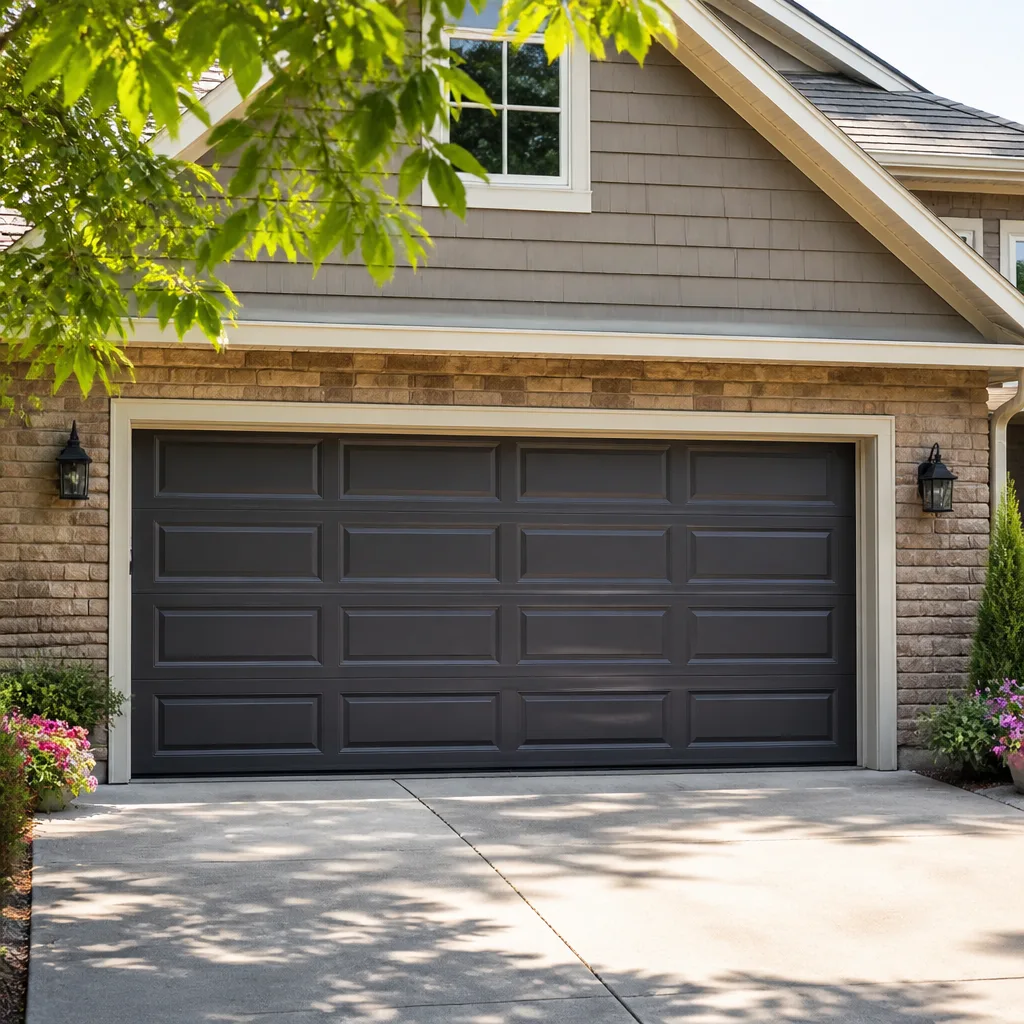 Raised-panel steel
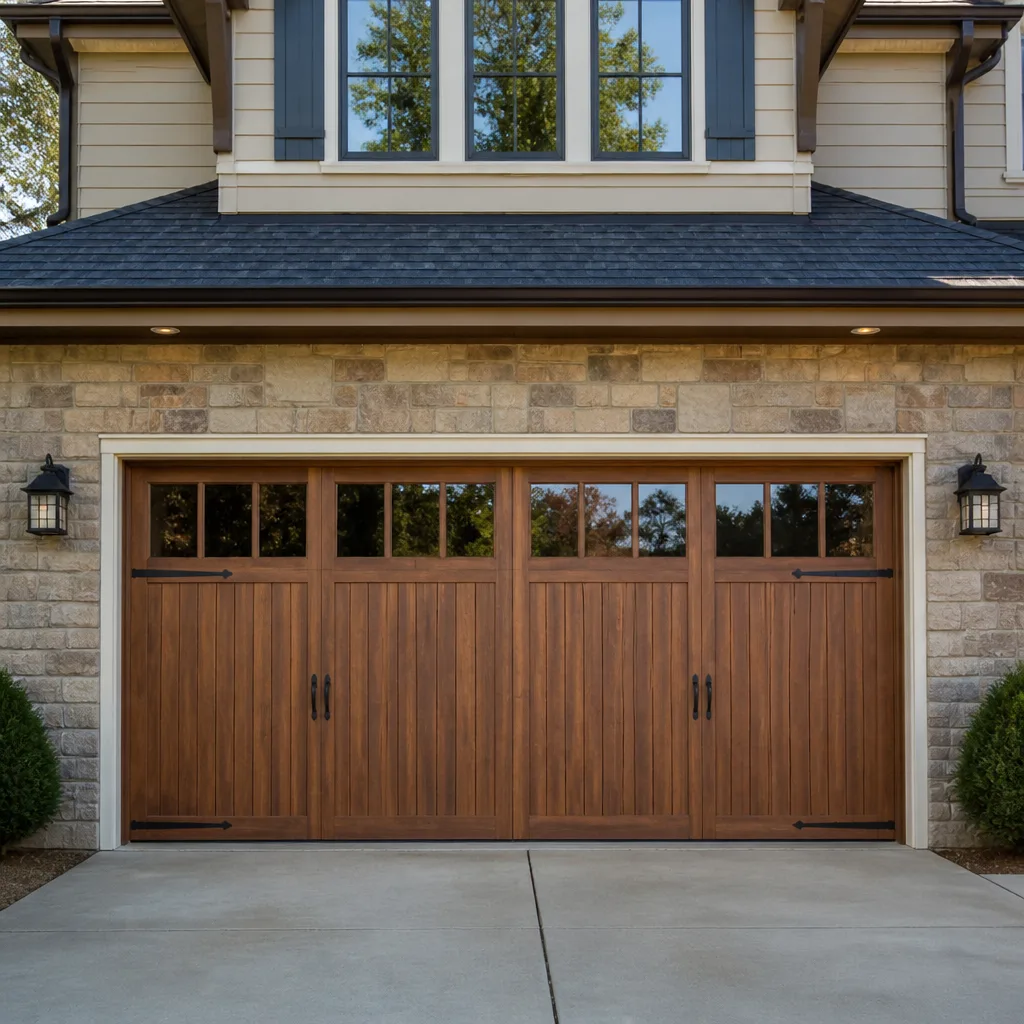 Carriage house
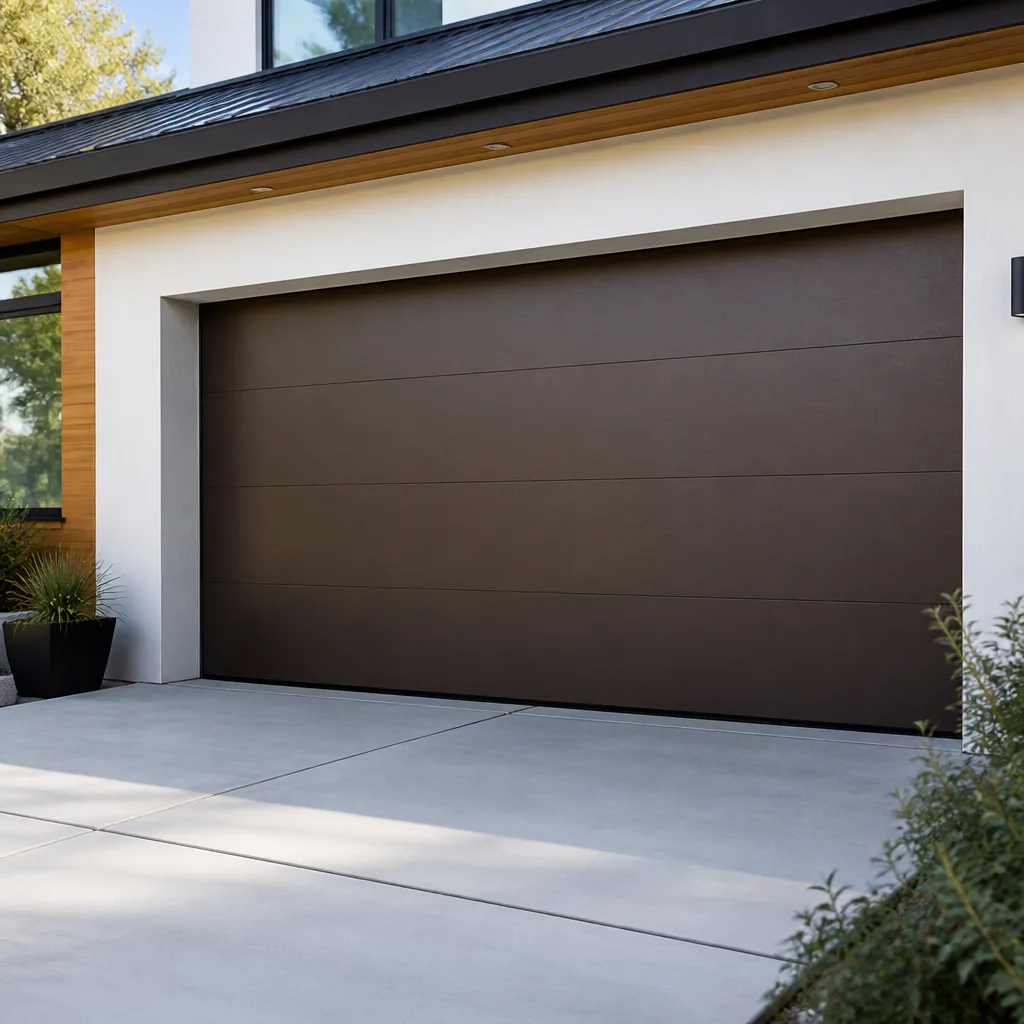 Modern flush
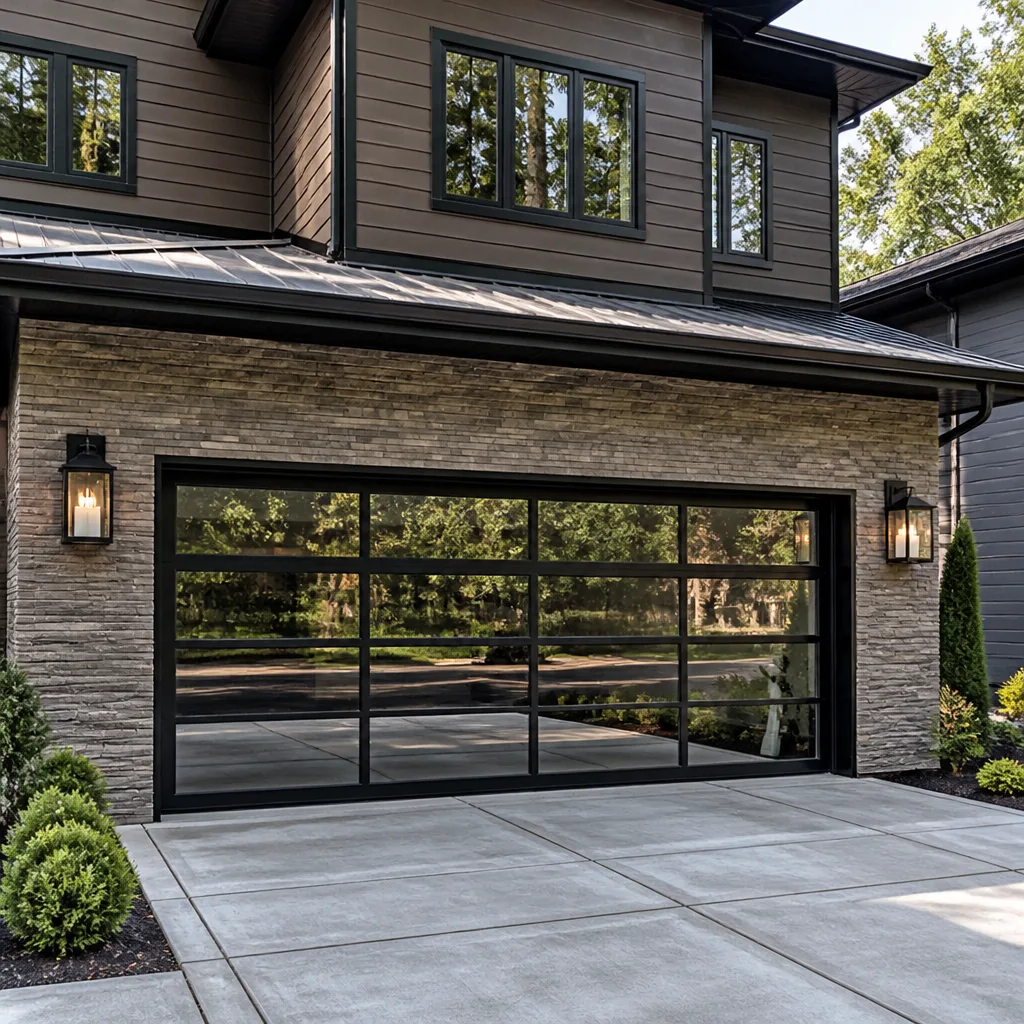 Full-view glass
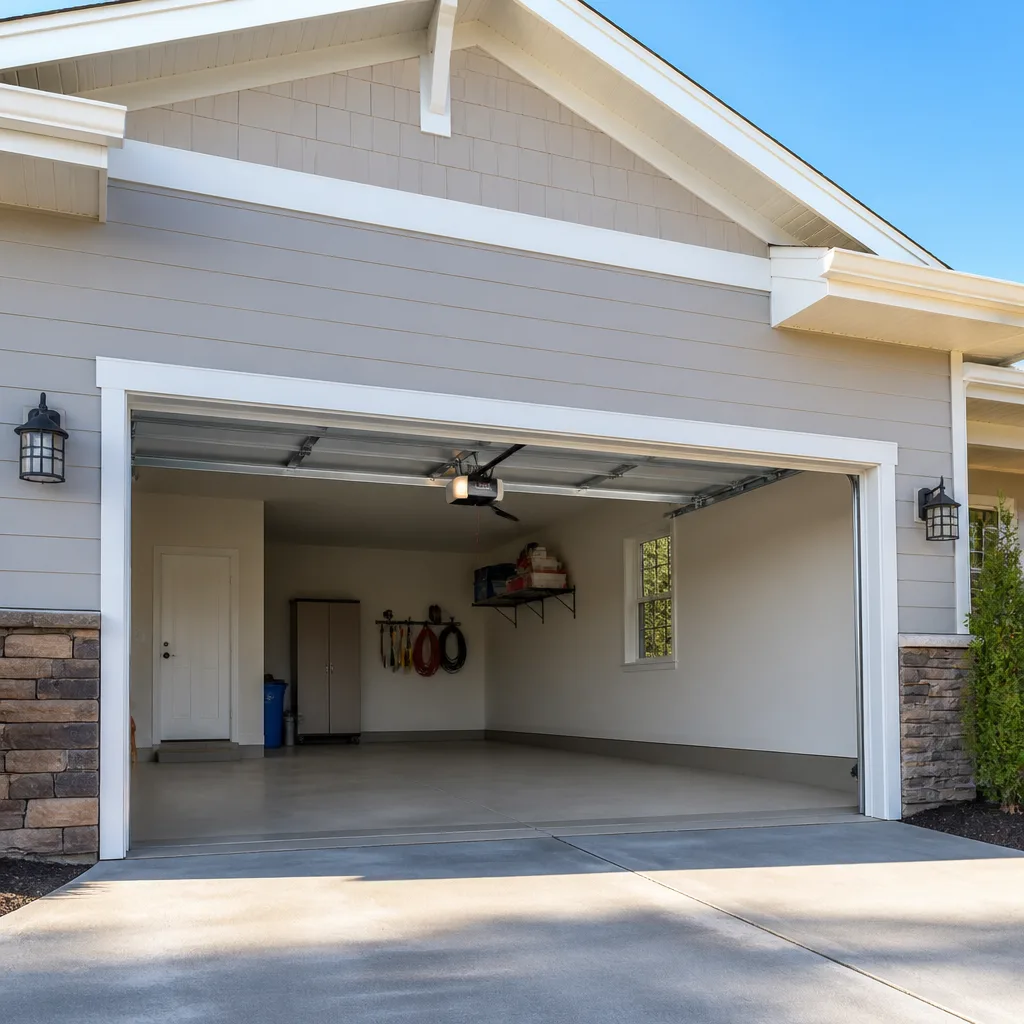 LiftMaster openers
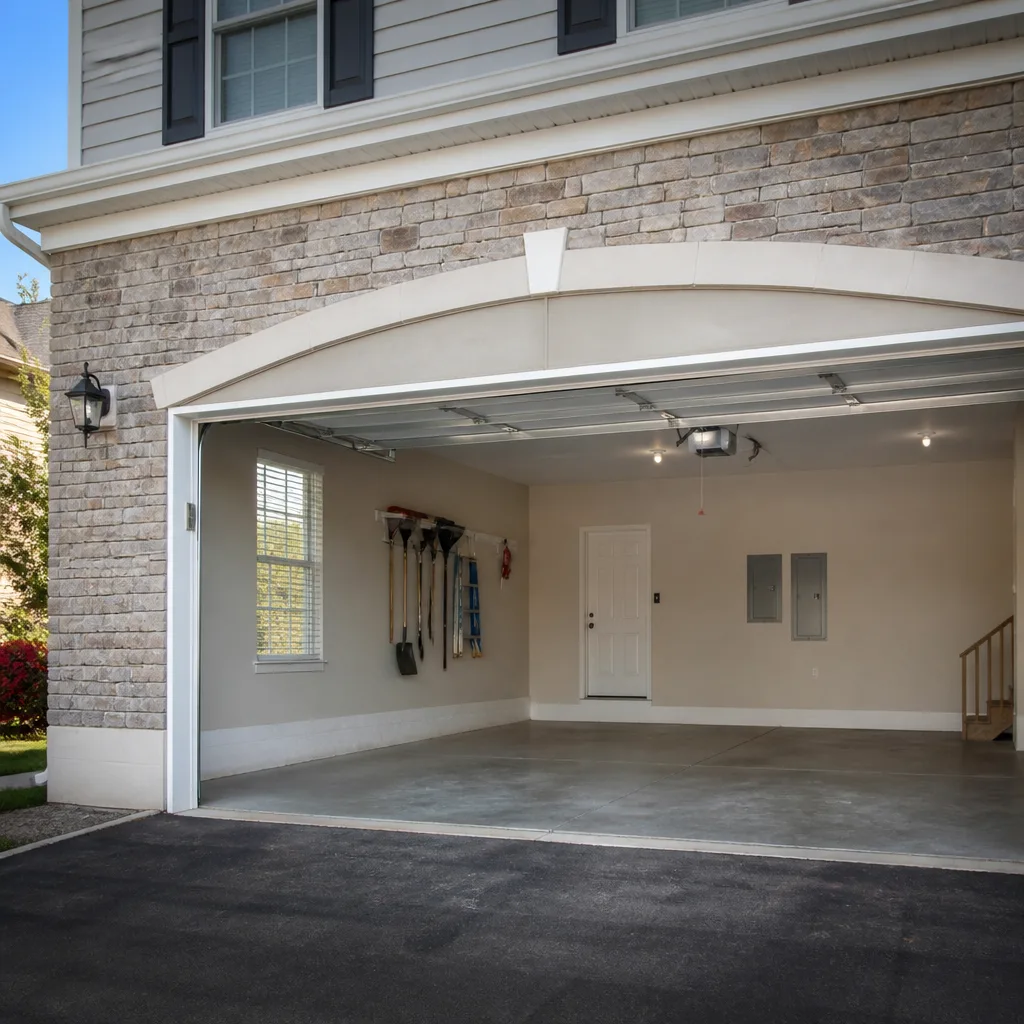 Chamberlain openers
Full 25-point door and opener safety check with every visit - springs, cables, rollers, tracks, and your LiftMaster or Chamberlain opener included
You get a price before we start. It does not change when the pro arrives.
Get your free estimateThe Complete Guide to Garage Doors in Hampton
Most garage door advice you’ll find online was written for a place that doesn’t exist: a dry, flat, inland suburb where every house was built in the same decade and every door is the same size. Hampton isn’t that place. This city sits at the edge of the Chesapeake Bay, where humid summers, wind-driven rain, and salt in the air wear on metal hardware far faster than they do a hundred miles inland. Add a housing stock that ranges from mid-century ranch homes near Phoebus to newer construction out toward Wythe and Buckroe, plus a large military population that moves in and out on orders, and you get a garage door environment with its own rules. This guide walks through all of it: materials, sizing, HOA approvals, PCS timelines, and a plain decision map for repair versus replacement. By the end you’ll know what your Hampton door is up against and what to do about it.
Quick Answer
A garage door in Hampton needs three things to last: hardware that resists humidity and salt exposure, a size and framing that match the home’s actual construction era, and a maintenance rhythm that accounts for coastal wear. If your door is under 15 years old and the panels and structure are sound, repair is almost always the right call. If it’s older, rusted through at the bottom sections, or repeatedly losing springs, replacement usually costs less over the next decade than patching it. A free written estimate is the only way to know which side of that line you’re on.
Styles & brands we work with
- Raised-panel steel
- Carriage house
- Modern flush
- Full-view glass
- LiftMaster openers
- Chamberlain openers
Table of Contents
- How Hampton’s Climate Shortens Garage Door Life
- Choosing Materials That Survive the Humidity
- Hampton’s Housing Mix: Sizing and Framing by Neighborhood
- HOA Rules for Garage Doors in Hampton Communities
- Military PCS Schedules and the Local Garage Door Market
- Repair or Replace? A Decision Map for Hampton Homes
- Openers, Remotes, and Smart Systems
- A Maintenance Rhythm for Coastal Virginia
How Hampton’s Climate Shortens Garage Door Life
Hampton’s position on the Chesapeake Bay creates a specific wear pattern that inland Virginia homeowners never deal with. Three forces do most of the damage: humidity, wind-driven rain, and salt carried on the air near the water.
Humidity is the quiet one. A garage in Hampton spends much of the year holding damp air, and that moisture condenses on cold steel every morning. Springs, hinges, rollers, and the bottom brackets all sit in that condensation cycle. What looks like a cosmetic issue in year three becomes a structural one by year eight if the hardware was never protected.
Wind-driven rain is the loud one. Storms coming off the bay push water against the door face and, more importantly, into the gaps at the bottom seal and between panels. A worn bottom seal lets water pool at the base of the door, which is exactly where rust starts on steel doors.
Salt is the one most guides skip. You don’t have to live on the waterfront to feel it. Airborne salt settles on metal surfaces across the city and accelerates corrosion wherever the protective coating has been scratched or worn through. That’s why the hardware on a Hampton door deserves more attention than the same hardware would get in Richmond or Charlottesville.
What this means practically:
- Galvanized or otherwise coated hinges, rollers, and track hold up meaningfully longer than bare steel in Hampton.
- Rust-resistant finishes on the door itself, whether factory-applied paint or a composite skin, matter more here than the sales sheet suggests.
- Springs fail on a schedule driven partly by corrosion, not just by cycle count, so a door that opens only twice a day can still lose a spring early.
- Bottom seals need replacing more often than the manufacturer’s interval suggests.
If your door’s hardware is already showing surface rust, that’s not a reason to panic. It’s a reason to have it looked at before the rust reaches the moving parts. Our technicians have up to 11 years of experience with exactly this kind of coastal wear, and the first step is always a free written estimate so you know what you’re dealing with.
Choosing Materials That Survive the Humidity
Most garage door buying advice treats material choice as a style question. In Hampton it’s a durability question first. Here’s how the common options actually hold up in this climate.
Steel
Steel is the most common door material in Hampton and the most misunderstood. A quality steel door with a factory finish and galvanized hardware handles coastal humidity well. A builder-grade steel door with bare hardware and a thin finish does not. The difference isn’t the steel itself; it’s the coating and the hardware package. When you compare steel doors, compare the finish warranty and look at the hinges and rollers, not just the panel.
Aluminum
Aluminum won’t rust in the way steel does, which makes it attractive near the water. The trade-off is dent resistance. Aluminum doors ding more easily, and a dented panel on a full-view or modern-style door often can’t be repaired without replacing the section. For a home near Buckroe or the waterfront, aluminum is a reasonable choice if you’re willing to be careful with it and if the frame and hardware are up to the same standard.
Wood and Wood-Composite
Wood is beautiful and it’s the highest-maintenance option in this climate. Solid wood doors in Hampton need regular sealing and repainting to keep moisture out, and a missed cycle shows up as swelling and warping at the bottom sections. Wood-composite doors split the difference: the look of wood without the same moisture sensitivity, though the finish still needs attention.
Insulated vs. Non-Insulated
Insulation matters more in Hampton than people expect. An insulated door helps hold the temperature line between the garage and the house, which cuts the humidity that migrates into the garage and condenses on your tools and hardware. If your garage shares a wall with living space – which most Hampton garages do – insulation is worth the extra cost.
Whichever material you choose, three hardware details decide how long it lasts here:
- Galvanized or coated hinges and rollers. Bare steel is the first thing to rust.
- A sealed bottom section. This is the single most exposed part of the door.
- Stainless or coated fasteners. Rusted screws strip and make future repairs harder.
If your current door is failing because of material breakdown rather than a single broken part, a full replacement often costs less over ten years than repeated patching. We handle both, and you can read more about our garage door repair work if you’re trying to decide which direction to go.
Hampton’s Housing Mix: Sizing and Framing by Neighborhood
One of the reasons generic garage door advice fails in Hampton is that the city doesn’t have one housing stock. It has several, and they were built in different eras with different garage dimensions and framing.
Older Ranch Homes near Phoebus and Downtown
The ranch homes in and around Phoebus and the older neighborhoods near downtown were built in an era when garages were sized for a single car and a smaller car at that. A common door width in these homes is 8 or 9 feet, and the headroom above the opening is often tighter than modern standards. That matters when you’re choosing between a standard torsion setup and a low-headroom system, and it matters when a technician arrives expecting room that isn’t there. If your home is older, the framing over the opening may also have shifted, which is why a measure before any replacement is non-negotiable.
Newer Construction in Wythe and Buckroe
Homes in Wythe and the newer pockets of Buckroe tend to have two-car garages with standard 16-foot doors and more generous headroom. Newer framing is usually square, which makes retrofit work straightforward. The catch is that these homes often came with builder-grade doors and openers, so the first failure tends to arrive at the same point for a lot of homeowners in the same development – usually a spring or an opener motor.
What to Check Before You Order Anything
Before you order a new door, gather four measurements:
- Door width and height. Measure the opening, not the existing door, and measure at three points to catch a sagging frame.
- Headroom. The distance from the top of the opening to the ceiling. This decides which spring and opener systems will fit.
- Side clearance. The space beside the door for the vertical track and springs.
- Backroom. How far into the garage the door needs to travel when open.
These four numbers are the difference between a job that goes smoothly and one that stalls on install day because the door that arrived doesn’t fit the opening. That’s also why we recommend a professional measure before a Dayspring Garage Door Repair installation estimate rather than ordering from a showroom number.
Weatherproofing the Framing
In Hampton, the framing around the garage opening takes the same humidity and wind exposure as the door itself. Old wood framing that’s been wet for a decade swells, softens, and eventually stops holding anchors. If your door is being replaced, it’s worth checking the jambs and the header at the same time. A door mounted to soft framing won’t stay aligned no matter how good it is.
HOA Rules for Garage Doors in Hampton Communities
A lot of Hampton neighborhoods are governed by a homeowners association, and the garage door is one of the items HOA boards care about most. It’s visible from the street, it’s uniform across the community by design, and changing it without approval is one of the fastest ways to get a letter.
Before you replace or upgrade your door, the sequence should look like this:
- Get the current architectural guidelines. Ask your HOA for the written rules on door color, material, panel style, and whether windows are permitted. Don’t rely on what a neighbor did five years ago; boards revise these documents.
- Submit an architectural request before you buy. Most associations require approval of the specific model, color, and material. Submit the manufacturer’s spec sheet and a photo of the door style.
- Keep the approval in writing. If the board approves a color, you want it documented. Approvals sometimes get lost with board turnover.
- Match the community unless you have approval not to. A door that stands out in a uniform development is a compliance problem, even if it’s a better door.
A few things worth knowing about how HOA approval interacts with replacement:
- Some Hampton associations specify the door color by name or code, not just “white” or “tan.” Bring the exact sample to your estimate.
- Window inserts, carriage-style hardware, and decorative trim often require separate approval even when the door itself is approved.
- Emergency repairs typically don’t need approval, but a replacement section or panel that changes the door’s appearance might.
- Opener and spring repairs never fall under architectural review, because nothing visible changes.
If you’re unsure whether your community has rules, ask before you sign a contract. Getting approval first costs nothing. Replacing an unapproved door can mean buying a second one.
Military PCS Schedules and the Local Garage Door Market
Hampton is a military community, and that shapes the garage door market in ways that don’t show up in a general guide. A large share of local homeowners arrive with orders and leave with orders, often on a timeline they didn’t choose. That creates two very specific situations.
You Just Moved In and Don’t Know What You Have
If you bought a home that was previously owned or rented, the odds are good you don’t know who installed the door or the opener. The previous homeowner may have replaced the opener without documenting it, or the builder installed one brand and a repair swapped in another. You shouldn’t have to solve that puzzle before you can get your car out of the garage.
This is where brand-agnostic service matters. We work on equipment from eight major manufacturers, including LiftMaster, Chamberlain, Genie, Clopay, Amarr, Wayne Dalton, Craftsman, and Raynor. If your opener says Craftsman and your door says Clopay, that’s fine. The technician identifies the system in front of them and works with it. If you need garage door opener repair on a brand you didn’t choose, that’s a normal call for us.
You’re Moving Out and Need It Fixed Before the Inspection
Orders don’t wait for a slow repair schedule. When a door won’t close, an opener won’t respond, or the safety sensors are tripping, the fix needs to happen on a timeline that fits a move. That’s part of why same-day service matters here. A door problem discovered during a pre-move walkthrough is one more thing on a list that’s already full.
Quick Turnaround Without Being Sold a Replacement
PCS homeowners are, understandably, focused on cost. The right answer is often a repair, not a replacement, and a company that works on every brand doesn’t need to upsell a new system to solve a problem it can diagnose. Ask for a written estimate before any work starts and read what’s actually being replaced.
We answer 24/7. Fast dispatch from 7am to 7pm, Sunday through Friday, and we’re closed Saturday. A call outside dispatch hours gets booked into the next opening. For a PCS timeline, that means you’re not waiting two days to find out what’s wrong.
Repair or Replace? A Decision Map for Hampton Homes
This is the question every homeowner eventually faces, and in Hampton the answer depends on three things: the door’s age, its material, and how much of the damage is coastal wear versus normal use. Here’s a straightforward way to think about it.
Repair Is Usually the Right Call When:
- The door is under 15 years old and the panels are structurally sound.
- The problem is a single component: a broken spring, a bent roller, a snapped cable, a failed opener motor.
- The door still runs smoothly and sits level when you raise it by hand.
- Rust is surface-level rather than eating through the bottom section.
Replacement Is Usually the Right Call When:
- The door is more than 15 to 20 years old.
- The bottom sections are rusted through or the panel skin is separating from the frame.
- You’ve replaced springs more than once in a few years, which suggests the door’s balance or hardware has degraded.
- The framing around the opening is soft or out of square.
- You want insulation for a garage that shares walls with living space.
A Simple Test You Can Do Yourself
Disconnect the opener and lift the door halfway by hand. If it holds position on its own with light effort, the door is balanced and probably a repair candidate. If it’s heavy, falls, or won’t stay, something in the spring or hardware system has failed. Don’t try to diagnose or adjust springs yourself – torsion springs and the cables attached to them are under high tension and can cause serious injury if handled without the right tools and training. This is one of the jobs a trained technician should always do.
Cost Expectations in Hampton
Every job is priced by a free written estimate, and those estimates are the price you pay. The ranges below are typical for the Hampton market and are meant to help you plan, not to replace a quote.
| Job | Typical Estimated Range |
|---|---|
| Torsion spring replacement (one spring) | $180 – $340 |
| Matched pair of torsion springs | About twice the single-spring range |
| Opener motor replacement | $280 – $650 |
| Panel replacement (one section) | $250 – $600 |
| New door installation (single, standard) | $850 – $2,200 |
None of those numbers include surprises. The written quote sets the price, and it’s quoted and agreed before any work begins, so you’re not looking at an invoice bigger than the estimate you signed.
Openers, Remotes, and Smart Systems
In our experience, a large share of “my garage door is broken” calls in Hampton turn out to be opener problems, not door problems. The door is fine; the machine that lifts it isn’t. Knowing which system you have saves time.
What the Opener Actually Controls
An opener is a full system, not just a motor. It includes:
- The motor and drive (belt, chain, or screw).
- The travel limits, which decide where the door stops.
- The force settings, which decide how hard the opener pushes.
- The safety sensors at the bottom of the track.
- The wall control, remotes, and keypad.
- Any smart-home or Wi-Fi integration.
Any one of those failing looks like “the door stopped working.” A technician who works on the whole system, not just the motor, finds the actual fault instead of replacing parts until it works.
Brand Matters Less Than You Think
The most common opener brands in Hampton homes are LiftMaster, Chamberlain, Genie, and Craftsman. They share a lot of design DNA, and a trained technician can move between them without needing to refer you elsewhere. If your opener is a Raynor or another brand, that’s fine too. The point isn’t the logo on the housing; it’s whether the person diagnosing it knows how that system behaves.
When an Opener Is Worth Replacing
Repair is usually the first call. Replacement makes more sense when the opener is well past its service life, when parts for the model are hard to source, or when a motor has failed and the repair cost approaches the cost of new. A technician should tell you which side of that line you’re on and explain why.
If the opener has failed and you need someone today, our opener repair service page covers what we handle and how fast we can get there.
A Maintenance Rhythm for Coastal Virginia
Coastal air is unforgiving, but it’s predictable. A short maintenance routine twice a year gets you most of the benefit, and it doesn’t require any tools more complicated than a rag and a can of lubricant.
- Look at the hardware. Check hinges, rollers, and the bottom brackets for surface rust. Early rust on a roller means it’s time to replace that roller before it seizes and starts wearing the track.
- Inspect the bottom seal. Run your hand along the seal where it meets the floor. A stiff, cracked, or torn seal lets water in and should be replaced. This is the most common water-entry point on a Hampton door.
- Lubricate the moving parts. A garage-door-rated lubricant on hinges, rollers, and the torsion springs keeps things quiet and slows corrosion.
- Test the balance. Disconnect the opener and lift the door halfway. It should hold. If it doesn’t, schedule a repair.
- Test the safety sensors. With the door open, place something in the sensor beam’s path and press the close button. The door should reverse. If it doesn’t, the sensors need attention.
- Check the weatherstripping around the frame. The trim around the opening also takes wind-driven rain, and worn trim lets water behind the framing.
Leave the springs, cables, and any adjustment of the torsion system to a trained technician. Those components are under high tension and are genuinely dangerous to work on without the right tools. Two seasonal checks a year cover the rest.
Common Mistakes to Avoid
- Buying a door without measuring the opening. In older Phoebus homes especially, the opening and the existing door may not match, and the headroom is often tighter than a standard replacement door needs. Measure the opening at three points before you order.
- Ignoring surface rust in the first year. In Hampton’s humidity, rust that starts on a roller or hinge in year two can seize a moving part by year four. Treat it as a repair item, not a cosmetic one.
- Skipping HOA approval to save a week. An unapproved door color or style in a governed community can mean buying the door twice. Submit the request before you sign the contract.
- Letting a contractor replace the whole door when only a spring failed. A new spring on a sound door runs a fraction of the cost of replacement. Ask for the specific diagnosis before agreeing to a full swap.
- Assuming the opener brand is the problem. A door that won’t close may have a sensor issue, a travel-limit issue, or a door problem the opener is only reacting to. Have the whole system looked at.
- Handling torsion springs yourself. This is the one mistake on the list that can seriously hurt you. Springs and cables are under high tension, and they fail without warning to anyone working on them without training and proper tools. Call a professional.
- Choosing aluminum for a driveway where cars, bikes, and kids move fast. Aluminum resists rust but dents easily, and a dented panel can’t always be repaired. If your driveway sees a lot of traffic, weigh the dent risk against the rust advantage.
See the difference
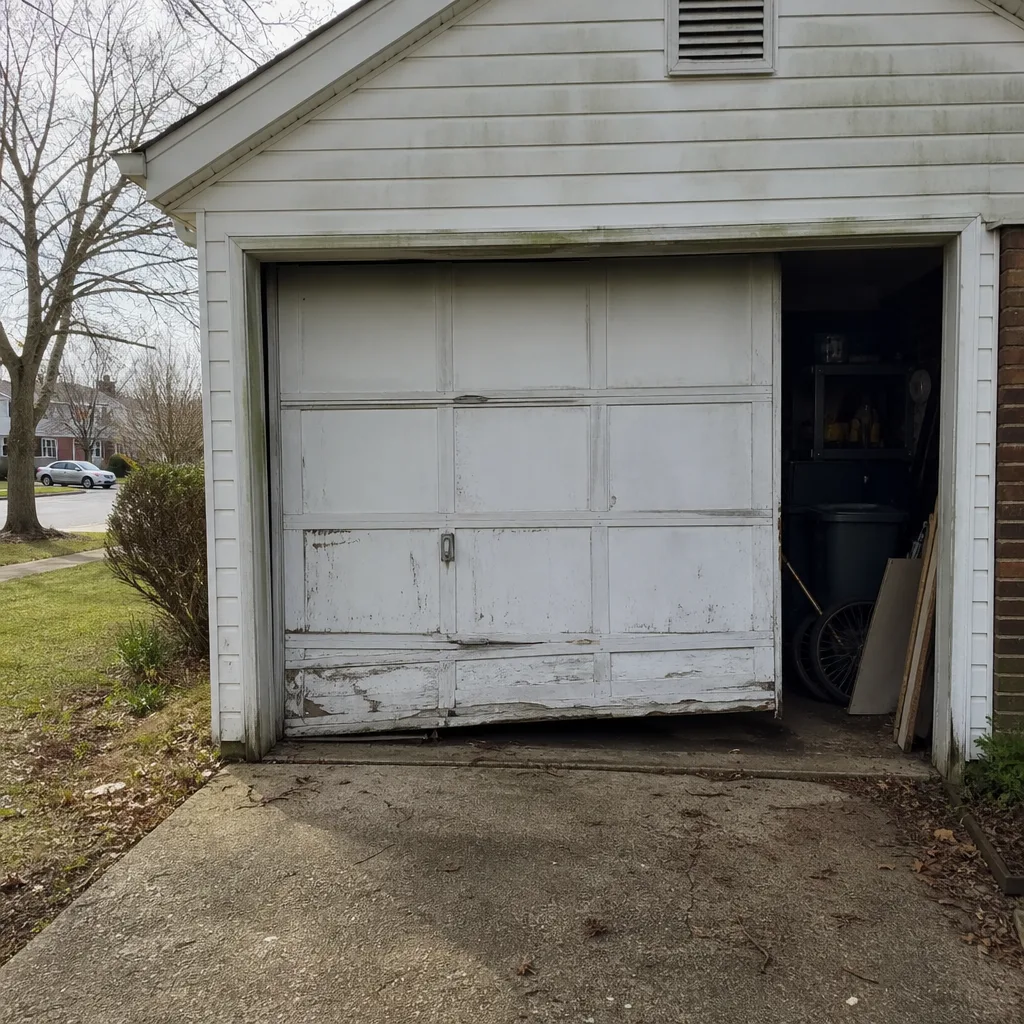 Before
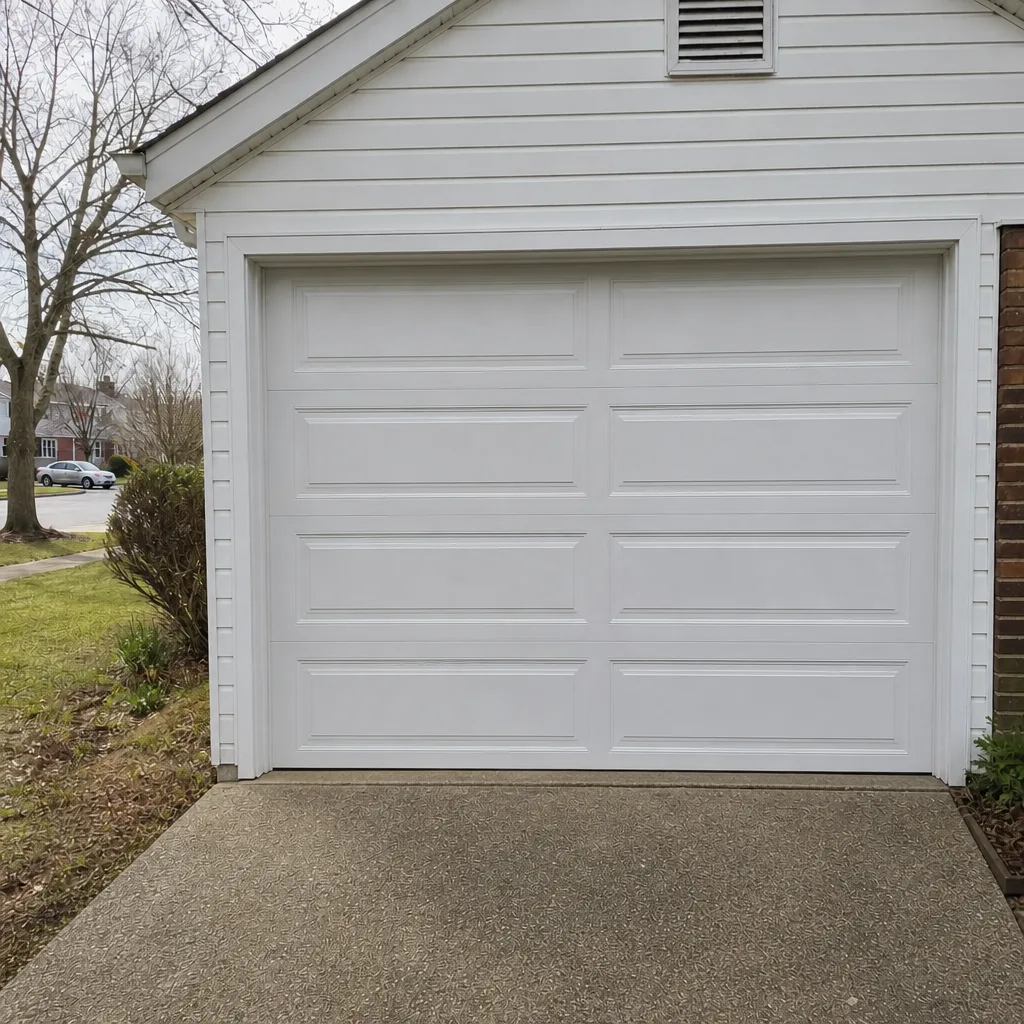 After
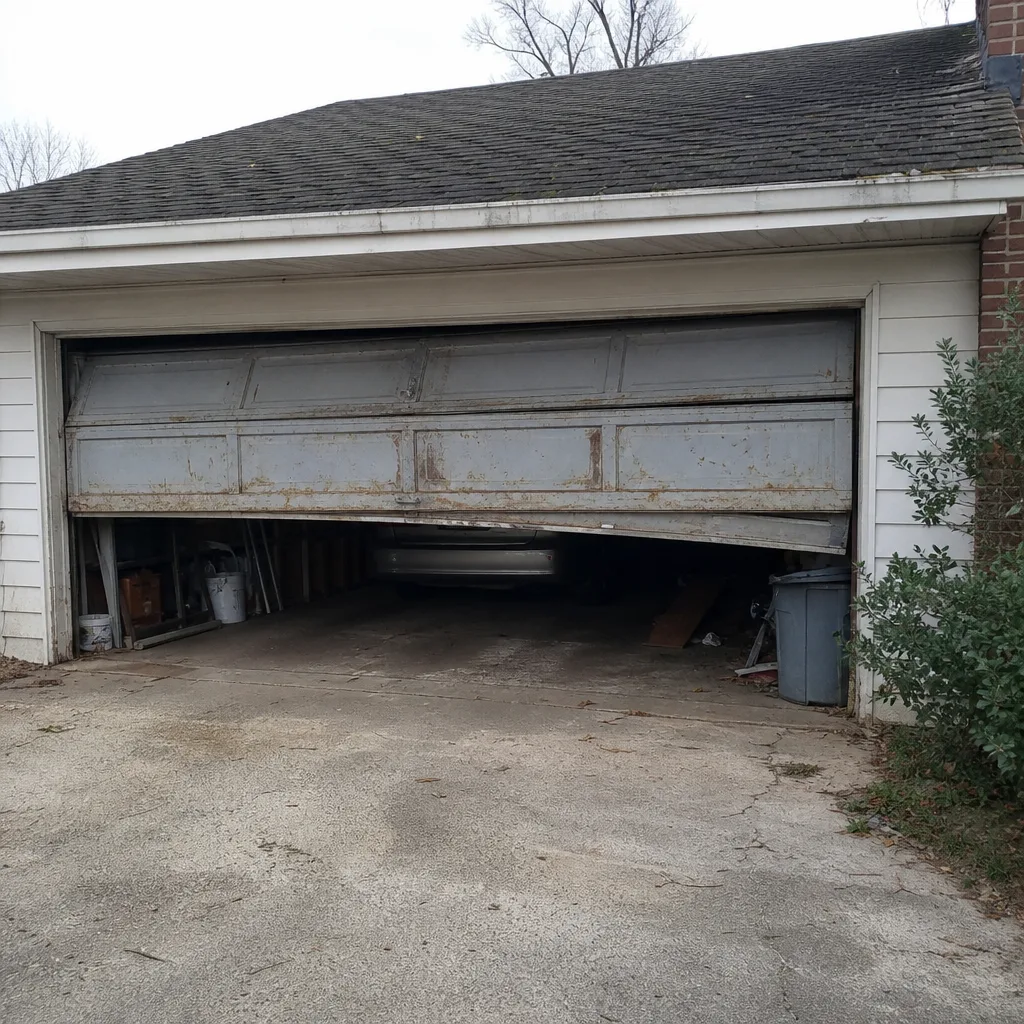 Before
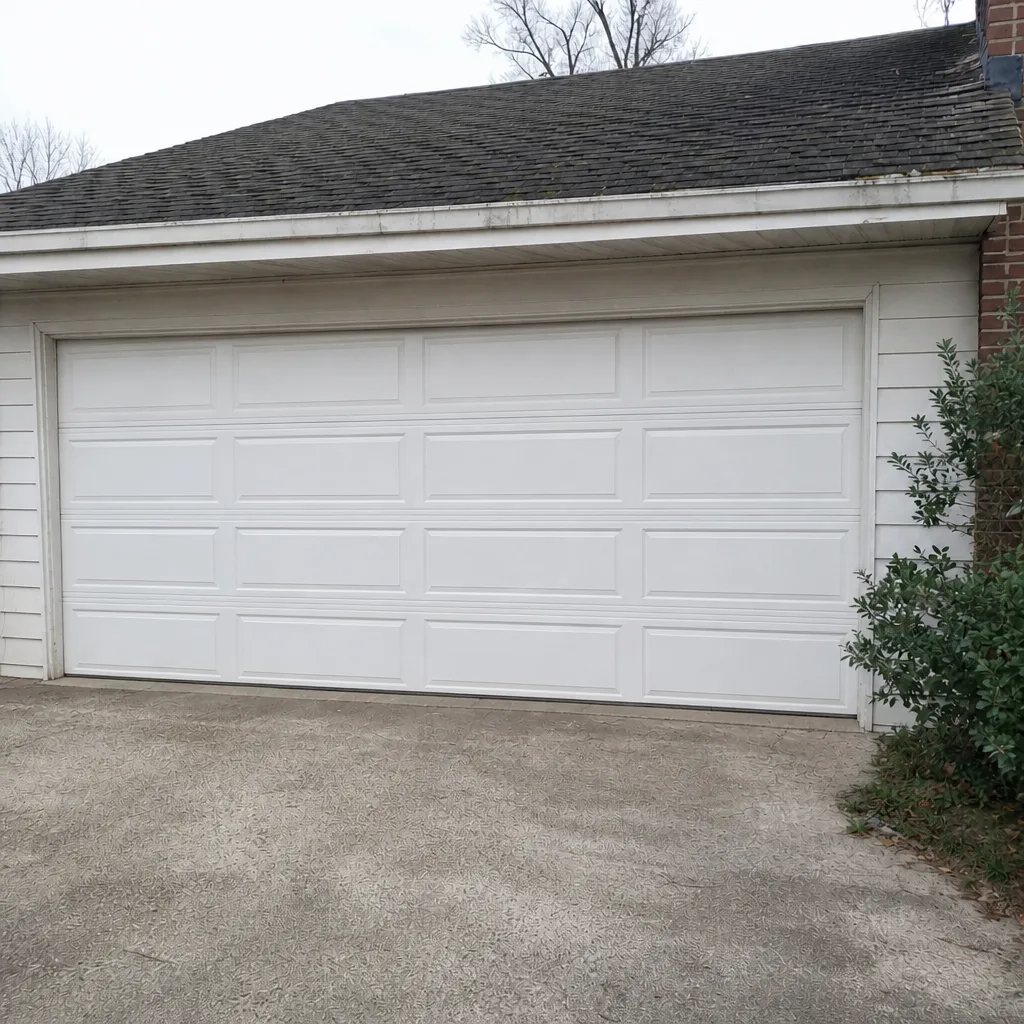 After
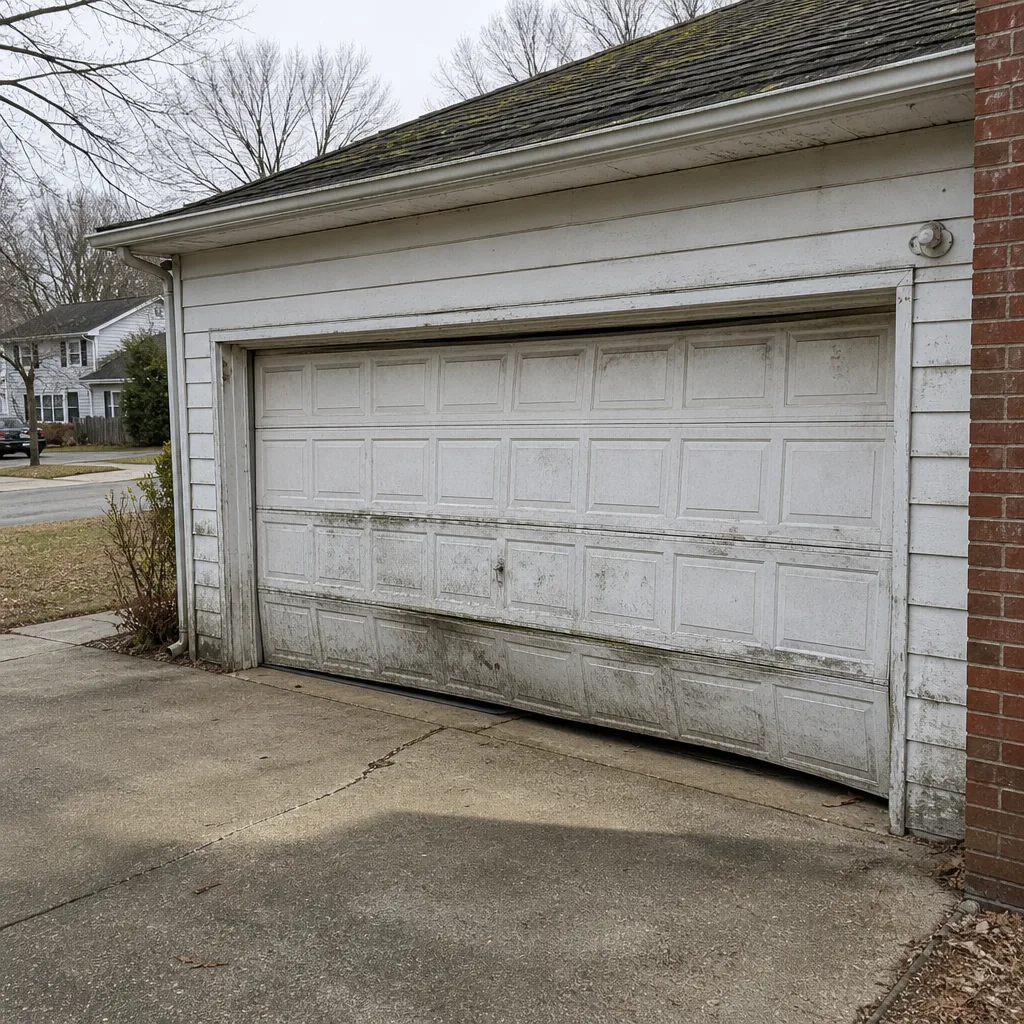 Before
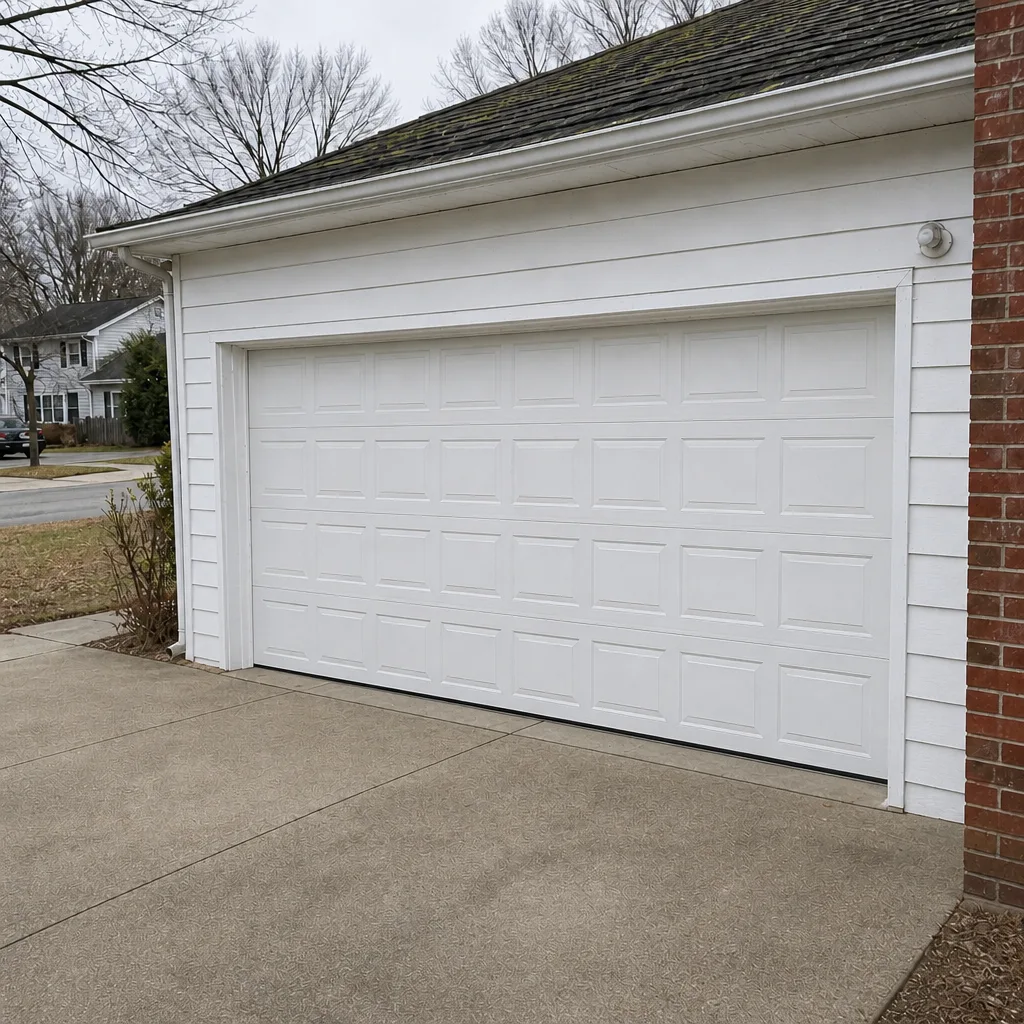 After
When to Call a Professional
Call a professional for anything involving springs, cables, torsion hardware, or electrical work on the opener. Those are the parts of the system that can hurt you. Also call when the door is uneven, won’t stay closed, reverses unpredictably, or has damaged panels that affect the opening’s seal. And call when your opener stops responding but the door moves fine by hand, because that’s a system problem that needs the whole opener checked, not a guess.
Dayspring Garage Door Repair offers free estimates in Hampton, so the first step costs you nothing but a conversation. Call (866) 942-6044. We answer 24/7. Fast dispatch from 7am to 7pm, Sunday through Friday.
If you’re not sure whether you’re looking at a repair or a replacement, more about how we handle Hampton jobs is available on our city page. Our technicians have up to 11 years of experience across every major brand, and we work on the door and the opener in the same visit.
Frequently Asked Questions
Spring replacement in Hampton typically costs between $180 and $340 for a single spring. A matched pair is usually replaced together, so expect roughly twice the single-spring range for two. The written estimate sets the final price and is quoted before any work starts. Call (866) 942-6044 for an exact quote – estimates are free.
If your community has a homeowners association, yes in most cases. Submit the door’s model, color, and material to the HOA’s architectural review before you order. Get the approval in writing. Emergency repairs rarely need approval, but replacements and visible changes usually do. Call (866) 942-6044 if you need help identifying the model for the approval form.
Check the door panels for a manufacturer’s label or stamped serial number, and look at the opener housing for the brand name. If neither is visible, a technician can usually identify the make and approximate age by the design. Knowing the brand matters when you need parts, because a Craftsman door and a Clopay door aren’t the same. Call (866) 942-6044 and we’ll help you identify what you have.
It depends on where the rust is. Surface rust on hardware is a repair. Rust that’s eaten through the bottom section or separated the panel skin from the frame usually means replacement is the better value over the next ten years. Hampton’s humidity accelerates corrosion, so rusted panels tend to get worse rather than stabilize. Call (866) 942-6044 for a free estimate on both options.
Yes in most cases. A door that won’t close leaves the house open, so it gets priority on the schedule. We answer 24/7 and dispatch from 7am to 7pm, Sunday through Friday. A call outside dispatch hours is booked into the next opening. Call (866) 942-6044 and we’ll find a slot today if one exists.
No. The estimate is written before work begins and the price is agreed before anything is touched. If we find a second issue during the job, we stop and tell you before doing anything else, so you approve any change in writing first. Call (866) 942-6044 for a free estimate – the number on the estimate is the number you pay.
The Bottom Line
Hampton is hard on garage doors in ways a generic guide won’t tell you. The bay humidity, airborne salt, and wind-driven rain start corrosion earlier than inland Virginia does, and the city’s mix of older ranch homes and newer construction means sizing and framing vary block to block. On top of that, HOA rules and PCS timelines add practical constraints that shape when and how you replace a door. The short version: use galvanized or coated hardware, seal the bottom section, keep up with seasonal checks, get HOA approval before you buy, and let a professional handle springs and cables. If your door is under 15 years old and the structure is sound, repair it. If it’s rusted through, sagging, or losing springs repeatedly, replacement is the better long-term spend. The same team handles repair, opener work, and installation, so whether the problem is a broken spring, a dead motor, or a door past saving, one call covers it.
Call (866) 942-6044 for a free estimate. We answer 24/7. Fast dispatch from 7am to 7pm, Sunday through Friday.
Written by the team at Dayspring Garage Door Repair.