
Last updated November 14, 2026
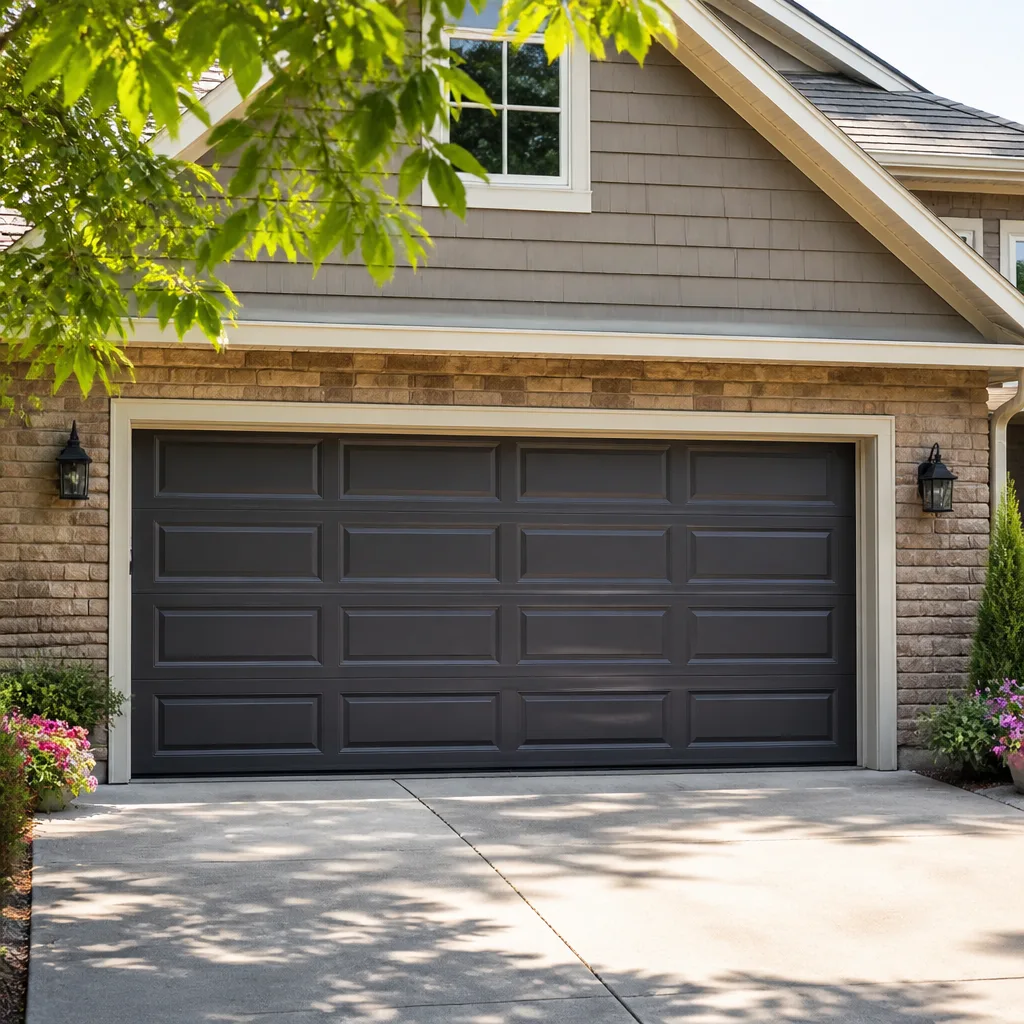 Raised-panel steel
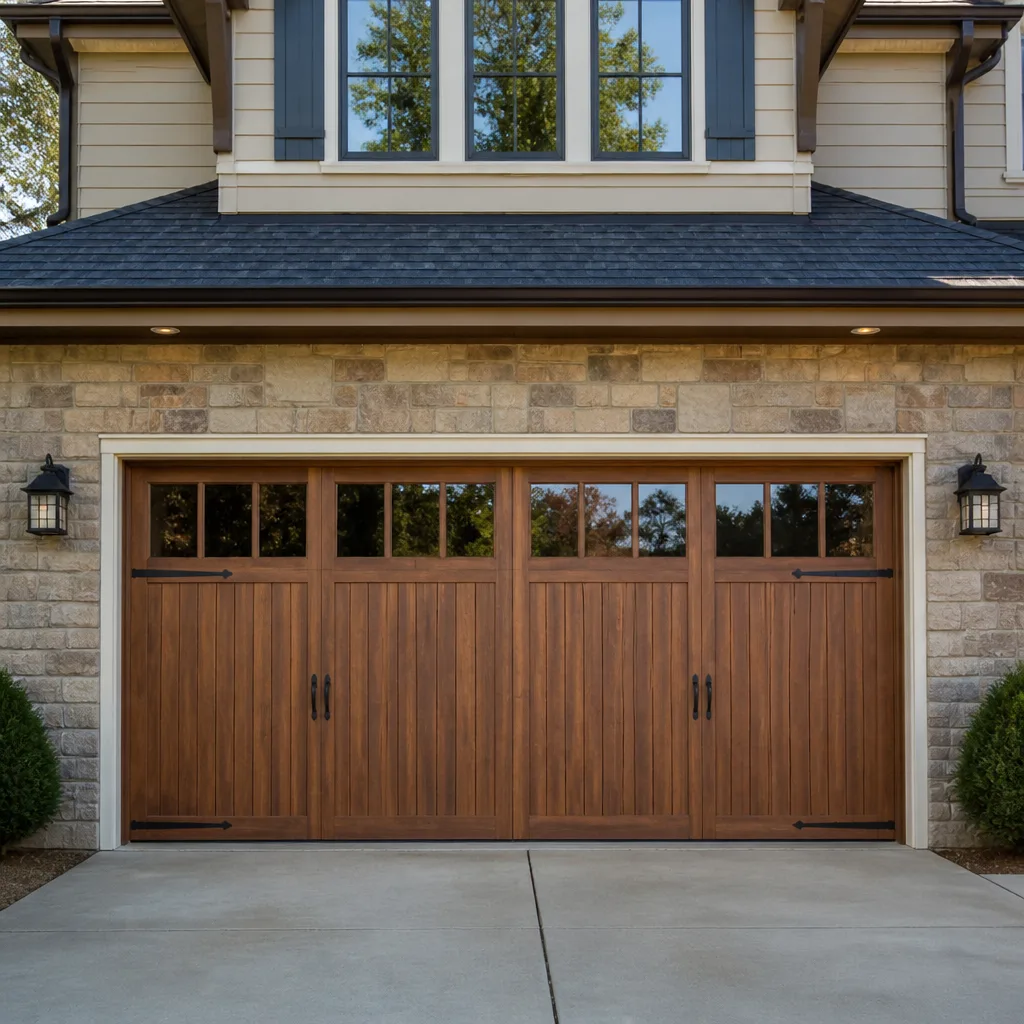 Carriage house
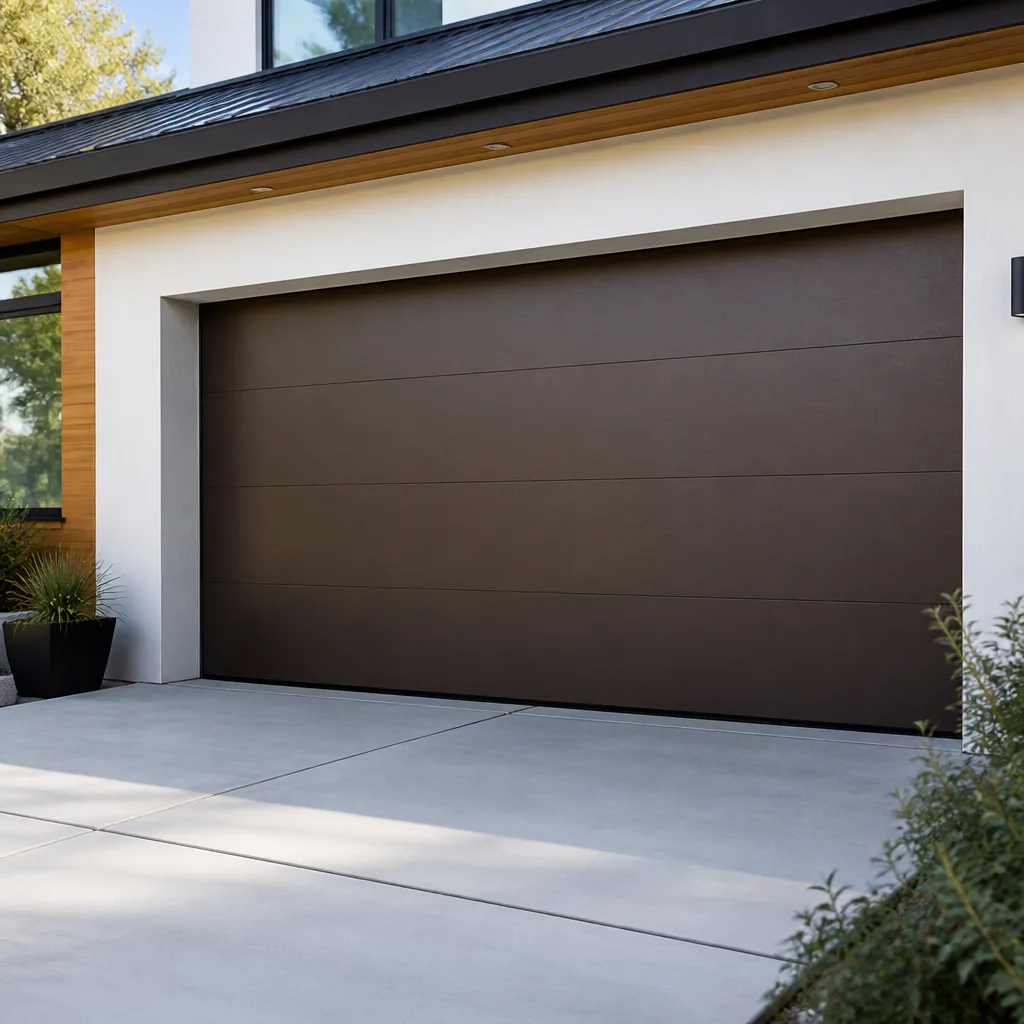 Modern flush
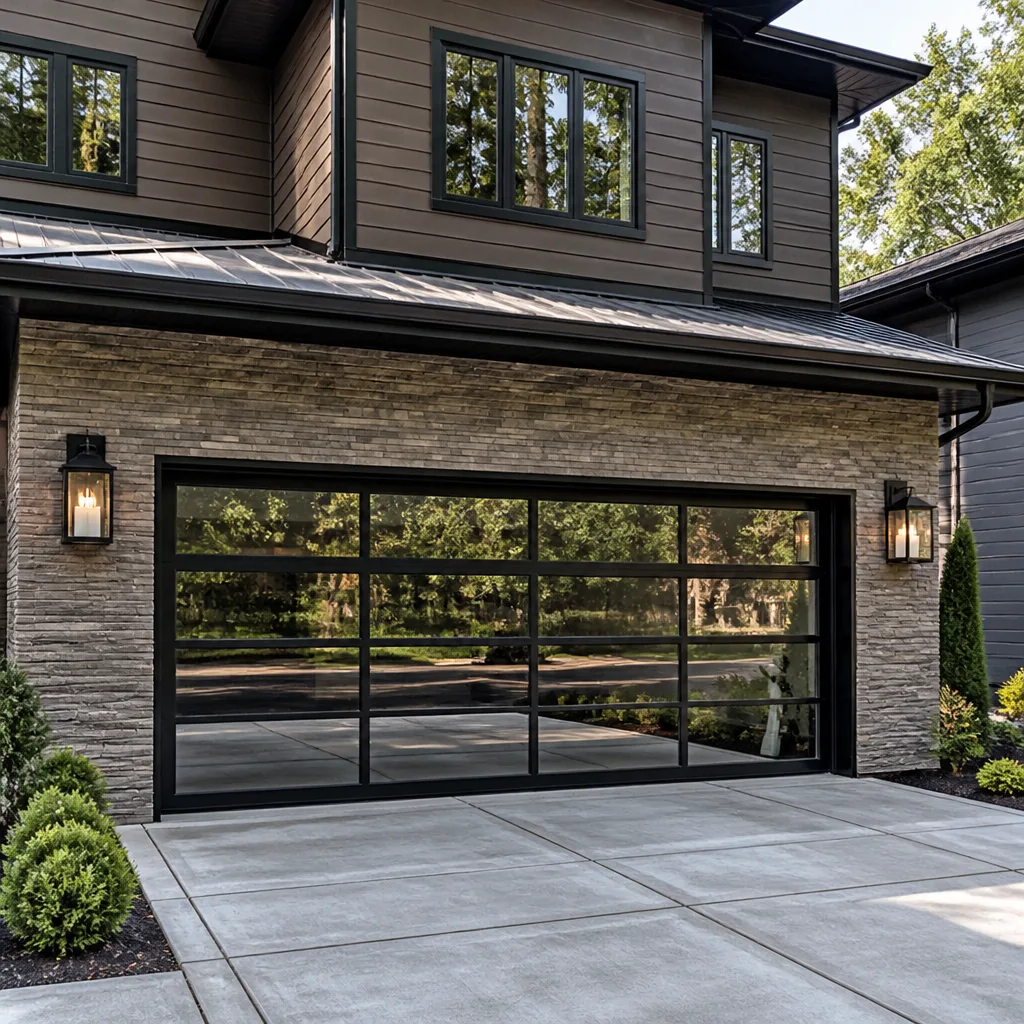 Full-view glass
 LiftMaster openers
 Chamberlain openers
Full 25-point door and opener safety check with every visit - springs, cables, rollers, tracks, and your LiftMaster or Chamberlain opener included
You get a price before we start. It does not change when the pro arrives.
Get your free estimateGarage Door Repair Maintenance Checklist for Hampton Homeowners
The number-one maintenance mistake Hampton homeowners make isn’t skipping lubrication. It’s lubricating the wrong parts with the wrong product. Spray white lithium grease on plastic rollers and you attract grit that grinds them down. Hit a powder-coated track with the wrong can and you can soften the coating that keeps the steel from rusting. Most checklists don’t explain any of this, so people follow them and still wear their doors out faster. This guide is different. It’s organized around what actually fails first on Hampton doors and why, with a real frequency table, the lubricants to use on which component, and plain talk on the balance test and safety sensors.
Quick Answer
A working maintenance routine for a Hampton garage door means lubricating the right parts with the right product, checking the balance and safety sensors regularly, and knowing what you should never touch yourself. Monthly checks cover the sensors, the door’s travel and the weather seal; twice-a-year tasks cover lubrication, hinge inspection and tightening hardware. Springs, cables and the opener’s internal gearing are always a technician’s job. Done consistently, this keeps a door reliable for years in Hampton’s humidity and reduces surprise breakdowns.
Styles & brands we work with
- Raised-panel steel
- Carriage house
- Modern flush
- Full-view glass
- LiftMaster openers
- Chamberlain openers
Table of Contents
- Why Hampton Doors Wear Differently
- The Right Lubricant for Each Part
- Spotting Early Corrosion From Humidity and Tidal Air
- The Door Balance Test, Explained Plainly
- Safety Sensor Alignment: Test, Then Decide
- A Realistic Maintenance Frequency Table
- A Ten-Minute Monthly Routine
- The Twice-a-Year Deep Check
- What Always Needs a Technician
Why Hampton Doors Wear Differently
Garage doors fail in patterns. A steamy summer with wide temperature swings, a wet spring and a stretch of summer humidity all push a door one direction; a cold snap pushes it another. Hampton sits in a region where the air holds a lot of moisture for much of the year, and the closer you are to the tidal waterways that thread through the city, the more that moisture lingers on metal overnight. A door in Phoebus or Buckroe tends to see more surface corrosion on hinges and bottom brackets than a door in a drier inland pocket, simply because the air around it stays damp longer.
That humidity does three things to a door over time. It works its way into the seams of hinges and the pivot points of rollers, where it starts the slow rust that eventually stiffens movement. It attacks the bottom seal, which sits closest to the wet concrete and the splash from a sloped driveway. And it makes the wood or composite panels of older doors swell and shrink through the seasons, which is why panel joints loosen faster here than in a drier climate. None of this is dramatic on any single day. It compounds.
The heat matters too, in a quieter way. Warm air softens the lubricant already on your moving parts, letting it migrate off the surfaces it was meant to protect. That leaves rollers and hinges running dry for weeks before anyone notices, and dry metal wears faster than lubricated metal. A Hampton door that gets no attention for a year will usually show it first at the hinges, and that’s exactly where a homeowner can catch the problem early.
The other local reality is storm season. A Hampton door faces wind-driven rain that can push water into places a calmer day never reaches. Checking the weather seal and the bottom seal before and after storm season is worth the five minutes, and it’s the kind of check a good routine builds in automatically.
The Right Lubricant for Each Part
Choosing a lubricant is not a “one can for everything” decision, and treating it that way is the mistake that quietly shortens a door’s life. The two products most homeowners reach for are silicone spray and white lithium grease, and they do different jobs.
Silicone spray is the workhorse for most of the door. It goes on hinges, rollers, the torsion bar bearings, and the pivot points where the door arm meets the opener rail. It’s light, it doesn’t hold grit, and it’s safe on plastic rollers, which many modern doors use. White lithium grease is heavier and longer-lasting, which is useful in some spots and harmful in others. It’s a reasonable choice for metal hinges and bearing plates that carry steady load, but it’s the wrong product for plastic rollers and for any track surface, because it holds dust and debris that then acts like sandpaper.
Here’s the part-by-part breakdown we work from:
- Hinges: a light spray of silicone, worked into the pivot. White lithium is acceptable on steel hinges but wipe away the excess so it doesn’t collect grit.
- Rollers: silicone only, and only on the stem where it turns. Never pack grease into a plastic roller.
- Torsion bar and bearings: a few drops of light oil or silicone at the bearing points. This is the one area where a technician should do the work if the springs look worn.
- Tracks: never grease or oil them. Clean with a damp cloth and leave them dry. Grease plus grit equals a sticky track.
- Weather seal and bottom seal: a silicone-based protectant, not grease, to keep the rubber from drying out.
- Opener rail and chain: follow the opener manufacturer’s guidance. A LiftMaster or Craftsman rail usually specifies a light grease or a specific belt design that should stay dry.
Skip household oils and WD-40 as a door lubricant. They’re useful for loosening a stuck bolt, but they evaporate too fast to protect moving parts, and they leave a residue that attracts dust. If you’re unsure which product your specific door and opener call for, that’s the moment to call a technician who works on the brand rather than guessing.
Spotting Early Corrosion From Humidity and Tidal Air
Corrosion on a garage door rarely announces itself. It starts as a dull patch on a hinge pin, a faint orange bloom at the base of a bracket, a bottom seal that feels stiff instead of springy. Catching those early is the difference between a five-minute wipe-down and a hinge replacement.
Run a slow visual sweep of these spots every few months:
- Hinge pivot pins. Look for a thin rust line where the pin meets the leaf. A little surface rust is normal; pitting is not, and a pitted hinge should be replaced before it seizes.
- Bottom brackets and the bottom of the track. This is the lowest point on the door and the closest to wet concrete. Rust here is common in Hampton, and it’s also where water splash from the driveway collects.
- Spring coils. Look for flaking paint and orange dust on the coil. A corroded spring is a weakening spring, and that’s a safety issue rather than a cleaning project.
- The bottom seal. Run a hand along it. It should feel pliable, not brittle. A hard, cracked seal lets water and air in, and it’s cheap and easy to replace.
- Panel seams and the bottom edge of each panel. Water sits in seams. Feel for bubbling paint, which usually means corrosion underneath.
If you find light surface rust, a wipe with a dry cloth and a drop of silicone on the moving point slows it down. Anything deeper, or anything on the springs, needs a technician. This is also where knowing your brand helps: a Wayne Dalton or Raynor door may use specific hardware finishes and seals, and matching the replacement part matters more than grabbing whatever the hardware store has. The best defense is honestly mundane: keep the door dry, keep the moving parts coated, and look before the rust gets a foothold.
The Door Balance Test, Explained Plainly
A properly balanced door should feel nearly weightless when you move it by hand. That’s it. That’s the whole test. If you can raise and lower the door with two fingers and it stays where you leave it, roughly halfway, the springs are doing their job. If the door feels heavy, drops on its own, or shoots up faster than you’d expect, the spring tension is off, and that’s the single clearest early sign of a spring problem.
Here’s how to check it safely, without ever touching the springs themselves:
- Close the door fully and disconnect the opener using the manual release cord. On most LiftMaster and Chamberlain openers that’s the red handle.
- Lift the door by hand to about waist height and let go. A balanced door stays put or drifts only slightly.
- Lift it to shoulder height and let go again. Same expectation.
- Lower it slowly and feel for any point where it binds or grabs.
If the door won’t hold its position, or you have to fight it to move it, don’t keep testing. A door with failing spring tension is under enormous stored force, and the springs and cables are not a homeowner repair. Stop, leave the door where it is if it’s safe, and call a professional. This is exactly the kind of job where a two-minute diagnosis from someone who works on the system in front of them beats a guess. If you’re in Hampton and the balance test tells you something’s wrong, that’s a garage door repair call, not a weekend project.
One more thing worth knowing: a door that passes the balance test but still feels rough or jerky probably has a roller or track problem, not a spring problem. Those are different repairs, and telling them apart is why the test matters.
Safety Sensor Alignment: Test, Then Decide
Safety sensors are the two small eyes mounted near the floor on each side of the door, and they exist to stop the door if something crosses the path. Testing them takes ten seconds and should be part of any Hampton maintenance routine. Close the door using the wall button, then wave a broom handle or your leg through the beam while the door is coming down. A working system reverses immediately. If the door keeps going, the sensors aren’t doing their job.
The symptoms separate adjustment from replacement:
- Adjustment: the door reverses most of the time but occasionally doesn’t; the sensor LED flickers; a sensor got bumped by a recycling bin or a car; the brackets are slightly out of line.
- Replacement: a sensor LED stays dark no matter how you aim it; the lens is cracked or cloudy; the wiring is frayed; one sensor won’t power on at all.
Common causes of misalignment in a Hampton garage are everyday ones. A trash can nudged into the bracket, a bike leaning on the track, condensation on the lens during a humid stretch, or a spider web strung across the beam. Wiping the lenses and gently nudging the bracket until both LEDs glow steady usually solves it. If it doesn’t, don’t tape over the sensors or bypass them, because that defeats the entire safety system. This is opener work, and it’s the kind of thing that separates a full-service company from a door-only shop. If your opener and sensors need attention together, that’s garage door opener repair territory, and it’s worth having someone look at the whole system at once.
A Realistic Maintenance Frequency Table
Most checklists are vague about timing. Here’s a practical breakdown of what to do when, built for a door that gets used every day.
- Monthly: test the safety sensors; watch the full open and close cycle for smooth travel; check the bottom seal for stiffness or damage; glance at the hinges for new rust.
- Every three months: lubricate hinges and rollers with silicone; wipe the tracks clean and leave them dry; tighten any hinge or bracket screws that have worked loose.
- Twice a year: run the balance test; inspect springs and cables visually for corrosion or wear; check the weather seal around the door; clean and protect the bottom seal; listen for new noises from the opener.
- Once a year: have a technician inspect springs, cables, and opener gearing; check the door’s overall alignment and hardware; confirm the opener’s force settings are appropriate.
- Always a technician: any spring or cable work; opener internal repairs; track realignment after an impact; installing a new door or opener.
That’s the whole schedule. It’s not a lot of work, and most of it takes minutes. The value is in doing it before a small issue becomes a stuck door on a morning you needed to leave. This is the routine we’d suggest to any Hampton homeowner who wants a door that works every morning.
A Ten-Minute Monthly Routine
Here’s the monthly check in order, so you can run it without thinking about what comes next:
- Press the wall button and watch the door open and close. Listen for grinding, squealing, or a door that hesitates at any point.
- Test the safety sensors with a broom handle as the door closes. It should reverse on contact with the beam.
- Wipe both sensor lenses with a dry cloth.
- Look at each hinge for fresh rust, and give any stiff pivot a light spray of silicone.
- Run a hand along the bottom seal and check the weather seal at the sides.
- Check that the door closes flush to the floor without a gap at either corner.
That’s it, and it takes less time than making coffee. The reason to do it monthly rather than yearly is that a Hampton door lives in a climate that works on it year-round. A small rust spot caught this month is a wipe-down; caught next spring it’s a hinge. A slow sensor caught this month is a nudge; caught during a storm it’s a door that won’t close.
The Twice-a-Year Deep Check
Twice a year, set aside half an hour and go a little deeper. This is the check that catches the problems the monthly routine can’t.
Start with the balance test, described earlier. Then do a slow visual sweep of the springs and cables. You’re not touching them, just looking for rust, fraying, or gaps in the cable winding. Look at the hardware: are any bolts loose, any brackets bent, any roller stems worn flat? Clean the tracks with a damp rag and check for dents or debris. Lubricate the hinges, rollers, and torsion bearings. Inspect the weather seal and bottom seal, replacing anything brittle. Finally, listen to the opener: a motor that strains, a chain that slaps, or a belt that slips is telling you it needs attention.
This is also the right moment to think about brand-specific needs. A Craftsman opener with a chain drive wants a different touch than a belt-driven LiftMaster, and a Wayne Dalton door’s hardware may need specific care. If you don’t know what you have, a technician can identify the system and tell you what it needs. If the deep check turns up something beyond your comfort level, we can take a look and give you a straight answer on whether it’s a repair or a replacement. If a door has reached the end of its life, replacing it is a measured, scheduled job, and we handle Hampton installation without sending you to a third party.
What Always Needs a Technician
Some jobs are homeowner work, and some will hurt you. The line matters, so here it is clearly. Garage door springs and cables are under extreme stored tension, and a spring that lets go can cause serious injury. Never attempt to adjust, remove, or replace a spring or cable yourself. The same goes for anything involving the opener’s internal gearing or electrical wiring, and for track realignment after an impact, which requires releasing tension in a controlled way.
What you can safely do: lubricate, clean, test sensors, check seals, tighten visible screws, and run the balance test. What you should hand to a professional: springs, cables, opener internals, electrical work, and any repair where the door is stuck open or won’t stay down. Our technicians have up to 11 years of experience, and we’re certified to work on eight major brands, including LiftMaster, Chamberlain, Genie, and Clopay, along with Wayne Dalton, Raynor, Craftsman, and Amarr. That means we diagnose and repair the actual system in front of us, not a generic stand-in.
Common Mistakes to Avoid
- Greasing the tracks. It feels like it should help, but grease plus grit is a sticky track that grabs the rollers. Keep tracks dry and clean.
- Using household oil or WD-40 on moving parts. Both evaporate and leave a film that collects dust, which wears rollers and hinges faster than dry metal would.
- Ignoring a stiff bottom seal. In Hampton’s humidity, a brittle seal lets water in at the lowest point of the door, and that’s where rust starts first.
- Bypassing or taping over safety sensors. It silences the symptom and removes the protection. Sensors exist to stop the door on a person or a pet.
- Skipping the balance test because the door still opens. A door can open fine and still have failing spring tension, which is the earliest warning you get before a spring breaks.
- Tightening every screw you see without checking alignment. Loose hardware is worth tightening, but a door pulled out of square binds and wears rollers.
- Assuming opener trouble is a door problem. A door that reverses for no reason, or a remote that works from the driveway but not the kitchen, points to the opener, not the door. That’s Dayspring Garage Door Repair work, not door-only work.
See the difference
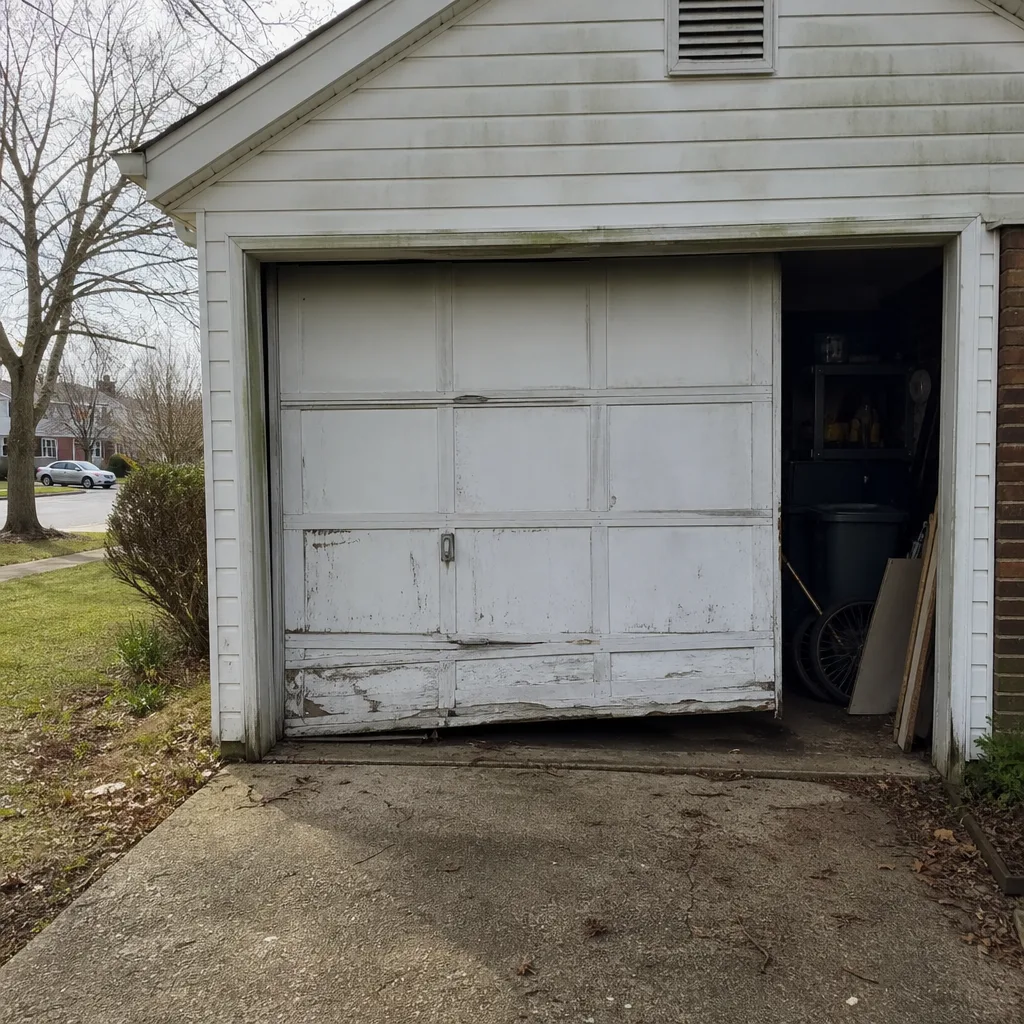 Before
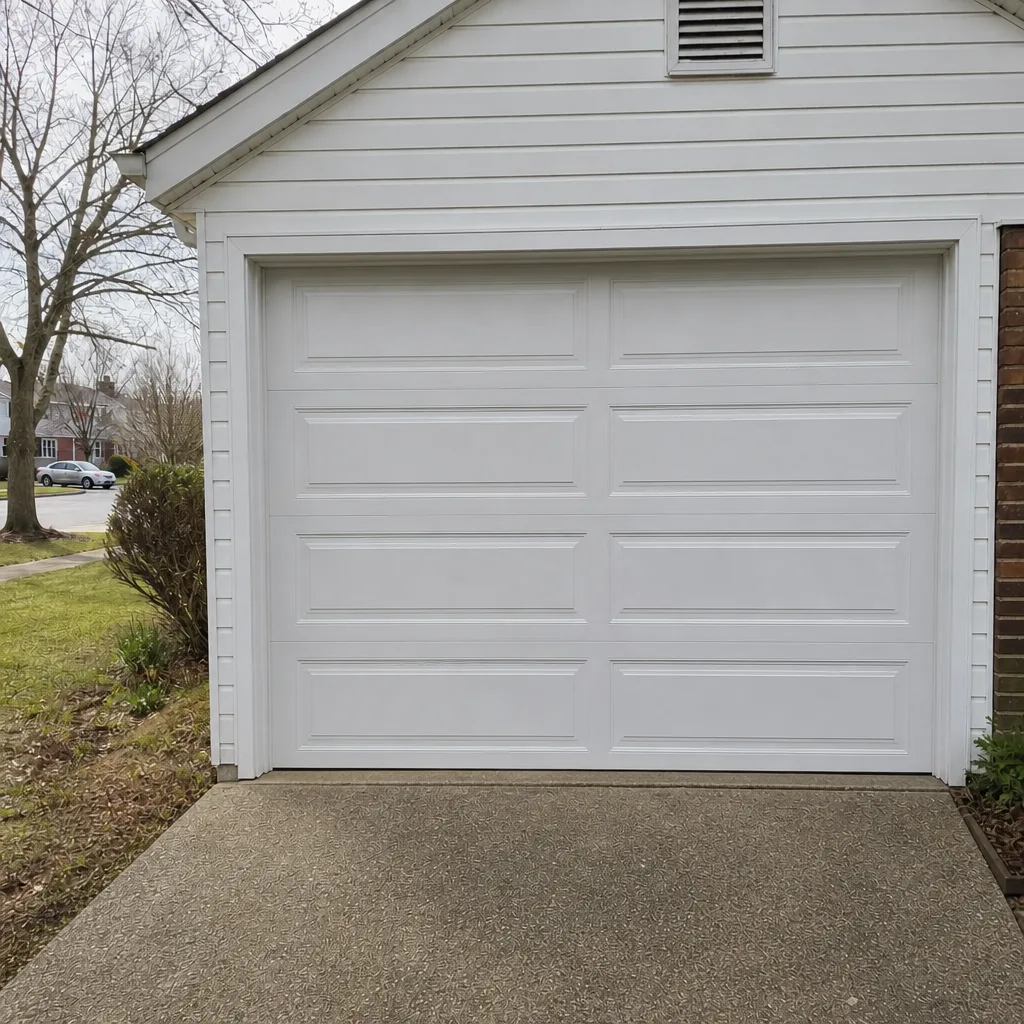 After
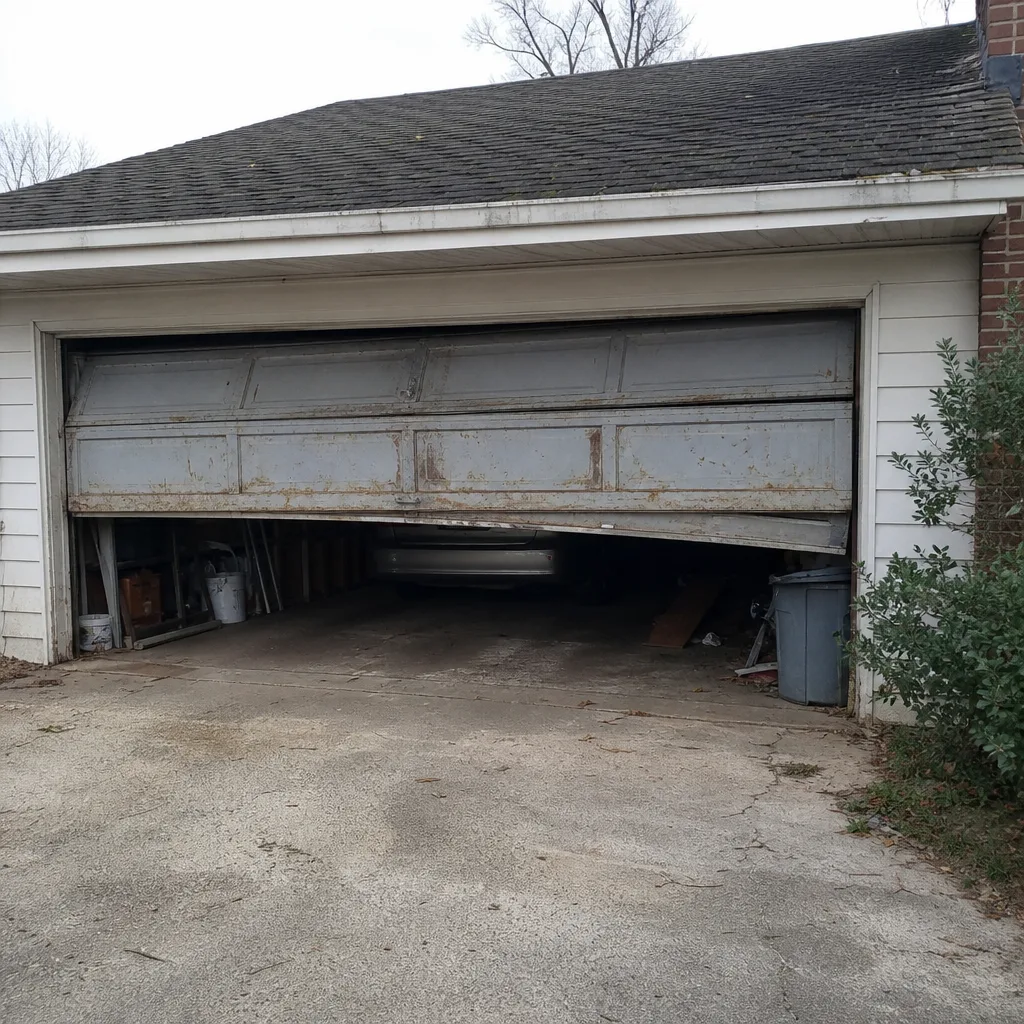 Before
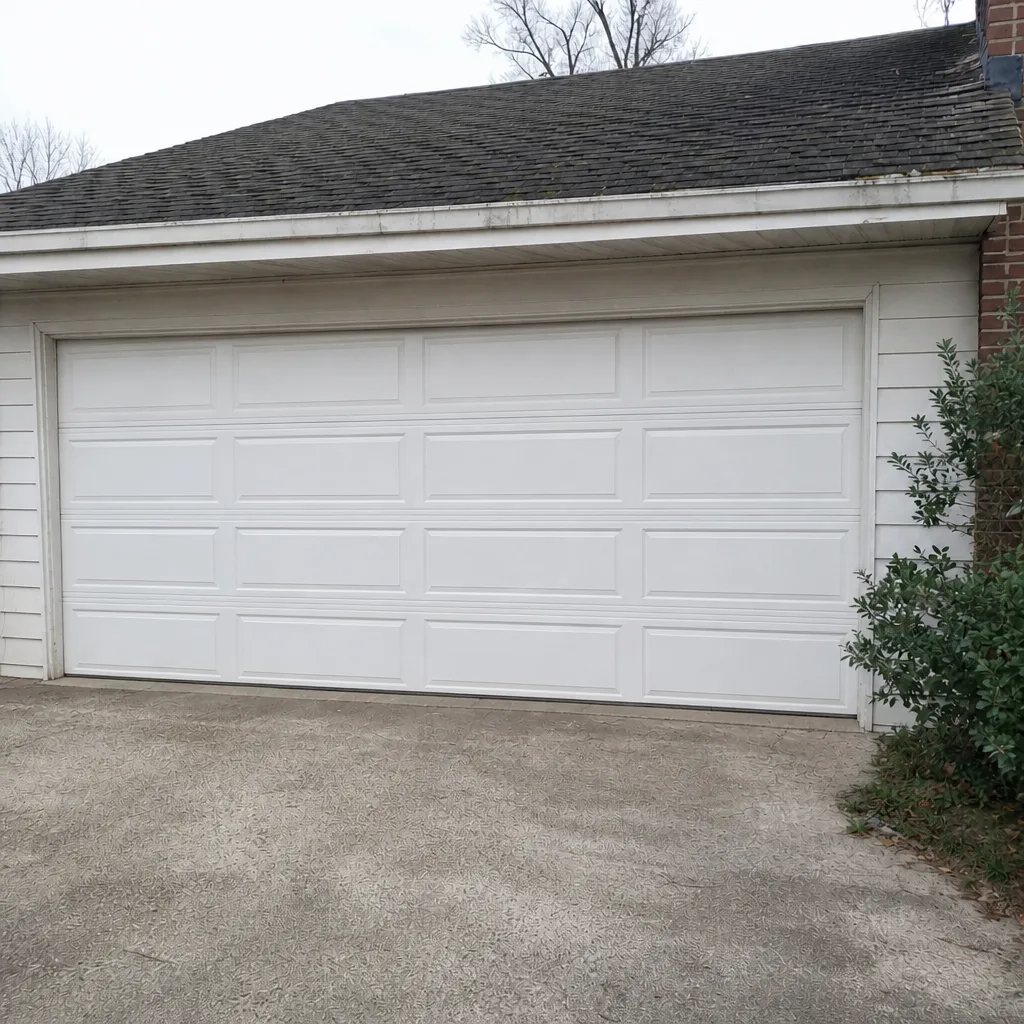 After
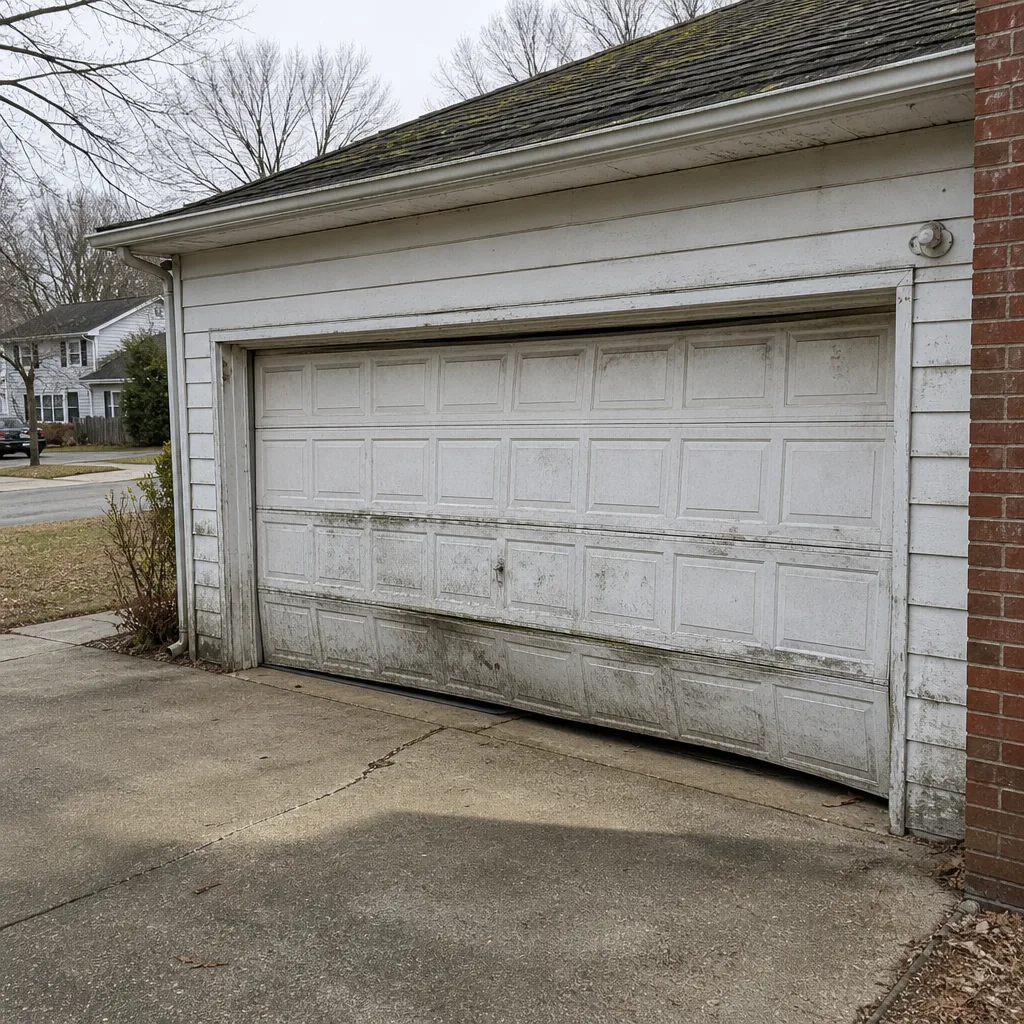 Before
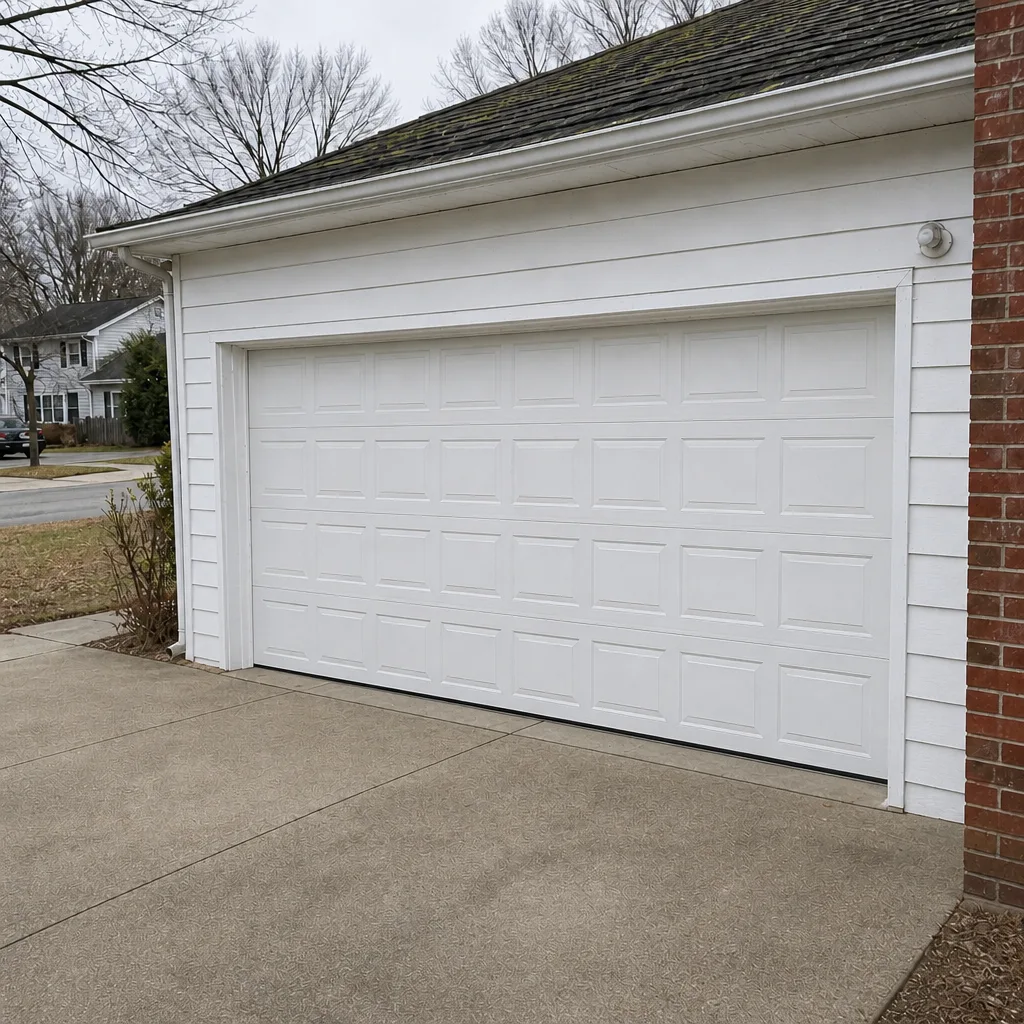 After
When to Call a Professional
Some warning signs are worth a phone call rather than a weekend of guessing. If the door won’t stay open, drops on its own, or feels heavy when you lift it, the springs are the likely cause and that’s not a homeowner job. If the door comes off its track, or a panel is visibly bent after an impact, stop using the opener and call. If the safety sensors won’t stay aligned after cleaning, or the opener reverses the door for no reason, the operator system needs a look. Same for any grinding, popping, or new noise from the opener motor. When in doubt, the balance test and a visual check of springs and cables will usually tell you whether it’s time. Dayspring Garage Door Repair offers free estimates in Hampton, and we answer 24/7 with fast dispatch from 7am to 7pm. Call (866) 942-6044.
Frequently Asked Questions
Lubricate hinges and rollers about every three months, and the torsion bearings twice a year. Hampton’s humidity and warm summers soften lubricant faster than a drier climate, so keeping to a quarterly schedule protects the moving parts before they run dry. Use silicone spray on rollers and hinges, never grease on the tracks.
Silicone spray is the right choice for most of the door, including hinges, rollers, and pivot points, because it’s light and doesn’t collect grit. White lithium grease is heavier and works on some steel hinge and bearing points, but it should never go on plastic rollers or tracks. When in doubt, silicone is the safer pick.
No. Garage door springs and cables are under extreme tension and can cause serious injury if they release unexpectedly. Never attempt to adjust, remove, or replace a spring or cable yourself. Call a professional for any spring or cable work, and keep everyone clear of the door until someone has looked at it.
Close the door with the wall button and pass a broom handle through the beam while it’s coming down. If the door reverses, the sensors are working. If it doesn’t, clean the lenses first, then check alignment. If a sensor LED stays dark no matter how you adjust it, it needs replacement rather than adjustment.
A door that feels heavy when you lift it usually has failing spring tension, which means the springs aren’t carrying the door’s weight anymore. That’s the clearest early sign of a spring problem. Don’t keep testing it, and don’t try to adjust the springs. Call a professional who can check the system safely.
It’s worth an extra look during humid stretches. Warm air softens lubricant so it migrates off moving parts, and humidity works into hinge seams and the bottom bracket where rust starts. A quick monthly check of the hardware and a quarterly lubrication routine keeps the door ahead of the season.
The Bottom Line
A garage door that works every morning isn’t luck. It’s a routine. Lubricate the right parts with the right product, keep the tracks dry and clean, run the balance test regularly, and stay ahead of the humidity that works on Hampton doors year-round. Do the small monthly checks, take the twice-a-year deep look, and leave springs, cables, and opener internals to a technician. If something feels wrong, call rather than wait. Dayspring Garage Door Repair offers free estimates in Hampton, we answer 24/7, and we dispatch from 7am to 7pm, Sunday through Friday. Call (866) 942-6044.
Written by the team at Dayspring Garage Door Repair.