
Last updated November 14, 2026
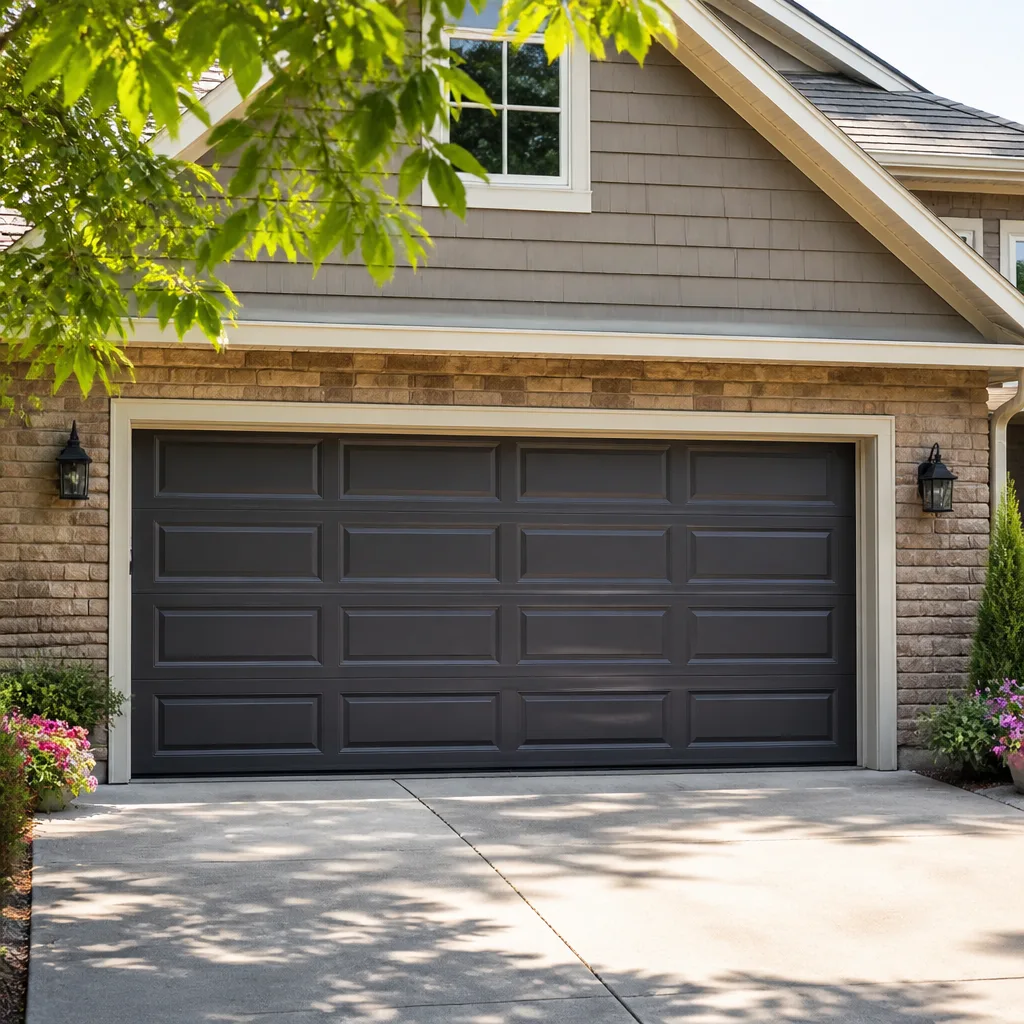 Raised-panel steel
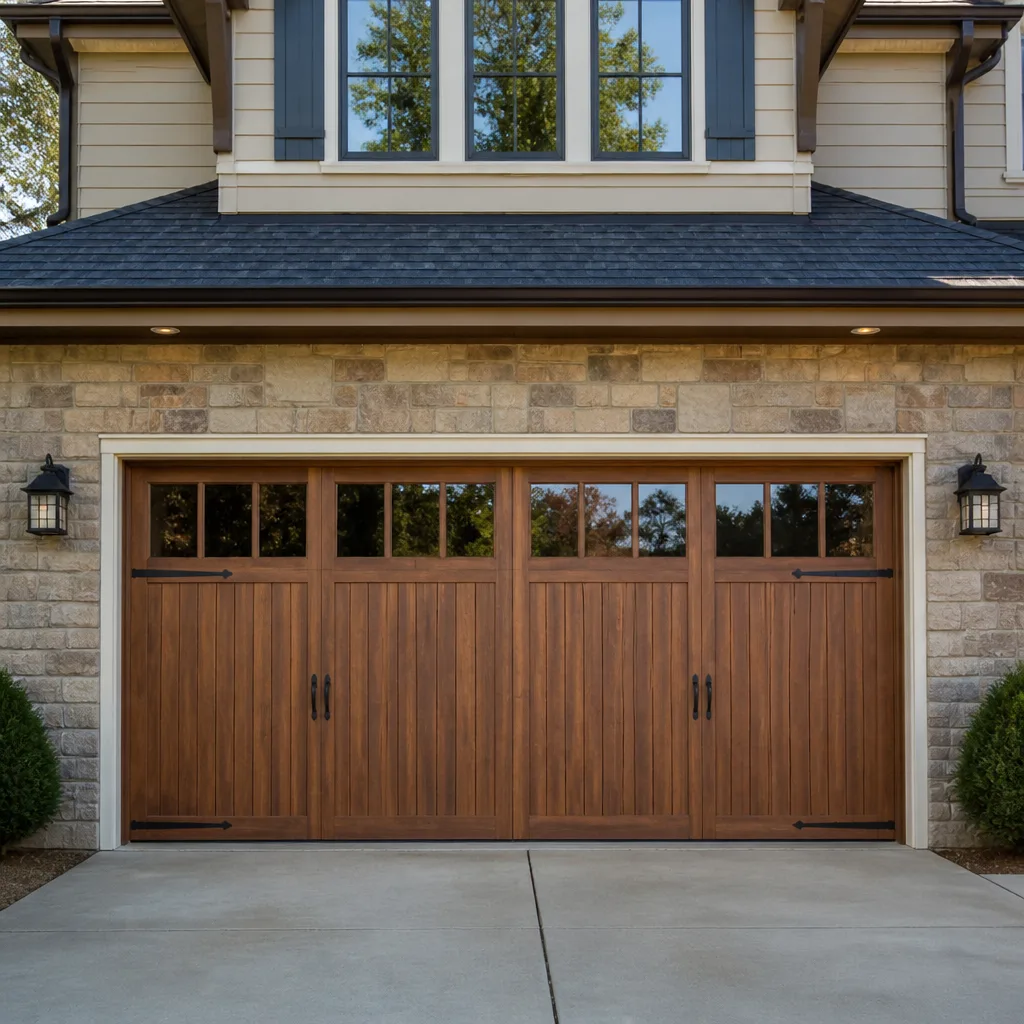 Carriage house
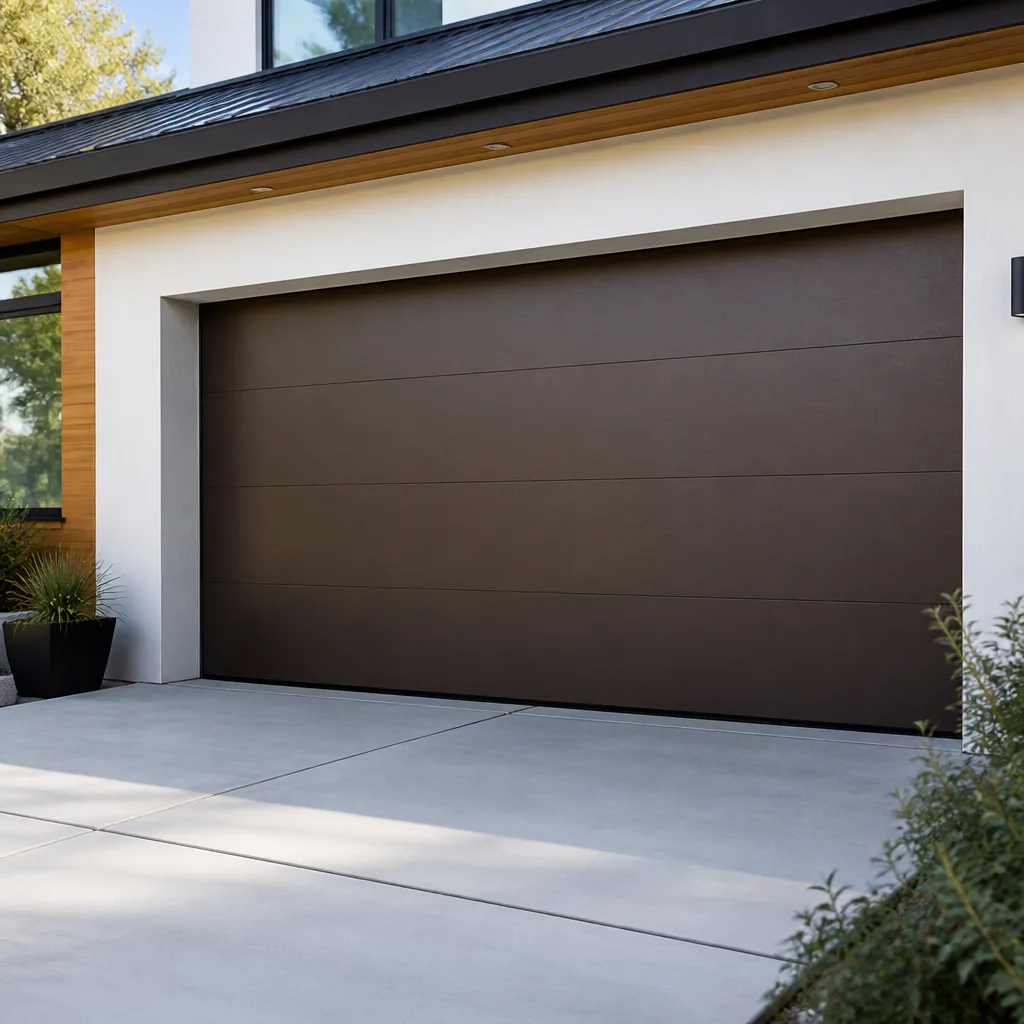 Modern flush
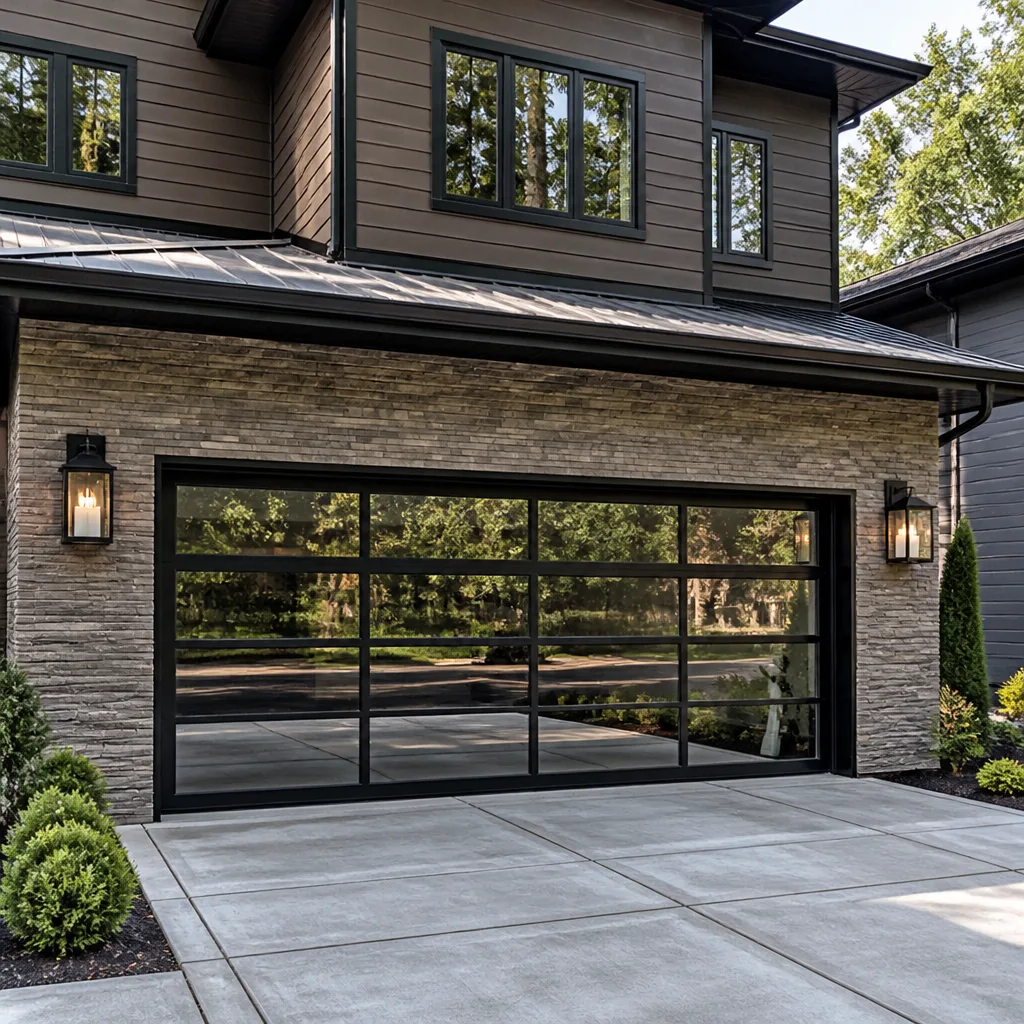 Full-view glass
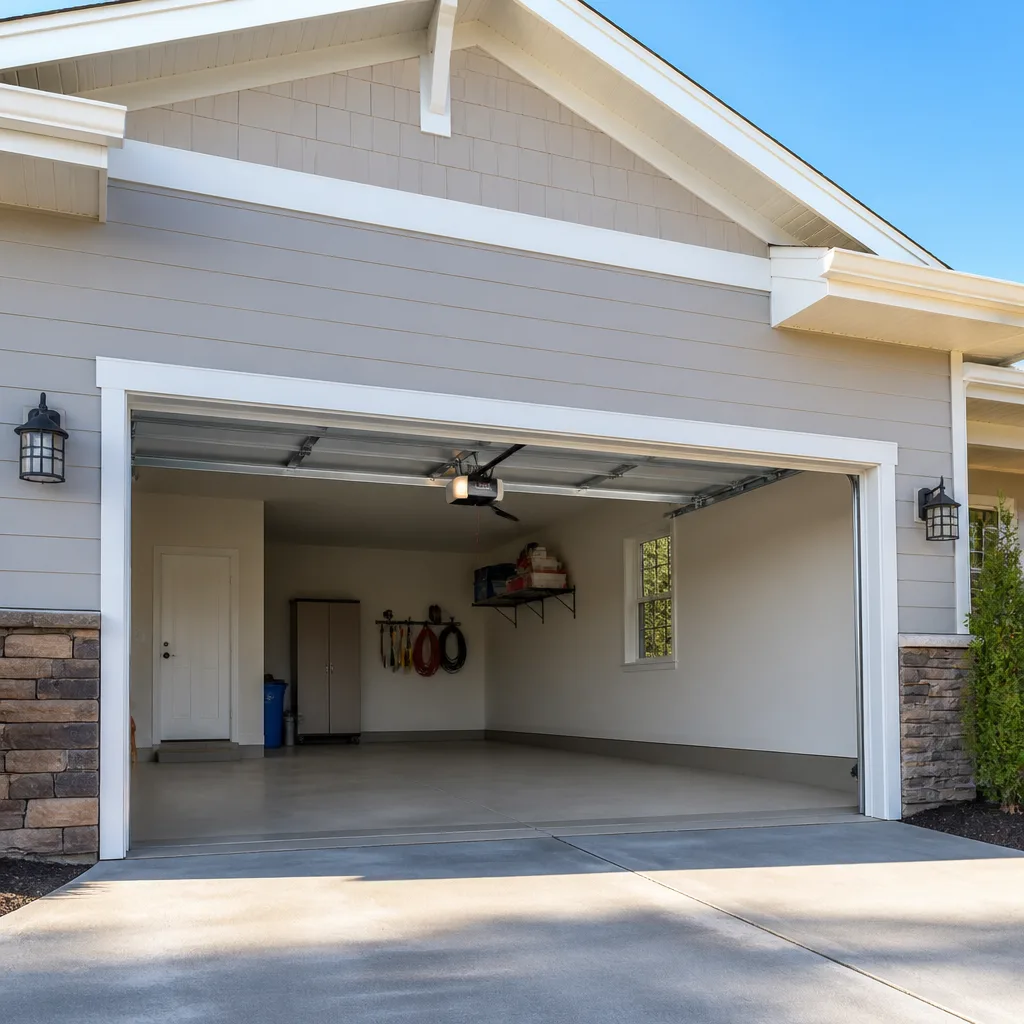 LiftMaster openers
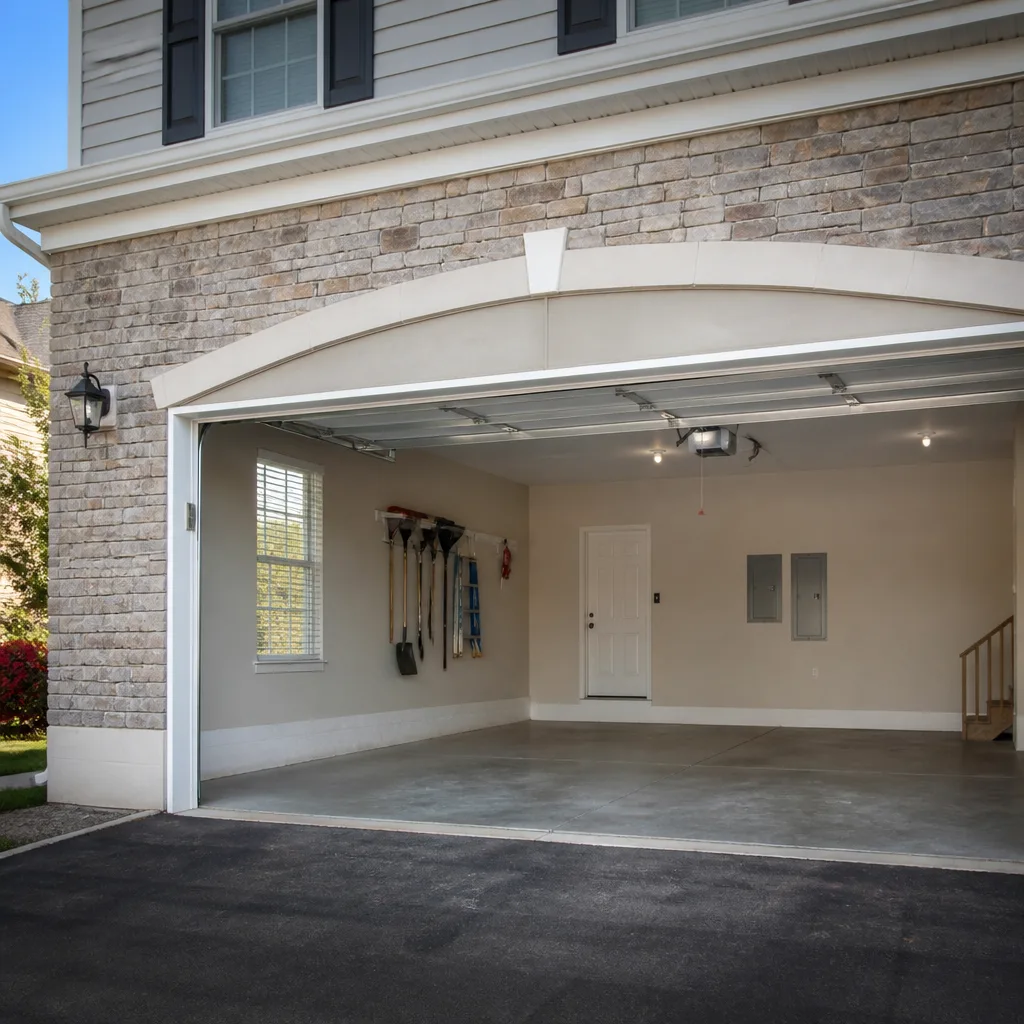 Chamberlain openers
Full 25-point door and opener safety check with every visit - springs, cables, rollers, tracks, and your LiftMaster or Chamberlain opener included
You get a price before we start. It does not change when the pro arrives.
Get your free estimateGarage Door Repair Troubleshooting in Hampton: Common Problems and How to Fix Them
A grinding noise isn’t always the opener. A door that won’t close isn’t always the sensors. That mismatch – the symptom you hear versus the part that’s actually failing – is the single biggest reason Hampton homeowners end up paying for a repair that doesn’t solve the problem, then calling someone else a week later. A garage door is one connected mechanism: springs carry the weight, cables hold the tension, tracks steer the panels, and the opener only supplies the push. When one part drifts out of balance, three other parts start complaining, and the loudest complaint is rarely the guilty one. This guide teaches you to read the door as a whole system – match each symptom to its likely subsystem, understand which checks you can safely handle yourself, and know exactly when to stop and call. By the end you’ll diagnose your door the way our technicians do, not the way a search engine does.
Quick Answer
Most garage door problems in Hampton trace back to four subsystems: springs and cables (balance), tracks and rollers (alignment), the opener (drive and logic), and safety sensors (the close cycle). A slow or heavy door is usually a spring problem, not an opener problem. A loud door is usually a roller or track problem, not a motor problem. You can safely check sensor alignment, lubrication, and limit settings yourself. Spring, cable, and panel-tension work belongs to a trained technician. The trick is matching the symptom to the right system before you touch anything.
Styles & brands we work with
- Raised-panel steel
- Carriage house
- Modern flush
- Full-view glass
- LiftMaster openers
- Chamberlain openers
Table of Contents
- Read the Symptom, Then the System
- The Symptom-to-System Map
- Why Hampton Doors Fail Differently
- What You Can Safely Check vs. What Requires a Technician
- Same Symptom, Different Brand, Different Cause
- The Decision Flowchart: Fix It or Call It
- Opener Symptoms That Masquerade as Door Problems
- Seasonal Troubleshooting for Hampton’s Temperature Swings
Read the Symptom, Then the System
Here’s the counterintuitive part about garage doors: the component that makes the noise is almost never the component that’s broken. A door that shudders on the way up isn’t telling you the door is broken – it’s telling you something’s fighting the door. A door that’s suddenly loud isn’t telling you the opener is dying – it’s telling you friction has crept into the moving parts. Learning to hear the difference is what separates a ten-dollar fix from a four-hundred-dollar one.
Picture the door as four systems stacked on each other:
- Balance system – torsion or extension springs and the cables that carry their tension. This system does the lifting. The opener only guides.
- Alignment system – tracks, hinges, rollers, and the panels themselves. This system keeps the door traveling straight.
- Drive system – the opener motor, belt, chain, or screw, plus the rail. This system pushes and pulls.
- Safety system – the photo-eye sensors, the travel limits, and the force settings. This system decides when the door is allowed to move.
When a door misbehaves, at least two of these systems are usually involved. The visible failure is the downstream complaint; the real failure sits upstream. A door that closes partway and reverses, for example, looks like a sensor problem – and sometimes it is. But it’s just as often a travel-limit problem, or a door binding in the track that trips the force setting. Same symptom, three completely different fixes. That’s why “just replace the sensors” is one of the most common misdiagnoses we see on doors across Hampton.
The practical habit: before you decide what’s wrong, ask whether the door is heavy, crooked, loud, or refusing. Each of those four words points to a different system. Everything else in this guide builds on that one question.
The Symptom-to-System Map
Match your complaint to the left column, then check the likely subsystem on the right. This is the diagnostic table our technicians run in their heads before they open a toolbox. It won’t cover every failure, but it covers the vast majority of what a Hampton homeowner will run into.
- Door is heavy to lift manually, opener strains or stalls → Balance system (springs). The springs have lost tension or broken. Do not keep running the opener against this.
- Loud grinding, squealing, or rattling during travel → Alignment system (rollers, hinges, tracks). Metal-on-metal friction from worn rollers or a dry hinge.
- Door rises crooked, one side lags behind → Balance system (one spring or one cable), or a bent track on one side.
- Door closes partway then reverses → Safety system (photo-eye, travel limit, or force setting), or a door binding in the track.
- Opener runs but door doesn’t move → Drive system (broken belt, stripped gear, or a snapped torsion cable that decoupled the door from the operator).
- Door drifts halfway and stops → Alignment system (something binding the track) or safety system (limit settings).
- Door slams shut instead of easing down → Balance system (spring under-tensioned) combined with a door that’s heavier than the opener can control.
- Remote works sometimes but not always → Drive system (opener logic board, antenna, or battery) – not a door problem at all.
Notice how much of this maps to the balance and alignment systems, not the opener. That’s not an accident. In our experience, most “the opener’s broken” calls turn out to be a door that’s too heavy for a perfectly healthy opener to lift. The opener is doing exactly what it’s designed to do – giving up when the load exceeds its settings – and replacing it won’t fix a thing. Before you price a new motor, confirm the door is actually balanced. Lift it a foot by hand with the opener disconnected (only if you can do so safely) and see if it stays put. If it drops or feels heavy, the problem lives in the springs, not the motor.
Why Hampton Doors Fail Differently
Garage doors don’t wear out on a calendar. They wear out on the conditions around them, and the Hampton Roads climate puts particular strain on a handful of parts. Understanding this helps you guess right the first time, because the failures you see here have a different shape than the ones a dry-climate door sees.
Humidity and its effect on cables and tracks. Hampton summers run humid, and that moisture works its way into every gap on the door. Steel cables – the braided ones that carry spring tension – begin to show surface rust along the strands before the cable actually fails. A rusted cable is a weakened cable, and a weakened cable is a cable that snaps at the worst possible moment. Tracks collect grit and fine debris in the channels; over time, that grit plus a bit of temperature-driven expansion can nudge the track out of true, and the door starts to rub. The most common early-warning signs we see on Hampton doors are frayed cable strands and tracks that are a quarter-inch out of alignment – both easy to miss, both cheap to fix early, expensive to fix after a failure.
Temperature swings and the balance shift. Seasonal temperature change expands and contracts every metal part on the door, including the springs. A spring that’s perfectly tensioned in October can behave noticeably differently in a July heat wave or a January cold snap. This is why a door that “suddenly” started acting up often isn’t a sudden failure at all – it’s a slow tension drift that finally crossed a threshold.
The garage itself. Hampton garages are sealed tight against the weather, which means they trap heat and humidity inside. That’s fine for the car but hard on wooden panels and steel hinges. Panel warp and hinge corrosion are both more common here than in homes with a more open garage. If you’re worried about the overall condition of a door beyond a single symptom, our garage door repair service includes a full system check, not just the part that’s making noise.
Neighborhood specifics. Doors in older neighborhoods closer to downtown Hampton see more panel-level wear – paint failure, panel warp, hinge sag – because those doors have been exposed to more seasonal cycles. Newer construction on the north side of the city shows more opener and sensor issues, because the doors themselves are younger but the electronics have picked up fine dust and the occasional spider nest in the sensor housing. Neither pattern is universal, but it’s a useful starting point when troubleshooting.
What You Can Safely Check vs. What Requires a Technician
This is the part where we hold the safety line. Some garage door checks are perfectly safe for a homeowner with a ladder and a few minutes. Others can put you in the hospital, and no troubleshooting guide is worth that. Here’s the clean split.
Safe to check yourself:
- Photo-eye sensor alignment – wipe the lenses, confirm nothing is in the beam path, wiggle each sensor to make sure the mount is tight.
- Lubrication – a light spray on hinges, rollers, and the bearing plates, not the tracks themselves.
- Travel-limit adjustment on your opener – a small screw setting, done from the ground with the door stationary.
- Remote and keypad battery replacement, and re-pairing a remote.
- Visual inspection of the door from the ground – checking for bent panels, worn rollers, or obvious track damage.
Requires a trained technician – do not attempt:
- Spring replacement, in any form. Torsion springs are under enormous stored energy and can injure severely if released uncontrolled.
- Cable repair or replacement. The cables carry the same tension as the springs.
- Track realignment if a track is bent, kinked, or has been displaced by a vehicle impact.
- Any work that requires unbolting a hinge or removing a panel while the door is under spring tension.
- Panel replacement on a door that’s been knocked off track.
The line between these two lists is simple: if the work involves stored spring tension, it’s not a homeowner job. Our technicians have up to 11 years of experience with exactly this equipment, and the reason we’re careful about the line is that a garage door injury is a serious one. Any work that requires you to be under or beside a loaded spring is work that gets a professional.
Same Symptom, Different Brand, Different Cause
Here’s a problem most troubleshooting guides skip: two doors can show the exact same symptom and the actual fix lives in completely different places, depending on the brand of the door and the brand of the opener. A door panel is a physical object, but the opener driving it is a small computer with brand-specific logic. Learning to pair the right question with the right brand saves a lot of wasted time.
Take the classic symptom: the door reverses immediately after touching the floor. On a LiftMaster or Chamberlain unit, this most often traces to the travel-limit setting – the opener thinks the floor is slightly higher than it actually is, and the force setting trips on contact. The symptom looks like a sensor failure but the fix is a limit adjustment. On a Genie unit, the same symptom is more commonly a safety-reverse test fault or a force-setting drift after a spring tension change. On a Craftsman opener, it’s frequently the wall-control logic board sending a false “close” signal after a power interruption.
Same complaint, three different subsystems. That’s why brand familiarity matters so much for a fast diagnosis. We service LiftMaster, Chamberlain, Genie, Clopay, Amarr, Wayne Dalton, Craftsman, and Raynor systems – which means whether your door is a Clopay panel with a Genie opener or an Amarr door with a Chamberlain operator, we’re diagnosing the actual system in front of us, not a generic stand-in. The advantage isn’t just speed. It’s accuracy. A technician who only knows one brand will sometimes “fix” a symptom by replacing a part that’s working fine, because the actual fault lives in a subsystem they don’t know well.
A quick practical note: before calling, find the label on your opener (usually on the back or side of the motor housing) and note the brand and model number. Also check the door’s hinge plates or bottom bracket for a manufacturer stamp. That two-minute step tells whoever answers exactly what they’re dealing with, and it narrows the diagnosis before anyone touches the door.
The Decision Flowchart: Fix It or Call It
Run through this in order. It ends in either a specific safe fix you can do yourself, or a clear “stop and call” – no vague “consult a professional” dead ends. Print it, screenshot it, whatever’s easiest.
- Is the door balanced? Disconnect the opener, lift the door by hand to about waist height, and let go. If it stays, the balance is fine – go to step 2. If it drops, feels heavy, or won’t stay up, stop here. The spring system needs a technician. Do not keep running the opener.
- Does the door move straight in the tracks? Watch the door travel up and down. If one side lags, or if the door visibly shifts side to side, stop here. Alignment issue – track, roller, or cable. Technician.
- Is anything obstructing the sensors? Check for debris, cobwebs, or a misaligned sensor. Clean and re-align. If the door now closes, you’re done.
- Does the door reverse only at the very bottom? Adjustment issue. Check the opener’s travel-limit screw (brand-specific) and adjust by a small amount. If a small adjustment doesn’t fix it, go to step 6.
- Does the opener run but the door doesn’t move? Check the drive belt or chain for a snap, and check for a broken torsion cable at the corners. If either is broken, technician.
- Is the door just loud? Lubricate the hinges and rollers, then re-test. If the noise persists beyond a slight improvement, technician – the wearing part is deeper than surface lubrication will reach.
- Does the remote fail only sometimes? Replace the battery and re-pair. If it’s still intermittent, it’s the opener logic, not the door – call for opener work.
If you’ve reached a “call” answer and you’re not sure whether the problem is the door or the opener, tell whoever you speak to both symptoms. We diagnose the whole system in one visit, so you’re not paying for two separate trips to chase two guesses – whether it’s the door, the opener, or both. If your issue is specifically the motor, remote, keypad, or safety sensors, our garage door opener repair service is built for exactly that.
Opener Symptoms That Masquerade as Door Problems
Half the calls we get about “a broken door” are actually a perfectly healthy door with an opener problem – or the other way around. Learning to tell the two apart on your own saves a diagnosis call and often a lot of worry. The question to ask: is the door the thing that’s broken, or is the opener failing to do its job?
Door-side symptoms (the door is at fault). The door sags, sticks, or drags even when you lift it by hand. Rollers squeal. The door doesn’t sit level at the bottom. Tracks visibly bend or rub against the rollers. These point to physical wear on the door, and the opener is fine – it’s just reporting the problem.
Opener-side symptoms (the opener is at fault). The door lifts fine by hand when disconnected, but the opener grinds, clicks, or won’t start. The remote works inconsistently. The keypad stopped responding. The opener light stays on without explanation. The drive belt or chain is visibly loose or broken. The opener reverses the door when nothing is in the way, and the travel limits look correct. These point to the electronics and drive, and no amount of door lubrication will fix them.
Both-side symptoms (the door and the opener are talking past each other). A door that lifts fine by hand but reverses mid-travel. A door that binds on the way up, causing the opener to hit its force limit and stop. These are the most common overlap cases, and they’re exactly the ones that reward a full-system check rather than a single-part replacement.
One detail worth flagging: smart-home integration. Many newer openers connect to apps or voice assistants, and when a home network changes, the opener can start behaving erratically – not because anything’s broken, but because the app-driven settings drifted or a firmware update changed the behavior. Keeping the manufacturer’s app updated, and re-pairing after any router change, resolves a surprising share of “the opener stopped working” complaints before any repair is needed. If the app connection isn’t the issue and the door still misbehaves, that’s a signal to have the operator system itself looked at, not just the remote.
Seasonal Troubleshooting for Hampton’s Temperature Swings
Garage doors don’t fail at the same rate in July as they do in January, and the reason is temperature. Metal expands in the heat and contracts in the cold, and every moving part on the door rides along with that expansion and contraction. If you check the door at one extreme and it’s fine, but it acts up three months later, don’t assume it “came back” – it never fully left, it just went quiet.
In the heat. Steel panels expand, springs lose a fraction of their tension, and tracks can bow slightly. A door that hangs up in the summer is usually a track that’s drifted out of true against an expanded panel. Lubrication dries out faster in high heat, so a door that starts to squeal in August often just needs a spray of lubricant on the hinges and rollers.
In the cold. Metals contract, springs stiffen, and the opener has to work slightly harder to move the door. Cold weather is when worn springs finally give out, and it’s also when a marginal safety-reverse setting trips more often because the door is meeting more resistance from the cold track. If the door reverses in cold weather but works fine in warmer weather, don’t dismiss it. That’s the opener telling you the force setting needs a look.
The transition months. Fall and spring – when temperatures swing twenty degrees in a day – are when alignment problems become visible. A door that shows one side lagging in early November is showing you a track or roller problem that was already starting to happen. That’s the best time to fix it, before it becomes a spring failure or a bent panel. A door that works every morning is the goal, and doing a quick visual check and lubrication pass at each season change is the cheapest way to stay there.
If you’re in a Hampton neighborhood and your door shows any of these seasonal signals, have someone look at it before the season tightens. The difference between a roller replacement in October and a spring replacement in January is usually just the temperature at which the symptom finally got loud enough to notice.
Common Mistakes to Avoid
- Replacing the opener when the door is heavy. If the door won’t lift by hand, the opener isn’t the problem – the springs are. New motors burn out fast against a door they can’t balance.
- Spraying lubricant in the tracks. Tracks are meant to be clean and dry; lubricant in the channel attracts grit and causes the door to slip. Grease the hinges and rollers, not the track.
- Assuming “won’t close” means bad sensors. In Hampton, we see this most often from a travel-limit or force-setting drift, especially after a spring change. Cleaning the sensors is step one; don’t stand there for an hour if the door still reverses cleanly.
- Adjusting a spring by eye to “level” the door. This is the single most dangerous shortcut on this list. Torsion springs store serious energy, and a door under-tensioned on one side can fail in ways that cause real injury.
- Ignoring a slightly frayed cable. Rust and fray on Hampton-area cables is a warning, not a cosmetic issue. A cable that strands visibly is a cable that’s about to snap.
- Treating an intermittent remote as a door problem. Battery, antenna, and logic-board issues live in the opener – not the door – and replacing a panel won’t fix them.
- Calling for a diagnosis you can do yourself. Sensor alignment, limit-screw adjustments, and lubrication are all safe homeowner checks. Save the call for the moment the flowchart points to spring, cable, or track work.
See the difference
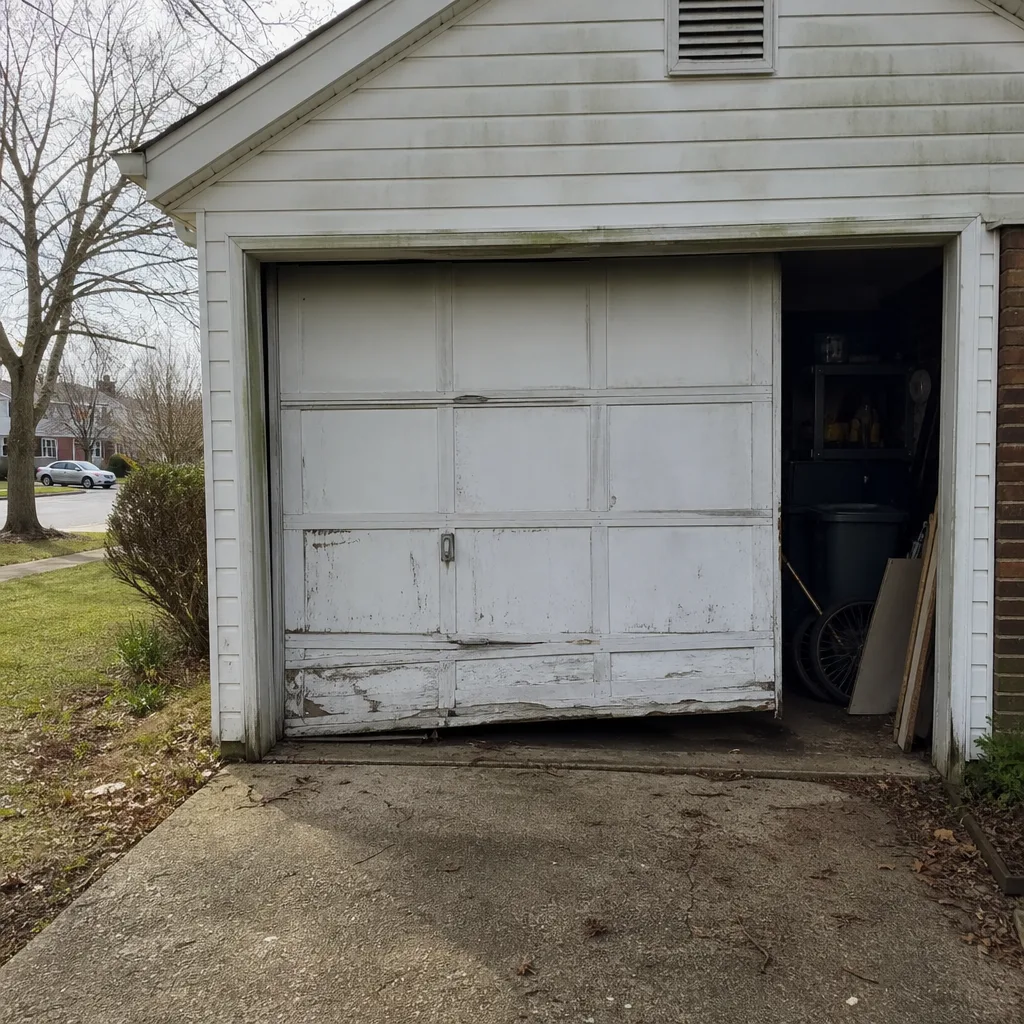 Before
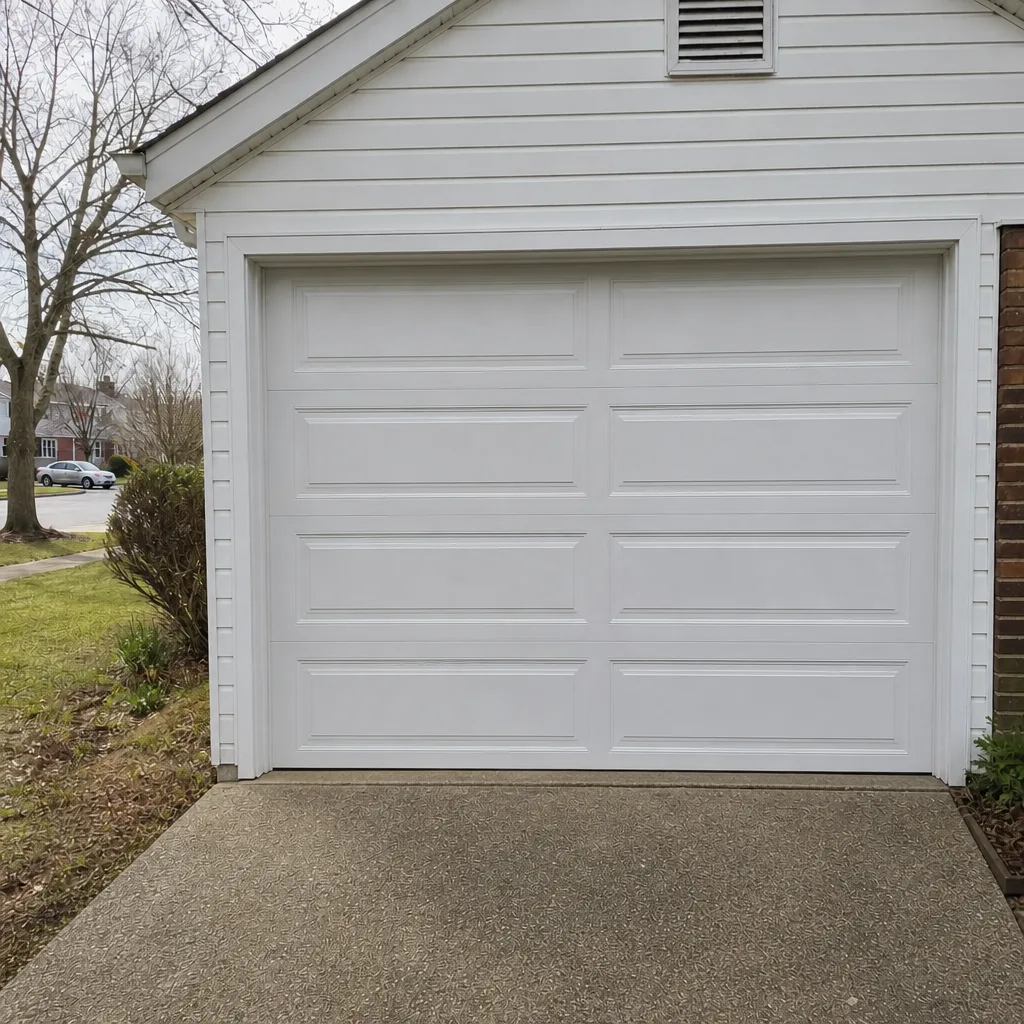 After
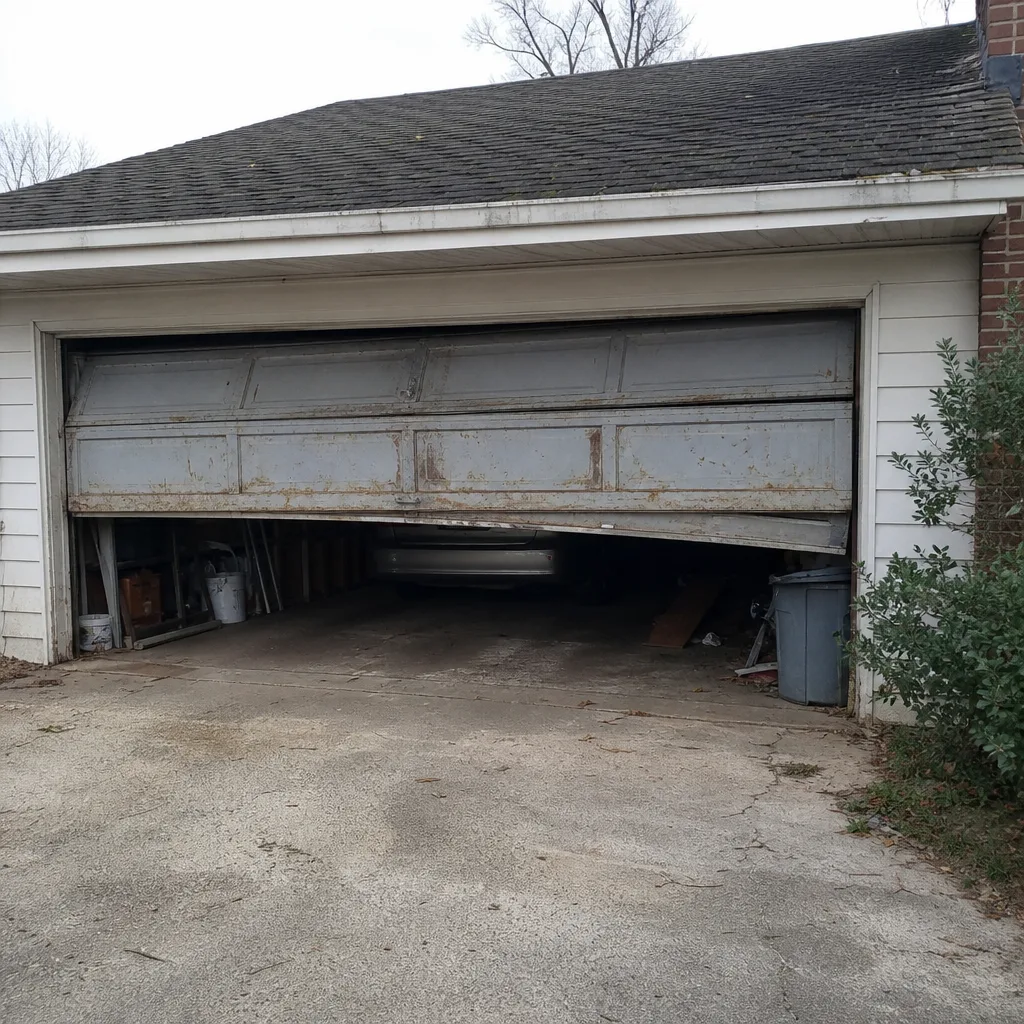 Before
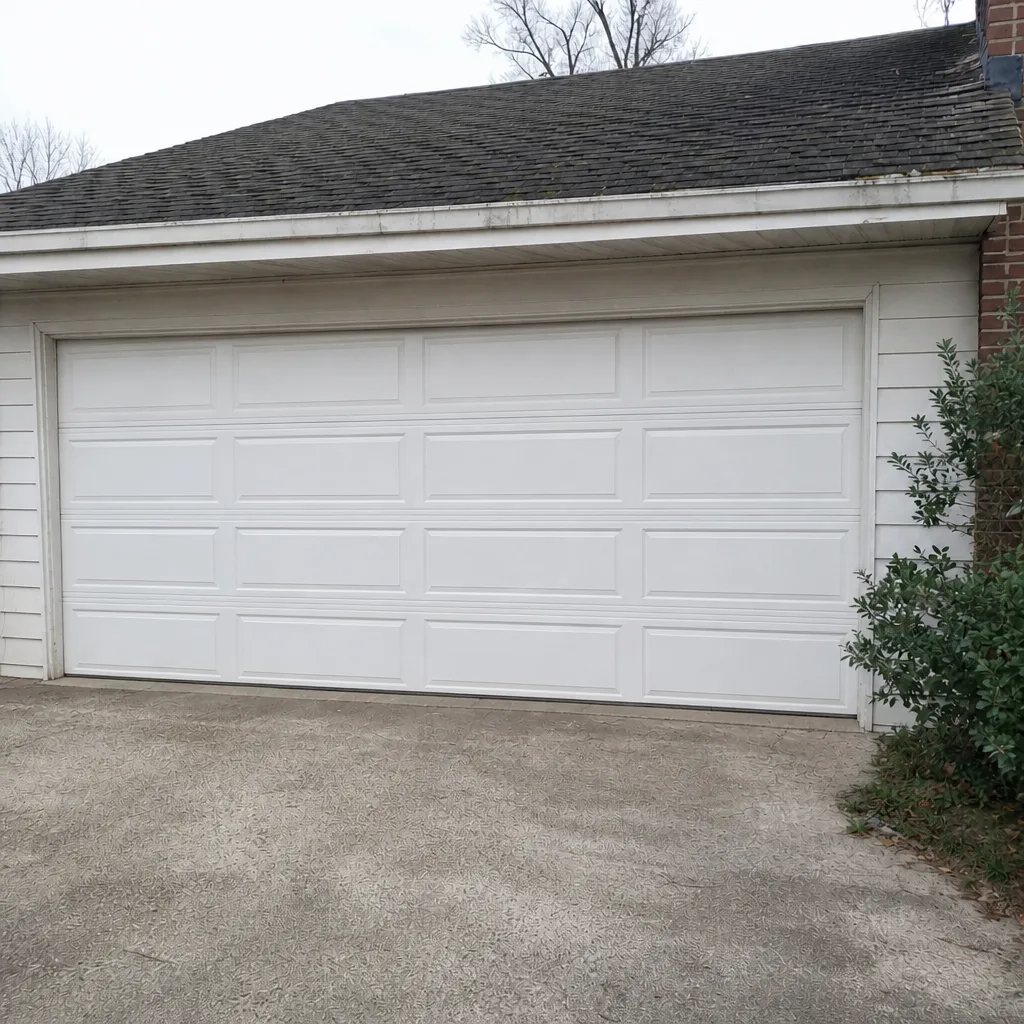 After
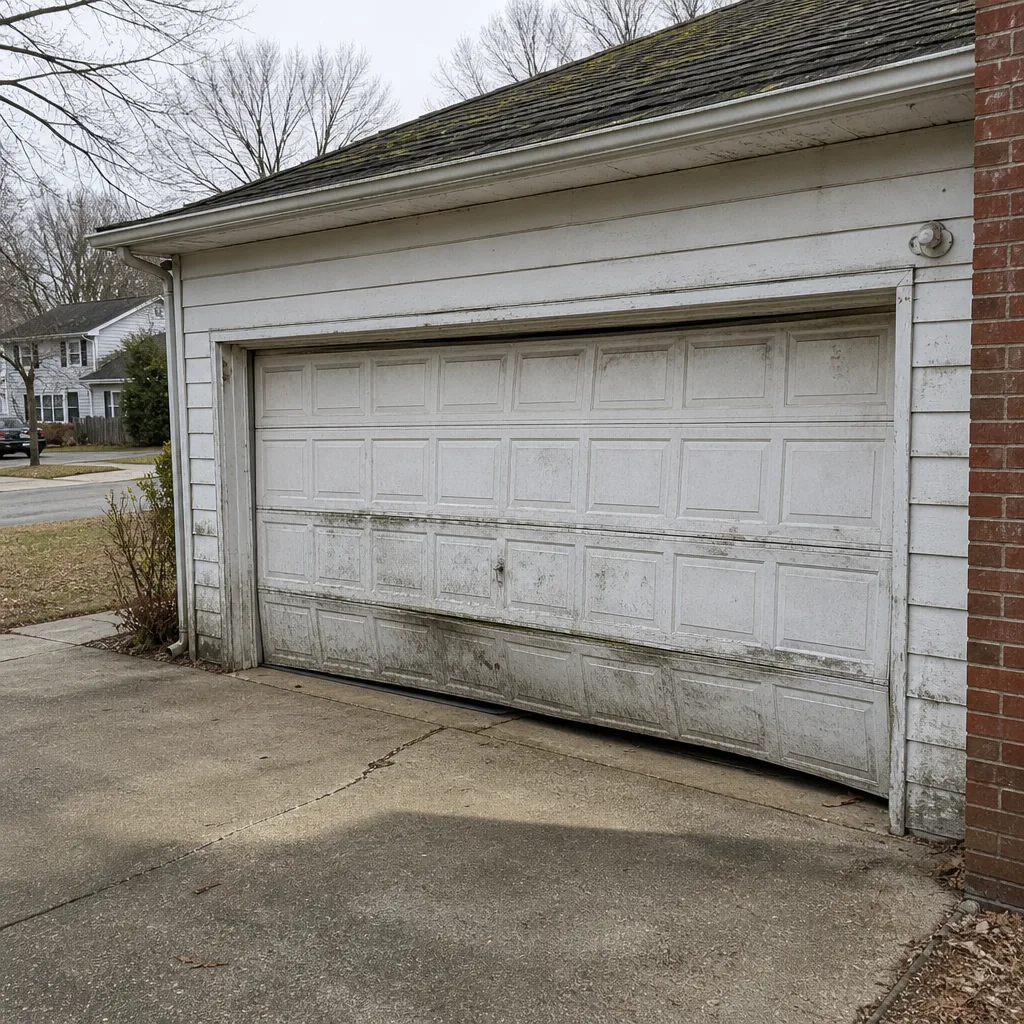 Before
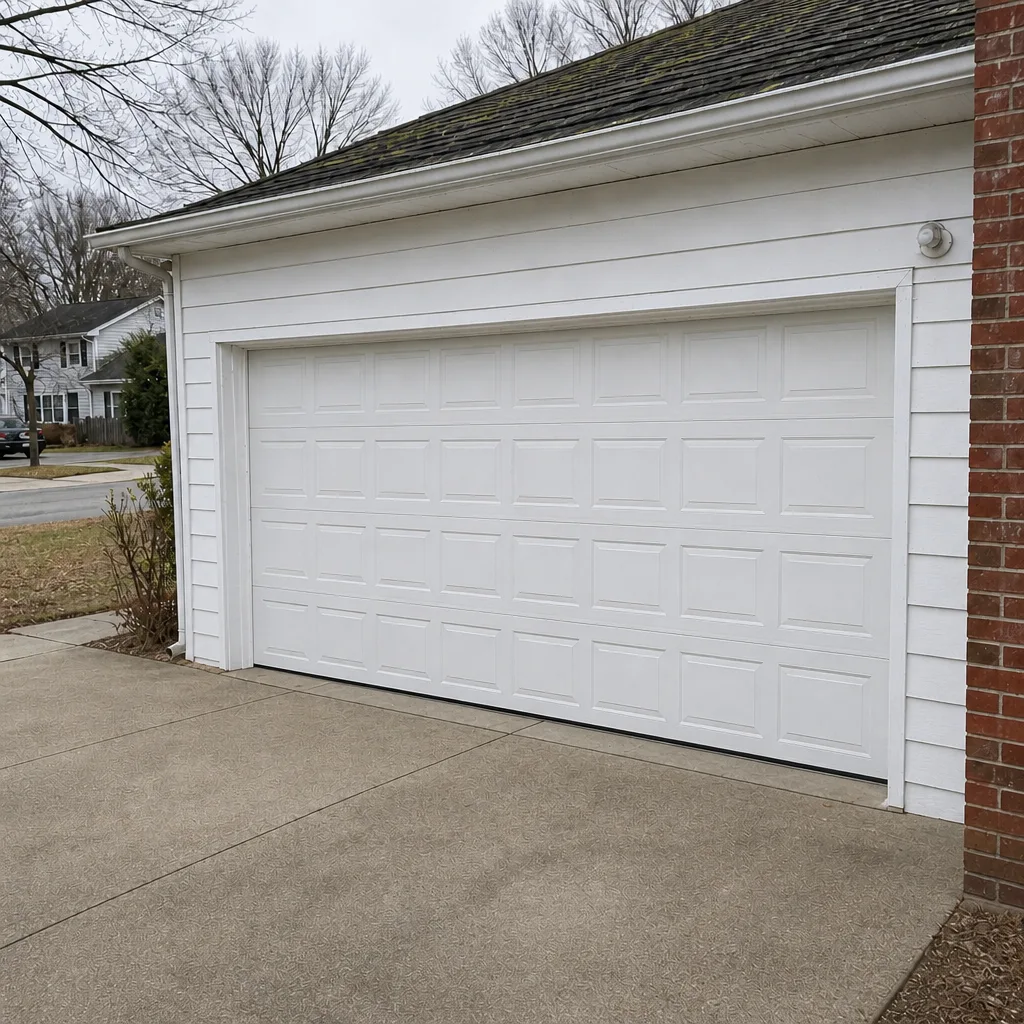 After
When to Call a Professional
Some symptoms are worth a professional call even if you think you can wait. Call us if your door won’t stay up when lifted by hand, if a spring has visibly broken or a cable has snapped, if the door has been knocked off track by a vehicle, if the door reverses or slams without an obvious cause, or if a repair you’ve already tried hasn’t solved the problem. Those are the cases where a wrong guess costs more than the visit. Dayspring Garage Door Repair offers free estimates in Hampton – call (866) 942-6044. We answer 24/7, we dispatch fast from 7am to 7pm Sunday through Friday, and every price is quoted and agreed before any work starts. If you’ve already run the flowchart and reached a “call” step, mention what you found – it saves a visit and gets you to the right fix faster.
Frequently Asked Questions
Disconnect the opener and lift the door by hand to about waist height. If the door is heavy, drops, or won’t stay put, the problem is the springs – not the opener. If it lifts and stays easily but the opener still struggles, the fault is in the opener’s drive or settings. This one test separates the two most common culprits before you spend a dime.
On most doors, this traces to a travel-limit or force-setting drift rather than a sensor failure. Hampton’s seasonal temperature swings expand and contract the door and track enough to shift a limit setting by a fraction, and the opener reads the result as an obstruction. If sensors are clean and aligned, the next step is a limit adjustment – and if the door still reverses after a small adjustment, it’s time to call (866) 942-6044 for a proper check.
No. Garage door springs – especially torsion springs – store enough energy to cause serious injury if released uncontrolled. This is not a homeowner repair, and no online guide changes that. Spring replacement belongs to a trained technician. Our technicians have up to 11 years of experience with this exact equipment, and the reason we’re firm on this point is that spring injuries are genuinely serious.
Loud operation almost always means friction has crept into the alignment system – worn rollers, dry hinges, or a track that’s picked up grit. Lubricate the hinges and rollers first (not the tracks) and re-test. If the noise persists beyond a small improvement, the wearing parts are deeper than surface lubrication will reach, and it’s worth a professional look before the friction damages a hinge or a panel.
Yes, more than most homeowners expect. The same symptom on a LiftMaster, a Genie, and a Craftsman can trace to three different subsystems, and a technician who knows one brand will sometimes replace a part that wasn’t the problem. We service LiftMaster, Chamberlain, Genie, Clopay, Amarr, Wayne Dalton, Craftsman, and Raynor systems, so the diagnosis starts from the actual equipment in front of us.
If the door is physically heavy, crooked, or noisy, the door is at fault. If the door lifts fine by hand but the opener grinds, clicks, or won’t start, the opener is at fault. If the door lifts fine by hand but reverses mid-travel or binds partway, both systems are talking past each other, and that’s when a full-system check makes sense. Call (866) 942-6044 and describe both symptoms – it helps the diagnosis go faster.
The Bottom Line
Most garage door problems in Hampton are misdiagnosed because homeowners chase the loudest symptom instead of the failing system. The fix is simple in practice: read the door as four systems – balance, alignment, drive, safety – and match your symptom to the right one before you spend anything. Heavy doors point to springs; crooked doors point to tracks and cables; loud doors point to rollers; and doors that refuse to close usually point to the safety system or the limits. You can safely handle sensor alignment, lubrication, and limit adjustments. Everything involving springs, cables, or a bent track is a technician’s job. When the diagnosis points to a professional, call Dayspring Garage Door Repair at (866) 942-6044 for a free estimate. We answer 24/7, with fast dispatch from 7am to 7pm, Sunday through Friday, and every price quoted before any work begins. That’s the difference between a door that works this week and a door that works every morning.
Written by the team at Dayspring Garage Door Repair.