
Last updated November 14, 2026
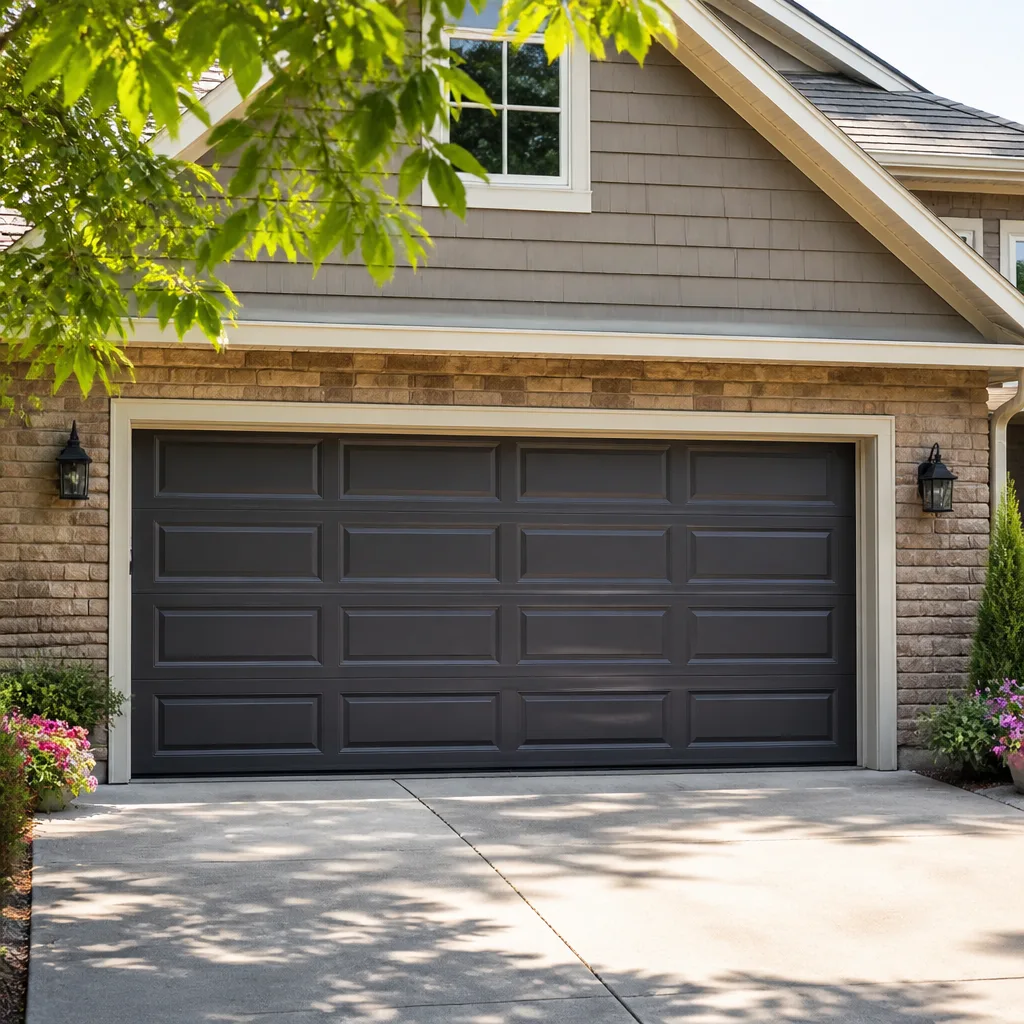 Raised-panel steel
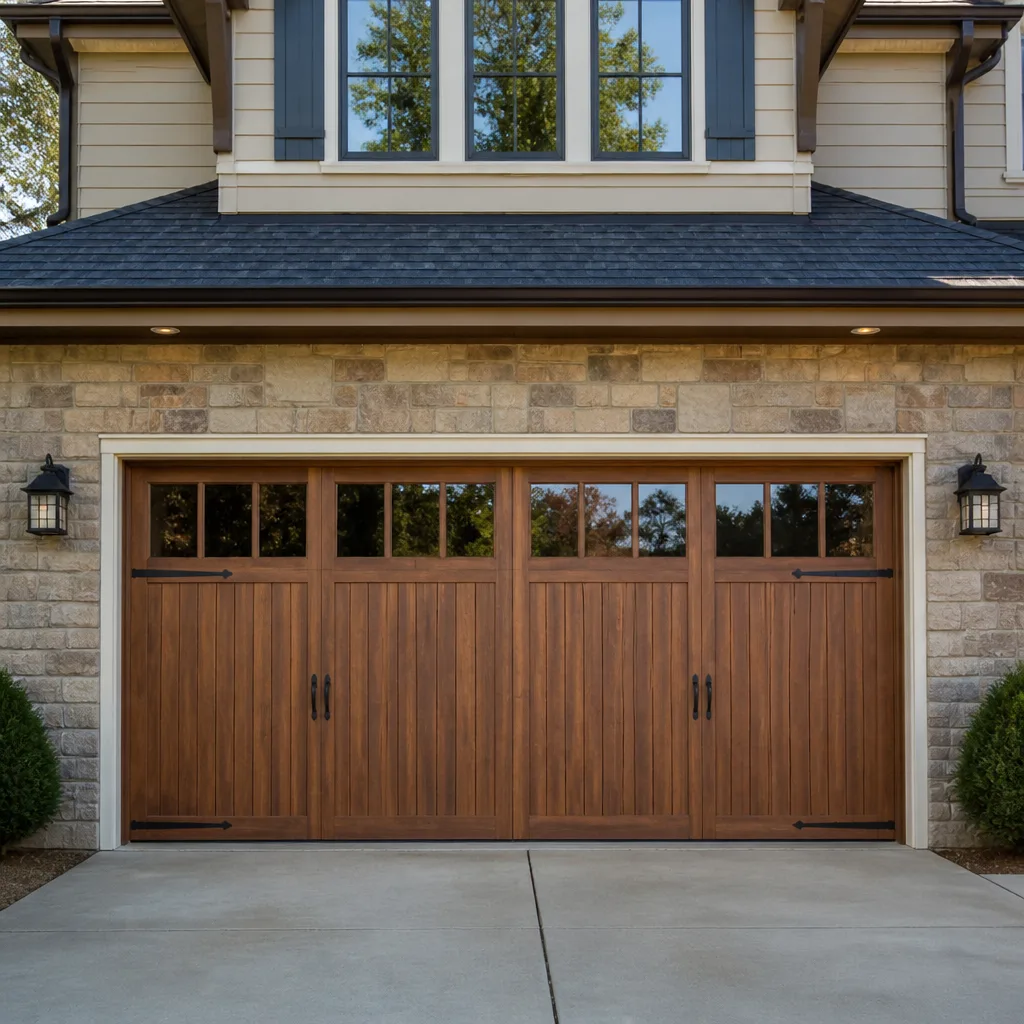 Carriage house
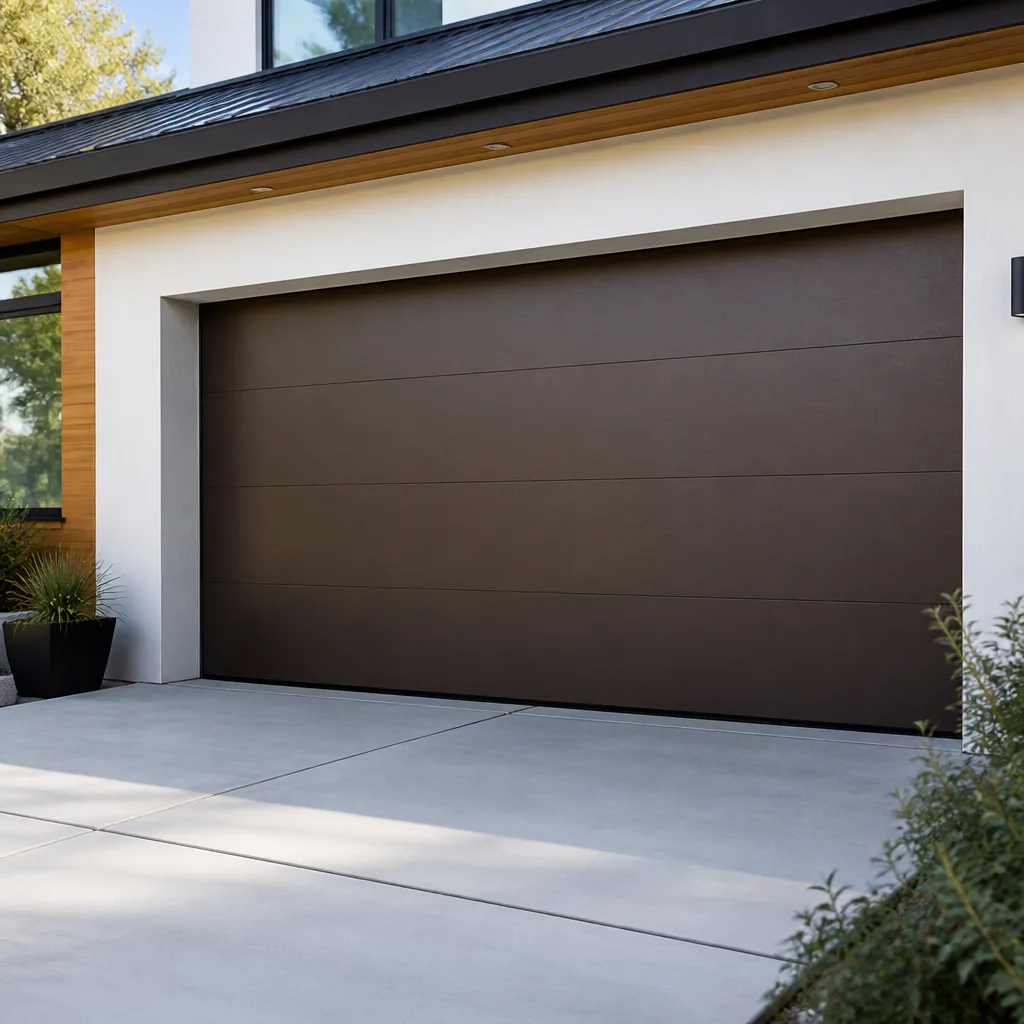 Modern flush
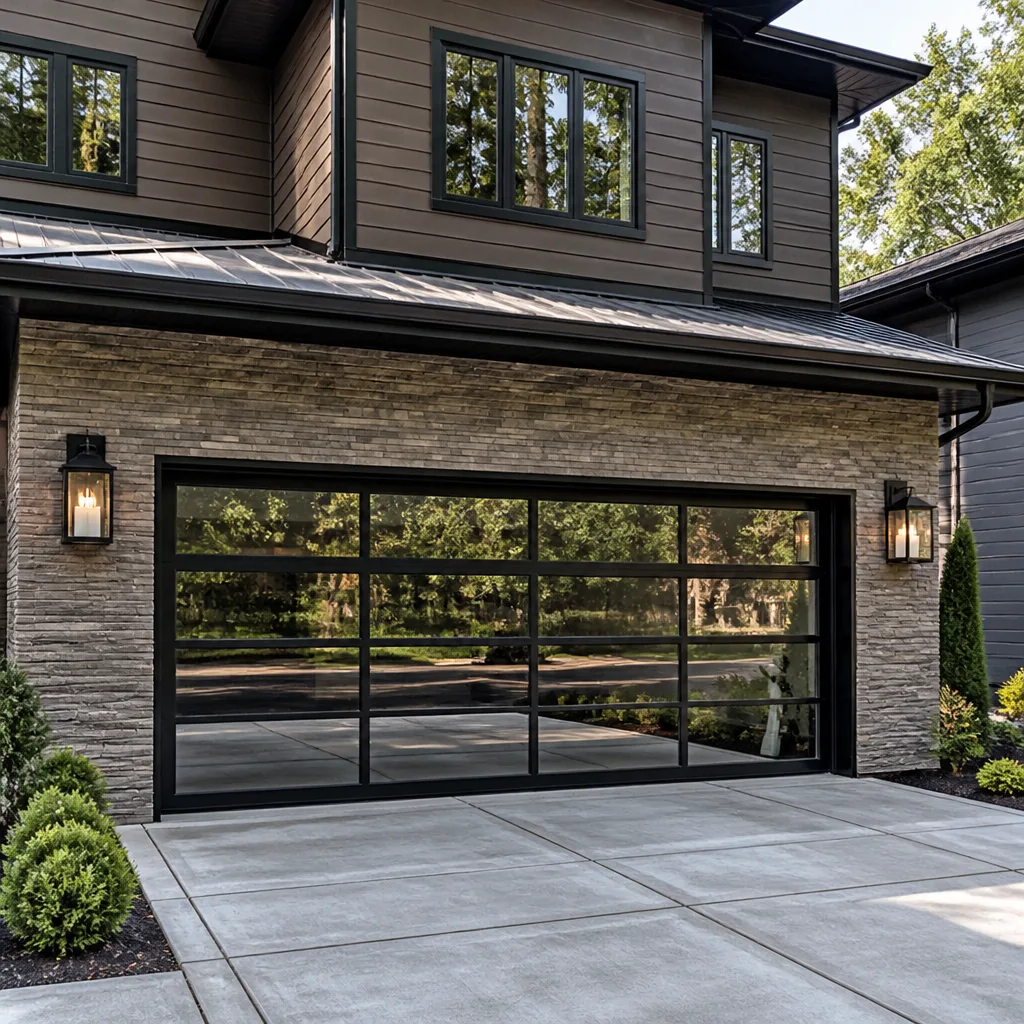 Full-view glass
 LiftMaster openers
 Chamberlain openers
Full 25-point door and opener safety check with every visit - springs, cables, rollers, tracks, and your LiftMaster or Chamberlain opener included
You get a price before we start. It does not change when the pro arrives.
Get your free estimateGarage Door Warning Signs: A Hampton Homeowner’s Reference Guide
Most garage door warning-sign lists tell you the obvious things: the door won’t open, the spring snapped, the opener hums but nothing moves. By the time those show up, you’re not reading a guide, you’re waiting on a repair. The signals that actually save homeowners money are the quiet ones – the half-second hesitation before the door lifts, a faint pop on the way down, a streak of orange on the door face that wasn’t there in spring. We’ve spent a lot of mornings in Hampton diagnosing exactly these, and this reference guide walks through what each subtle symptom points to mechanically, which ones you can check safely from the ground, and which ones mean it’s time for a pro.
Quick Answer
The subtle garage door warning signs worth acting on are: a brief hesitation or stutter before the door moves, popping or scraping sounds that repeat at the same point of travel, opener lights that flash instead of staying lit, a door that reverses on its own, visible gaps or daylight at the bottom corners, and orange rust streaks on the door face below the hardware. Each points to a specific component – a failing motor capacitor, a torsion spring losing tension, worn rollers, or corroded hinges and bearings – and catching them early is almost always cheaper than waiting for the breakdown.
Styles & brands we work with
- Raised-panel steel
- Carriage house
- Modern flush
- Full-view glass
- LiftMaster openers
- Chamberlain openers
Table of Contents
- Why a Half-Second Hesitation Matters More Than You Think
- Decoding the Sounds: Scraping, Popping, and Grinding
- Visual Signs of Spring Wear You Can Check From the Ground
- How Hampton Humidity Shows Up in Your Door
- Opener Behavior That Warns You Before It Fails
- The Two Safety Tests Every Homeowner Should Run Monthly
- Panel, Track, and Hardware Signs of Wear
- When It’s a DIY Look and When It’s a Call
Why a Half-Second Hesitation Matters More Than You Think
A garage door that pauses before it moves isn’t just getting old. That lag is one of the clearest early indicators of a failing motor capacitor or a torsion spring that’s lost tension, and both tend to fail on a predictable timeline once the hesitation starts showing up reliably.
Here’s what’s mechanically happening. The opener motor uses a capacitor to give it the jolt of starting current it needs to get a heavy door moving. Capacitors degrade over time – they don’t fail all at once. As the capacitor weakens, the motor takes a beat longer to spin up, and you see that as a stutter or a half-second delay between pressing the button and the door starting to lift. A torsion spring works differently but produces a similar symptom: as the spring winds down, it delivers less counterbalance to the door’s weight, so the opener has to work harder to get moving, and that extra effort reads as hesitation.
The reason this matters so much is timing. A capacitor failing is a small, straightforward opener repair. A torsion spring that’s been slowly fatiguing is a step away from snapping – and a snapped spring is not a small repair, and it also takes the door out of service entirely. Homeowners in Hampton who call when they first notice the hesitation tend to end up with a simpler, less expensive job than the ones who wait for the bang.
What Else Can Cause a Hestitation
- Binding rollers or hinges – the door fights its own track and moves in stops and starts.
- A misaligned track – a slight pinch at one section makes the door drag before it travels freely.
- Low opener battery in the remote – though this usually affects the button press, not the door’s movement.
- Cold, stiff grease on the rollers and hinges on a cool Hampton morning.
If the hesitation is consistent – every single open, same spot – it’s mechanical rather than a battery issue. That’s the version a technician should look at. It’s also the kind of diagnosis where full-system knowledge matters, since the door, the springs, and the opener are all suspects at once.
Decoding the Sounds: Scraping, Popping, and Grinding
Every garage door makes noise, and some of that noise is normal. The trick is knowing which sounds are just the mechanism working and which ones trace back to a specific worn component. Here’s how we categorize them.
Normal Operational Sound
A healthy door produces a steady, low mechanical hum from the opener and a smooth rolling sound as the rollers travel the track. It shouldn’t be silent, and it shouldn’t rattle. If your door has always sounded the same way and still does, that’s usually fine.
Metal Scraping
Scraping that repeats at the same point of travel almost always traces to a roller, hinge, or section of door rubbing against the track. In Hampton, where humidity swings through the year, this often starts with a corroded hinge or a roller that’s lost its lubrication and is dragging metal on metal. It’s frequently fixable with lubrication or new rollers, but if the track has been bent out of line – common when a car has nudged the door – the adjustment is a technician’s job.
Popping
A single sharp pop right when the door starts to move, especially if it happens reliably, is often a sign of a spring under uneven tension or a cable popping against a drum. This is one of the sounds we advise homeowners not to ignore – a torsion spring that pops before it snaps can do so without much further warning.
Grinding
Grinding from the opener itself, rather than the door, points at the motor’s internal gears – often a nylon gear that’s wearing down. This is a common opener-specific repair and one that some door-only companies won’t take on. It’s still a symptom you want diagnosed, because a worn gear can fail and leave the door stranded. If you hear grinding above your head rather than at the door, you’re likely looking at an opener repair rather than a door repair, but the two can overlap.
A Quick Sound Reference
- Steady hum + smooth roll: normal.
- Scraping at one spot: worn or corroded roller or hinge.
- Sharp pop on start: uneven spring tension or cable issue.
- Grinding from the motor: internal opener gear wear.
- Rattle that shakes the whole door: loose hardware or a roller that’s separated.
Visual Signs of Spring Wear You Can Check From the Ground
You should never touch, adjust, or try to wind a garage door spring. Torsion springs are under extreme tension and releasing that tension incorrectly can cause serious injury. What you can do is look from the ground, safely, with no tools and no climbing. Here’s exactly what to look for.
What to Look For From the Floor
- A visible gap in the torsion spring coil. A torsion spring is a coil – if you can see daylight through the coil, or the coil looks unevenly spaced or splayed, the spring has failed or is failing.
- Sagging or stretched extension springs (the ones that run along the track above, parallel to the door). A stretched or kinked spring is a worn spring.
- Orange or rust-colored powder on the spring. Springs are wound from steel; when they begin to fail they often deposit reddish dust on the surrounding hardware and the door face.
- A door that won’t stay fully open or fully closed. If you release it and the door drops instead of holding, the counterbalance is off – a spring symptom.
- A door that tilts or one side lifts higher than the other. Often a sign the springs or cables are no longer delivering even tension.
Where to Draw the Line
Looking is fine. Touching is not. If you see a broken coil, a spring hanging loose, or a door that’s dropped on one side, leave the door closed (or propped if it’s already open – by a professional, not by you) and call a pro. Spring work is the single riskiest part of any garage door, and this is not a repair to attempt with a hardware store spring and a winding bar. When a spring is the issue, that’s routine garage door repair for a trained technician.
How Hampton Humidity Shows Up in Your Door
Hampton’s climate gives garage doors a specific set of problems, and most of them show up as symptoms that owners blame on age when the real cause is moisture. The humid summers and cool, damp stretches mean the hardware and the door face are working through a slow corrosion cycle, and the damage reveals itself in a few predictable ways.
Sticking in Summer
When the humidity climbs, the wood-and-steel interfaces on a garage door – the hinges, the rollers, the bearing plates – don’t glide the way they do in drier weather. Rust or a stiff, dried-out lubricant makes the rollers bind, and the door slows down, or sticks slightly on the way up or down. If your door seems to move more freely in winter, moisture and lubrication are the likely culprits.
Rust-Orange Streaking on the Door Face
Those orange streaks that appear below the hinges and spring are not a stain. They’re rust deposits bleeding down from corroding hardware above. On a Clopay or Amarr steel door, the door face itself is likely still fine – the streaks are coming from the hinges and rollers, and catching it early means cleaning and treating hardware instead of repainting the whole door later. In Hampton, this pattern is so reliable that seeing the streaks is often the first clue homeowners get that hardware needs attention.
Uneven Travel
As the same humid weather works on the tracks and the door’s own alignment, the door can begin to travel unevenly – slightly faster on one side, or wobbling on the way up. Left alone, uneven travel puts stress on the springs and the opener, which is why the humidity that starts as a cosmetic annoyance can cascade into a mechanical repair.
What Slows the Corrosion Down
- Wipe rust-colored streaks as soon as they appear and check the hardware above for corrosion.
- Keep hinges and rollers lubricated to reduce sticking in humid months.
- Watch the track for any rust or buildup at the joints, especially on older doors.
- Don’t ignore a door that behaves differently in July than it did in March – the difference is a clue.
Opener Behavior That Warns You Before It Fails
The opener almost always tells you it’s in trouble before it actually quits. The problem is that the signals are small and easy to dismiss. Here’s what to watch for, on any system – Genie, Chamberlain, LiftMaster, or a Craftsman unit.
Slow Response
If the door takes noticeably longer to start moving after you press the button than it used to, the opener’s motor is losing efficiency. This can be the capacitor we mentioned earlier, or a sign the opener is working against a door that’s grown heavier because the springs have weakened. Either way, it’s the same symptom you noticed at the top of the page, and it’s worth having someone look at both the door and the opener together.
Reversed Direction
A door that goes down when you wanted it to go up – or stops and reverses mid-travel without anything in its path – is a safety symptom, not a convenience one. On many openers this points to a misadjusted force setting or a sensor problem. It’s also something a trained tech can diagnose and reset without just turning the force up and calling it fixed.
Lights That Flash Instead of Illuminate
Most modern openers use the light to communicate. If your opener light flashes a pattern – typically when the door starts to close and reverses – that’s usually a signal the safety sensors are misaligned, blocked, or the opener is detecting an obstruction issue. The same blinking lights can indicate a logic board fault. The pattern matters, and a technician who knows your brand’s behavior can read it immediately.
Remotes and Keypads Acting Up
A single remote that stops working could be a battery, a failed remote, or a radio board in the opener. If two remotes and the keypad all stop working at once, the opener’s receiver is the likely cause. And if your opener remote has become intermittent while the wall button works fine, that narrows it further. Full-operator diagnostic expertise – motors, remotes, keypads, safety sensors, and smart-home integrations – is what we build garage door opener repair around, because a door-only company would often hand you off for this part.
The Two Safety Tests Every Homeowner Should Run Monthly
UL 325 requires residential garage door openers to include two safety functions: a system that reverses the door when it meets an obstruction (and on newer openers, a means to detect obstructions before contact at the floor), and a means to prevent the door from closing on a person or object. You can verify both yourself in a couple of minutes each month. These are checks, not repairs, and neither requires tools.
Step 1: The Reversal (Contact) Test
- Open the door fully, then place a rigid object on the floor in the middle of the opening – something like a 2×4 laid flat, or a sturdy box.
- Press the button to close the door.
- Watch what happens when the door meets the object.
- The door should stop and reverse direction on its own.
If the door doesn’t reverse, or it reverses only after pressing into the object hard enough to crush it, that’s a safety failure. Stop using the door until a technician checks it.
Step 2: The Force Test
- With the door open, hold the bottom edge of the door with both hands as it closes – just firm resistance, don’t fight it.
- The door should reverse when it feels that resistance.
- Run this at several points along the travel path, since a door can pass at one spot and fail at another.
If the door doesn’t reverse under light resistance, the force setting is too high and the opener needs adjustment by someone who knows the system. Don’t simply dial the force down yourself – the setting interacts with the door’s balance, and adjusting one without the other can cause a different problem.
Also Check the Photo-Eye Sensors
- With the door open, wave an object across the sensor beam at the base of each side.
- The opener should indicate (light blink or reverse) when the beam is broken.
- Clean any dust or cobwebs from the sensor lenses – a common cause of false triggers in a Hampton garage.
Panel, Track, and Hardware Signs of Wear
The door itself and its supporting hardware also tell you when it’s drifting toward failure. None of these are as subtle as the hesitation at the opener, but they’re the ones homeowners tend to put off longest.
Track Damage
Look at the vertical tracks where the door meets the floor, and the horizontal tracks overhead. Any bend or kink – even small – is a problem, because the door has to move through the whole track, not just the straight parts. A car bumper that tapped the door, a heavy object leaned against it, or a hard door reversal can all bend a track. Bent track is repairable, but not via running the door “a few more times to see if it settles out.”
Cracked or Warped Panels
A crack in a steel or wood panel usually starts at an impact point and grows. A wood or wood-composite panel can also absorb moisture in a humid climate and warp, which changes the door’s weight and its balance. On a Wayne Dalton steel door, the panel might still be structurally fine but have a cosmetic crack that’s letting moisture in; on an older wood door, warping often means the door needs replacement rather than a patch. That judgement call is often the difference between a repair and a new installation, and it’s one we can make with the door in front of us.
Loose or Worn Hardware
- Hinges that feel loose – tighten only if you can do so safely without stripping or if a hinge hasn’t rusted to a no-turn state.
- Rollers that look flattened or missing – a worn roller is cheap to replace, but running on a dead roller can damage the track.
- Bolts and bracket fasteners – vibration gradually works these loose, and a loose bracket can shift the geometry of the door.
- The lift cable – if the cable looks frayed, kinked, or is coming loose at the drum, that’s not a wait-and-see item.
When a door is beyond straightforward repair, the honest call is often replacement, and we can quote a new door system directly rather than sending you to another contractor. That’s part of offering repair, opener work, and installation under one team.
When It’s a DIY Look and When It’s a Call
We’d rather you look than ignore your door, and we’d rather you call than hurt yourself. Here’s the line we draw. You’re fine checking things from the ground: listening to the sound, testing the reversal and force functions, wiping rust streaks, keeping hinges and rollers lubricated, and reading what your opener light is telling you. You’re not fine touching the springs, adjusting the cables, or attempting to reset a track without training. Those jobs can go wrong quickly and dangerously.
If you’ve done the safe checks and something feels off – a hesitation you can’t explain, a pop you can’t trace, a door that reverses when it shouldn’t – that’s the moment to get eyes on it. In Hampton, that means a technician can look at the door and the opener together, since a symptom on one often originates on the other. Our technicians have up to 11 years of experience with the actual systems in front of them, and because we service Genie, Clopay, Amarr, Wayne Dalton, LiftMaster, Chamberlain, Craftsman, and Raynor equipment, we’re not guessing at a brand we don’t know.
If you’re not sure yet whether your door needs attention, walk through this guide’s checks from the ground, and if anything in the symptom list matches, we’re happy to look at it. You can find our service area details on the Hampton page, and our main site at Dayspring Garage Door Repair covers how repair, opener repair, and installation all fit together.
Common Mistakes to Avoid
- Ignoring the hesitation. A door that’s late to start is sending a signal, often about the capacitor or the springs. Waiting for it to stop entirely is the same failure points, just a bigger repair.
- Calling every noise “getting old.” Grinding and popping aren’t the same thing, and they point to different components. Diagnosing the specific sound is what saves time and money.
- Winding down the force setting to stop the door reversing. If the door reverses on its own, the fix is finding the cause, not turning the sensitivity down so it stops complaining. That disables a safety feature.
- Touching the springs. Torsion springs carry enough stored energy to seriously injure. There’s no safe home version of this repair – look, don’t touch.
- Treating rust streaks as a paint problem. In Hampton’s humid air, orange streaks below the hardware are coming from corroding metal above. Repainting over the streaks hides the symptom without fixing the hardware.
- Putting off hardware when the door is small and simple. A worn roller or hinge on a single-car door still lets the door run, but it also means the track is taking the wear. Small parts, replaced early, keep bigger parts in shape.
- Assuming a new opener is the answer when the door is the problem. A heavy, unbalanced door will wear out a new opener faster than the old one. The door and the opener need to be looked at together.
See the difference
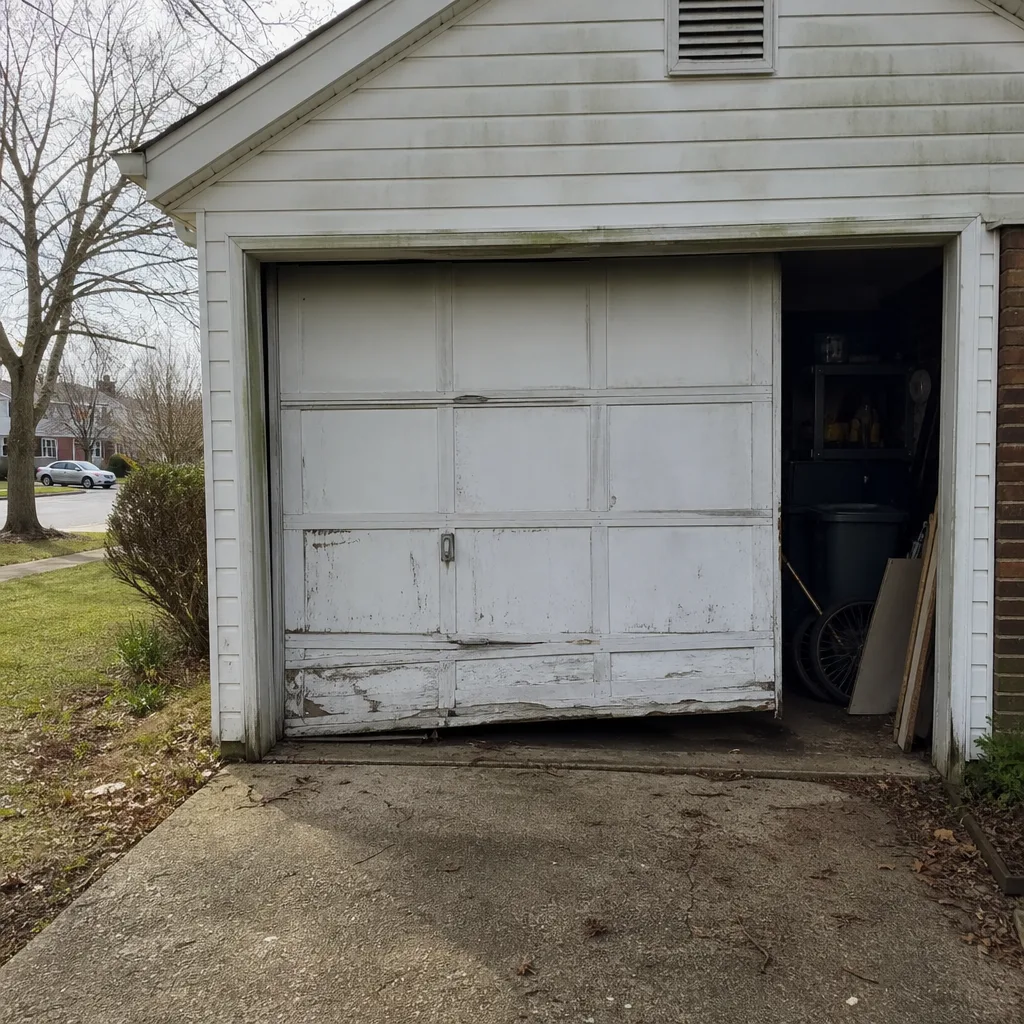 Before
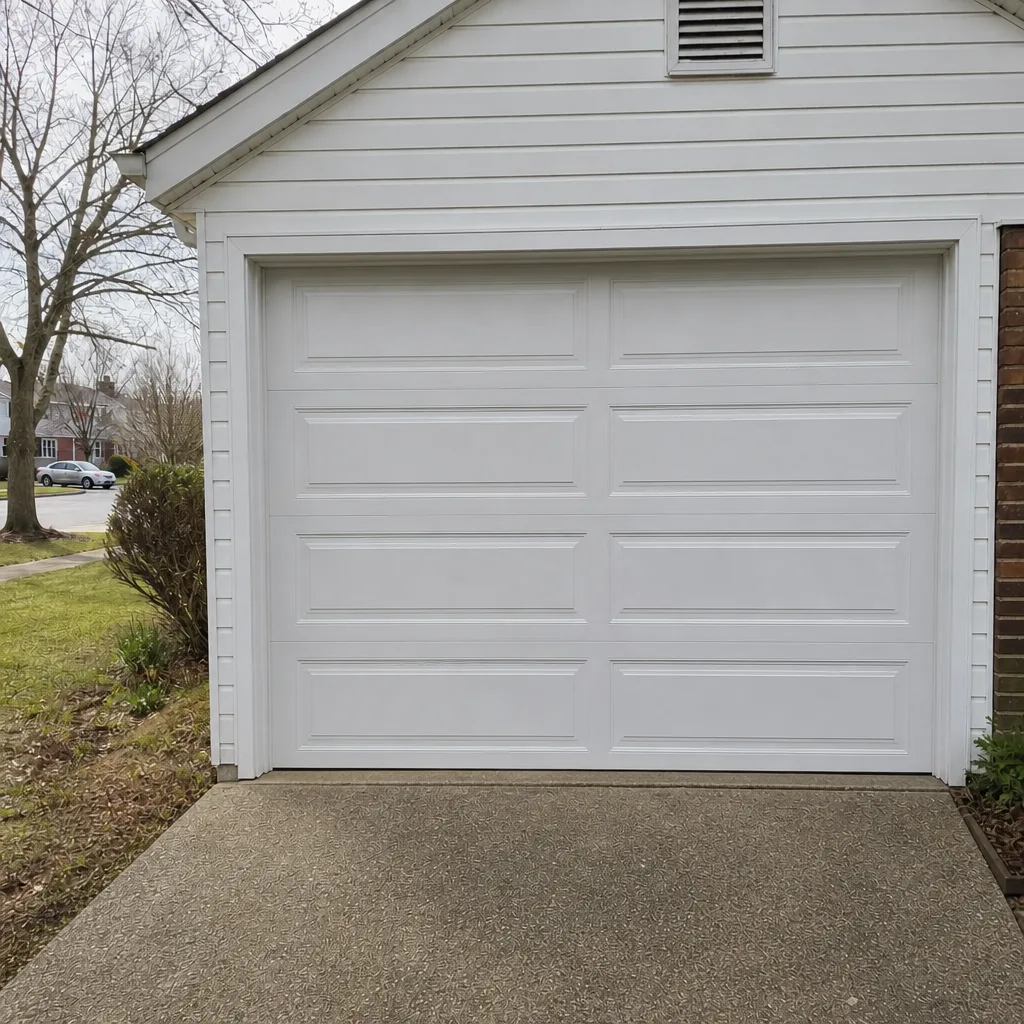 After
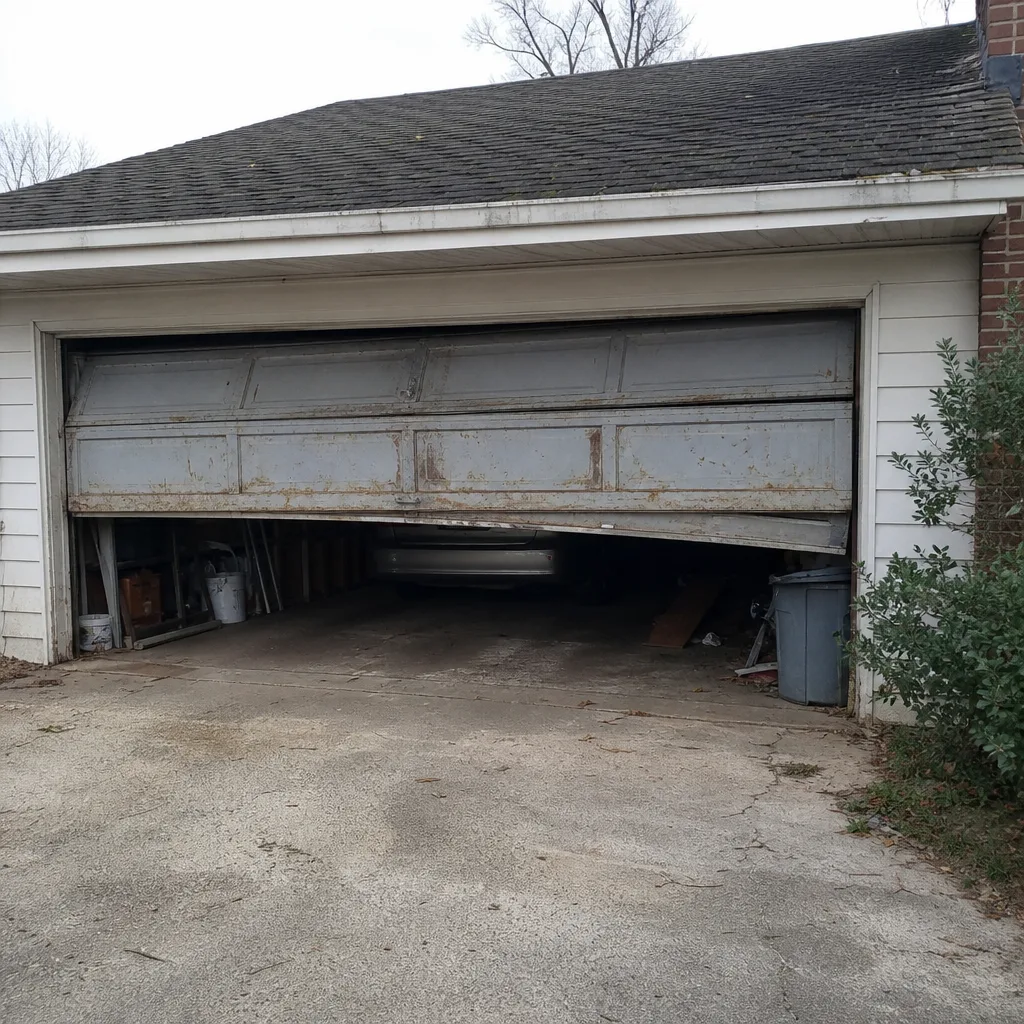 Before
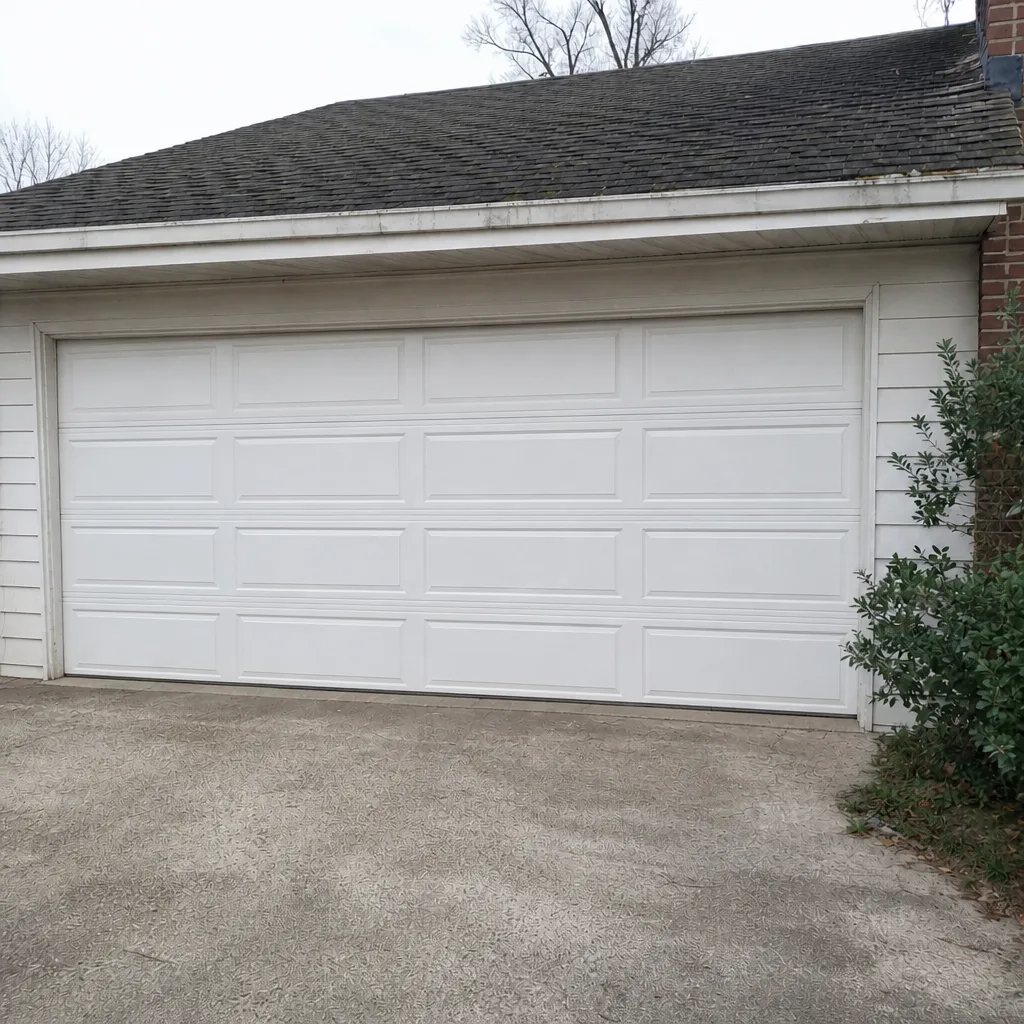 After
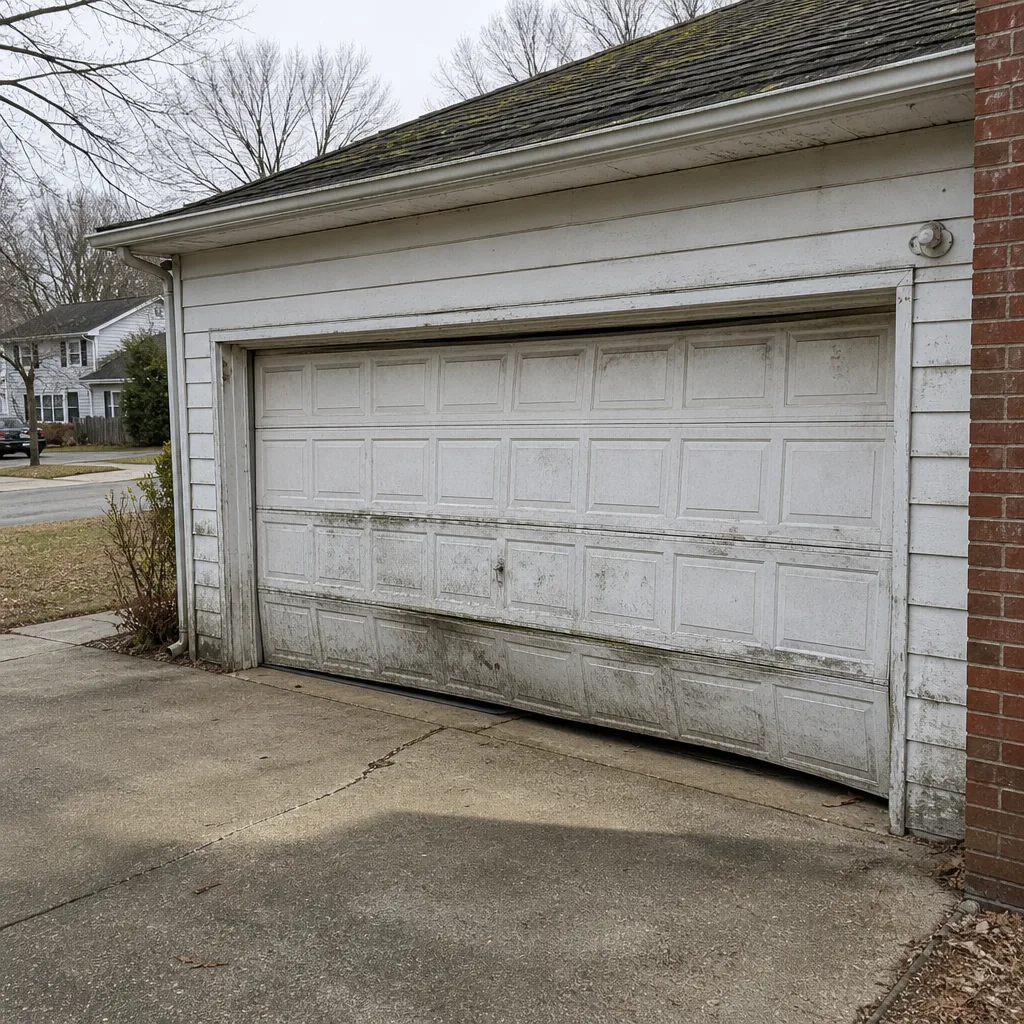 Before
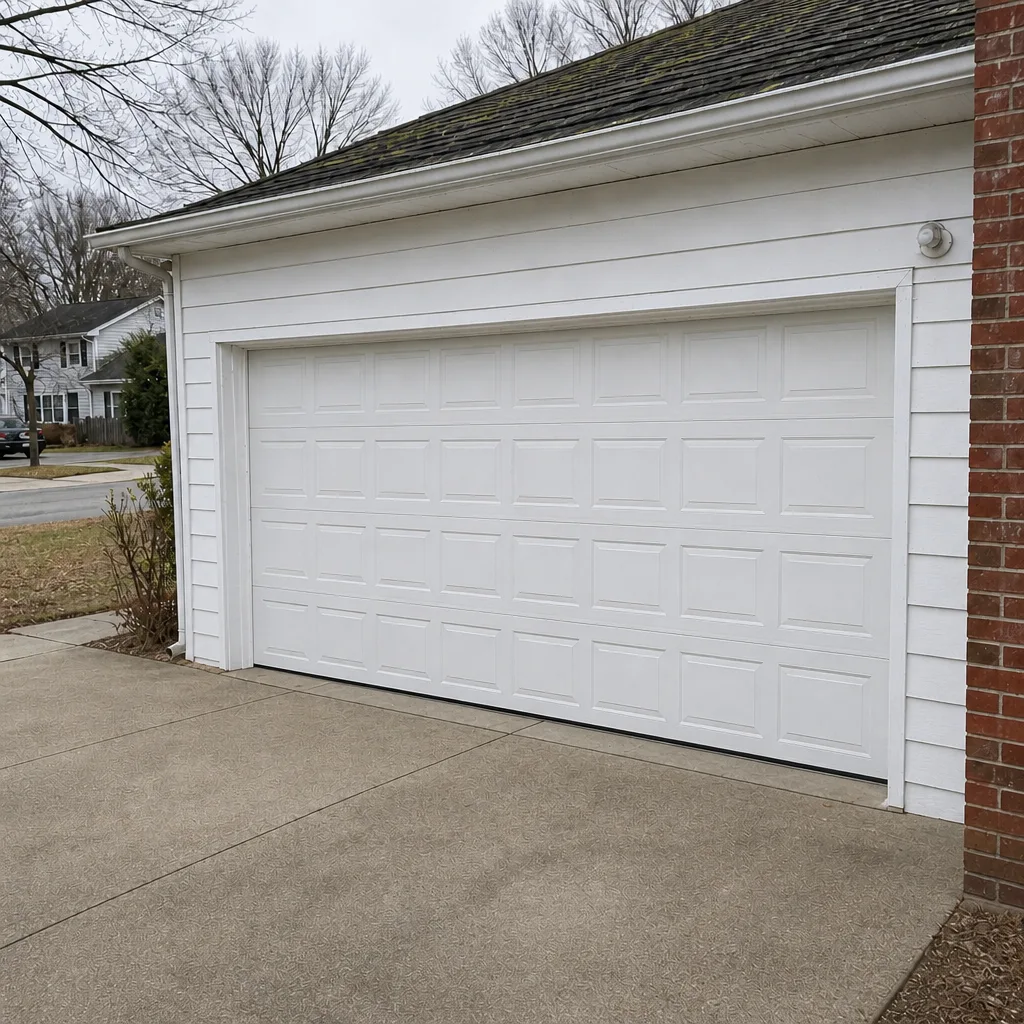 After
When to Call a Professional
Call a pro if you see a broken or uneven spring coil, a door that drops when you try to hold it open, a frayed or slack cable, a bent track, a door that reverses on its own, an opener that flashes lights in a pattern you can’t identify, a motor that grinds, or a door that stops partway and won’t finish the cycle. Also call if the reversal and force tests fail – a door that won’t reverse on an obstruction is a safety problem, and it shouldn’t be used until it’s checked. Some of these are daytime calls, and some feel urgent. Dayspring Garage Door Repair offers free estimates in Hampton – call (866) 942-6044. We answer 24/7, and fast dispatch from 7am to 7pm. We work on your brand whether it’s a Genie, Chamberlain, LiftMaster, or something else, and the written estimate sets the price before any work starts.
Frequently Asked Questions
The most common early sign is a brief hesitation before the door starts moving – a half-second stutter that wasn’t there before. It typically points to a weakening motor capacitor or losing torsion spring tension, and both can lead to a bigger repair if ignored. Call (866) 942-6044 for an exact quote – estimates are free.
Look for a visible gap or uneven coil in the spring, reddish rust powder on the spring or below it, a door that won’t hold open, or a door that looks uneven side to side. All of these are ground-level visual checks. Never touch, wind, or attempt to adjust the spring yourself. Call (866) 942-6044 if you see any of these.
Humidity stiffens the lubricant and causes light corrosion on hinges and rollers, so the door drags on the way up and down. It also changes the door’s weight on wood panels. Lubricating the hardware helps, but if the sticking has become constant, the door needs a proper look. Call (866) 942-6044 for a free estimate.
On most modern openers, flashing lights are a diagnostic signal, usually pointing to misaligned or blocked safety sensors or an obstruction the opener is detecting. The exact pattern varies by brand – Genie, Chamberlain, and LiftMaster all encode different faults. Call (866) 942-6044 and we can help you sort out which pattern you’re seeing.
Not always. A single cracked panel can often be repaired or replaced on its own, depending on the door’s material and brand. Wood doors that have warped from moisture are more likely to need replacement, while steel panel damage is often patchable. Call (866) 942-6044 for a free estimate and a straight answer.
You can and should run both yourself, monthly – they’re simple checks with no tools required, and they’re how you catch a safety issue between service visits. What a technician should handle is any adjustment the tests reveal is needed. Call (866) 942-6044 if either test fails.
Dayspring Garage Door Repair connects you with independent local technicians who work on your door and opener system. Our technicians have up to 11 years of experience and are familiar with the eight major brands we service. Call (866) 942-6044 for details on our service and a free estimate.
The written estimate is the price. We don’t quote a number on the phone and then surprise you on arrival; the technician assesses the door, explains what’s needed, and quotes before any work starts. If the scope changes, that’s a conversation, not a bill. Call (866) 942-6044 for a free estimate.
The Bottom Line
The garage doors that cause the most trouble aren’t the ones that break suddenly – they’re the ones that warned you quietly for months. The hesitation before the door moves, the pop at the start, the orange streak under the hinge, the opener light that blinks instead of burning steady – each one is a specific message about a specific component, and catching them early almost always beats a breakdown. Run the reversal and force tests monthly, look before you touch, and let the noise tell you what it’s telling you. If you’re in Hampton and any symptom in this guide matches your door, we’re glad to come look at it. Call (866) 942-6044 for a free estimate. We answer 24/7, with fast dispatch from 7am to 7pm, Sunday through Friday.
Written by the team at Dayspring Garage Door Repair.